Last updated: September 2026
The UK’s Financial Services and Markets Bill 2026 is designed to simplify parts of financial services regulation, reduce unnecessary administrative burdens, and modernize elements of consumer protection.
The potential savings are substantial. The UK Government’s impact assessment, reviewed by the Regulatory Policy Committee (RPC), estimates £1,087.5 million in administrative savings for firms. The overall positive monetized impact is estimated at £1,635 million in net present social value.
But lower administrative costs should not automatically be interpreted as less compliance.
For compliance teams, financial institutions, and UK RegTech providers, a more interesting question is emerging: if regulation becomes more proportionate and less administratively burdensome, will firms need better technology to demonstrate how they are complying?
Potentially.
The Bill could reinforce a shift away from compliance based primarily on completing prescribed processes and towards an environment in which firms need to connect policies, controls, data, decisions, and evidence.
That could create a different type of opportunity for RegTech.
What is the Financial Services and Markets Bill 2026?
As of September 2026, the Financial Services and Markets Bill remains legislation progressing through Parliament. It completed its House of Lords stages on 15 September 2026 and has moved to the House of Commons for consideration.
The Bill should therefore not yet be described as an Act or as settled law.
According to the Regulatory Policy Committee, the government intends the Bill to simplify financial sector regulation, reduce burdens on businesses, and modernize consumer protections while maintaining high regulatory standards.
Its measures include:
- consolidating the Payment Systems Regulator (PSR) within the Financial Conduct Authority (FCA)
- reforming the Financial Ombudsman Service
- improving the operational effectiveness of the FCA and Prudential Regulation Authority
- reforming the Senior Managers and Certification Regime (SM&CR)
- reforming the bank ring-fencing regime
- reforming the Consumer Credit Act 1974 framework
- changing aspects of the Appointed Representatives Regime
- introducing a provisional licensing scheme
- making other changes intended to streamline financial services regulation
The government’s objective is not simply deregulation. The RPC describes the intention as ensuring that administrative burdens are proportionate while retaining core consumer, prudential, and market protections.
For regulated firms, that distinction matters.
Source: UK Government, Regulatory Policy Committee, Impact of Financial Services and Markets Bill.
Will the Financial Services and Markets Bill create new demand for RegTech?
Potentially, but the more interesting question is what kind of RegTech demand could emerge.
The Bill is designed to reduce regulatory friction rather than remove the underlying need for firms to demonstrate that they are appropriately controlled.
This distinction is particularly relevant because UK financial regulation is already making extensive use of outcomes-based approaches.
The FCA’s Consumer Duty provides an established example. The FCA says firms need to assess, test, understand, and evidence the outcomes their customers receive. Firms must use judgement to determine which information provides appropriate evidence.
This provides useful context for thinking about the direction of compliance technology.
When regulation gives firms more flexibility in determining how to achieve an expected outcome, firms may have fewer prescriptive steps to follow. But they can still need to explain:
- what decision was made
- why it was made
- what information informed it
- which policy or control applied
- who approved it
- what exceptions occurred
- what mitigating action was taken
- whether the control operated as intended
In that environment, the value of technology may increasingly lie not only in automating a compliance task but also in preserving the evidence behind the decision.
Less prescriptive regulation could increase the importance of evidence
There is an apparent paradox at the heart of proportionate regulation.
More flexibility can reduce unnecessary processes, but it can also place greater responsibility on firms to exercise judgment appropriately.
That makes evidence important.
Consider a risk-based decision. A financial institution may conclude that a particular customer, transaction or situation requires enhanced controls. Another situation may justify a different level of treatment.
The important question is not simply whether a workflow was completed.
A compliance team may later need to demonstrate why that treatment was appropriate based on the information available at the time and the firm’s documented policies and procedures.
The FCA’s existing approach to Consumer Duty illustrates the wider principle. Its guidance says that firms need to assess and evidence customer outcomes, while its reviews have highlighted the importance of suitable data, explanations, governance, and evidence of actions taken.
A regulatory environment with greater scope for judgement therefore does not necessarily eliminate compliance work.
It can change the nature of it.
From process evidence to decision evidence
Traditional compliance systems can be good at showing that an activity occurred:
Screening completed. Review performed. Approval recorded.
Connected compliance infrastructure should be capable of answering a deeper set of questions:
Why was this decision reached? What information was considered? Which risk factors affected the outcome? Which policy applied? Who reviewed the exception? What happened afterwards?
For RegTech providers, this distinction could become increasingly important.
Why auditability could become a competitive requirement for RegTech
Financial institutions already need records for multiple purposes, including internal governance, audit and regulatory supervision.
The technology challenge is that the evidence supporting a decision can be distributed across different systems.
For example, relevant information might sit across:
- customer records
- screening tools
- transaction monitoring systems
- spreadsheets
- case management platforms
- policy documents
- third-party databases
- management information
- manually recorded compliance decisions
A final decision may be visible while the chain of evidence behind it is fragmented.
This can make retrospective review difficult.
If a decision is questioned months or years later, compliance teams may need to reconstruct what happened from multiple data sources.
The problem is therefore not necessarily an absence of compliance technology.
It can be an absence of connected compliance infrastructure.
Where could regulatory reform expose the biggest technology gaps?
The largest gaps are unlikely to arise from a single provision in the Financial Services and Markets Bill.
They are more likely to appear when firms attempt to translate a simplified or more proportionate regulatory framework into repeatable, governed, and demonstrable processes.
1. Fragmented compliance data
A firm may have sophisticated systems for individual functions while still lacking a consistent view across them.
Customer information might exist in one platform, screening results in another, supporting documents elsewhere and approvals in email or spreadsheets.
That fragmentation can make it harder to reconstruct the complete compliance journey.
2. Manual workflows
Manual processes are not automatically inappropriate. For lower-volume or highly specialised activity, they can sometimes be proportionate.
Problems arise when firms cannot reliably demonstrate what happened.
A spreadsheet may record an outcome without retaining sufficient context about the information used, changes made, reasoning applied, and approvals obtained.
3. Disconnected policies and controls
A further gap arises when operational controls cannot easily be connected to the policies or obligations they are intended to implement.
When regulation changes, firms need to understand not only the new requirement but also what it affects internally.
That could include:
regulatory change → obligation → policy → control → workflow → evidence → reporting
If those relationships are maintained manually across different repositories, apparently simple regulatory change can become operationally complex.
4. Weak historical decision trails
Compliance evidence also needs context.
Knowing that a customer received a particular risk classification today does not necessarily explain why that classification was reached six months ago.
A stronger evidence trail could preserve the relevant information, screening results, risk factors, approvals and actions associated with a decision at the point it was made.
5. Reporting without underlying evidence
Dashboards can make compliance activity easier to monitor, but visual reporting alone does not necessarily solve the evidence problem.
Firms may need to move from a high-level metric into the underlying cases and controls that produced it.
That makes traceability between reporting and operational evidence particularly valuable.
What does the Bill mean for compliance teams?
The immediate implication is not that every compliance team needs to buy more technology.
Instead, firms could use regulatory reform as an opportunity to examine whether their existing technology can support a more proportionate, risk-based environment.
A practical assessment could ask:
- Can we reconstruct why a material compliance decision was made?
- Can we identify the data available to the decision-maker at that time?
- Can we connect decisions to our internal policies and controls?
- Can we see who reviewed and approved exceptions?
- Can we retrieve supporting evidence without searching multiple systems?
- Can we demonstrate that controls operated as intended?
- Can we identify which workflows need updating when regulatory requirements change?
- Can management information be traced back to underlying evidence?
Where the answer is no, reducing regulatory complexity may not solve the operational problem.
It may simply make the underlying technology gap more visible.
What should RegTech providers prioritise?
The opportunity for RegTech providers may extend beyond automating individual compliance activities.
Four capabilities could become particularly relevant.
Explainability
Systems should make it possible to understand how an outcome was reached, particularly where automated processes or risk models contribute to a decision.
Auditability
Important decisions should retain appropriate supporting information, timestamps, approvals and relevant contextual evidence.
Configurability
If firms have greater scope to implement controls proportionately to their business and risk profile, rigid workflows may become less useful.
Technology should potentially allow firms to configure processes around their documented policies and risk frameworks, subject to appropriate governance.
Connectivity
Individual tools can create efficiency, but their value may be limited when information remains isolated.
The bigger opportunity is connecting customer data, risk assessments, screening, decisions, controls, evidence and reporting.
What does this mean for AML compliance?
The Financial Services and Markets Bill should not be interpreted as replacing or removing firms’ separate anti-money laundering obligations.
However, its direction of travel is relevant to AML compliance technology because AML frameworks already rely heavily on risk-based decision-making.
Customer risk assessment, ongoing monitoring, screening and escalation can all involve decisions that depend on context.
For firms assessing their AML software in the UK, the useful question is therefore not simply whether technology can automate a check.
It is whether the compliance environment can preserve the information needed to understand and evidence the resulting decision.
For example, organisations may benefit from being able to connect:
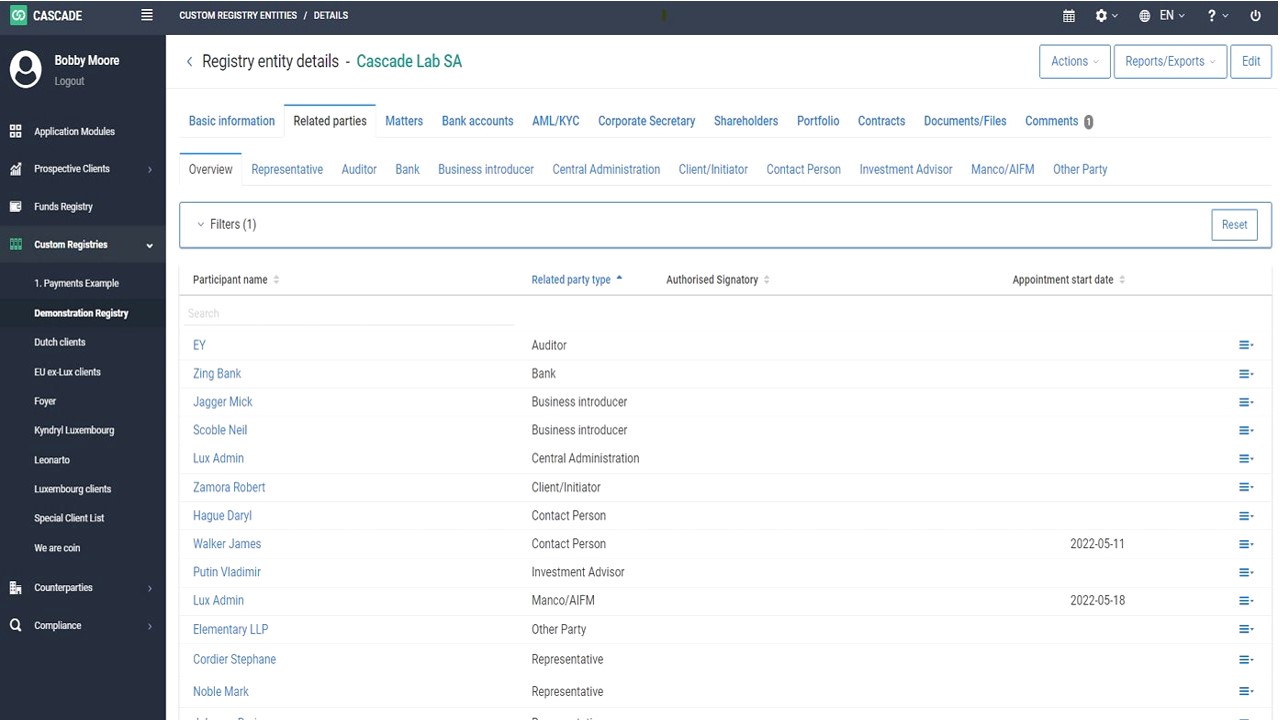
- customer and beneficial ownership information
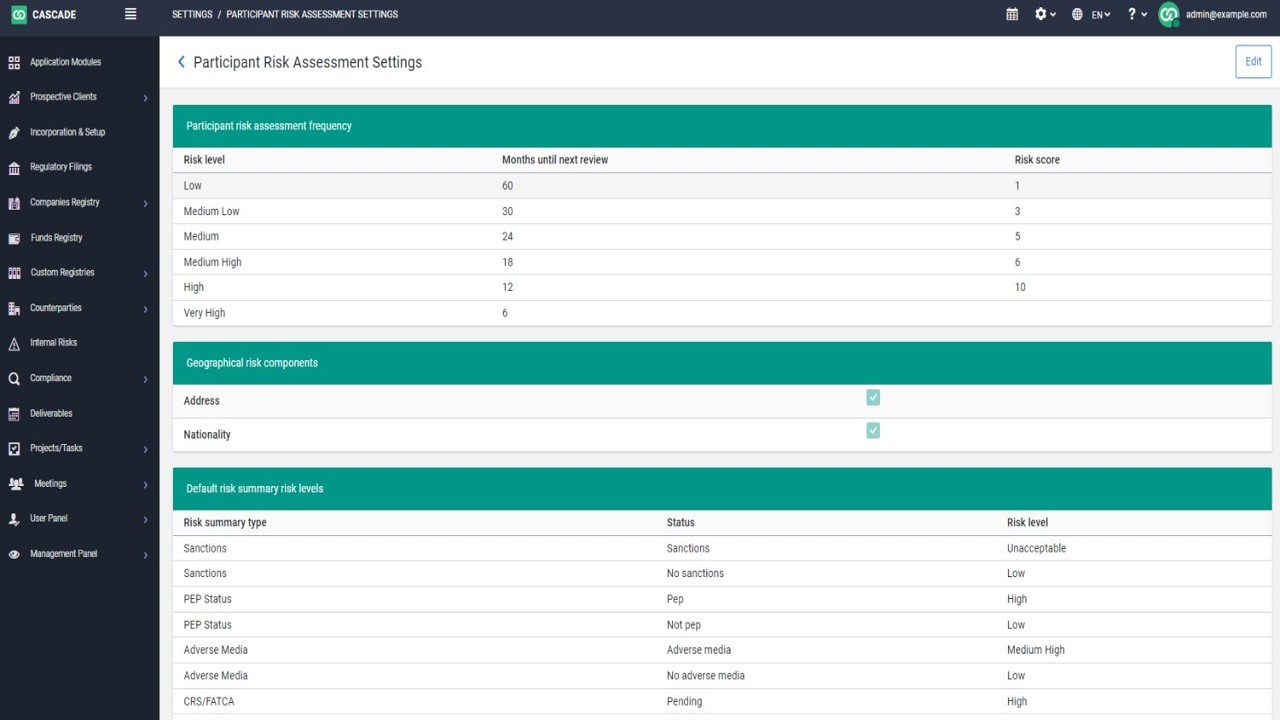
- customer risk assessments
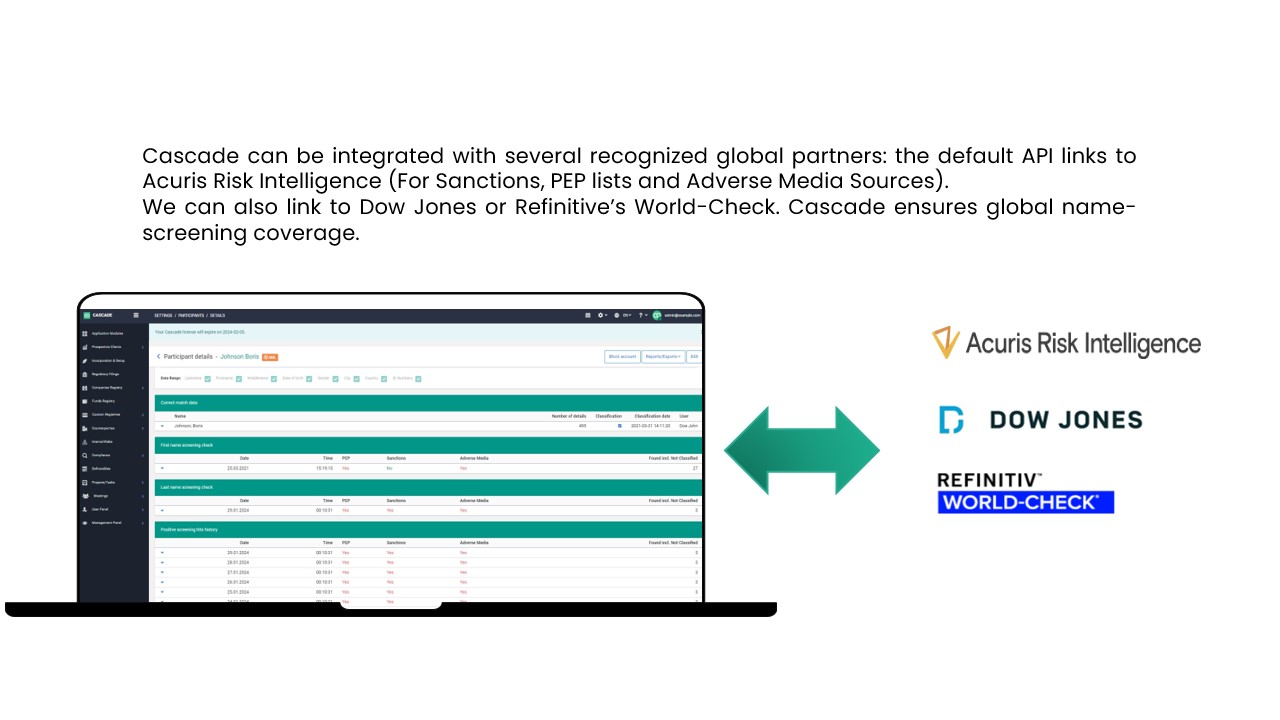
- name screening results
- alert investigations
- supporting documentation
- escalation decisions
- approvals
- subsequent reviews
- reporting and analytics
This is where the distinction between an individual compliance tool and connected AML infrastructure becomes significant.
Building connected AML processes with Cascade
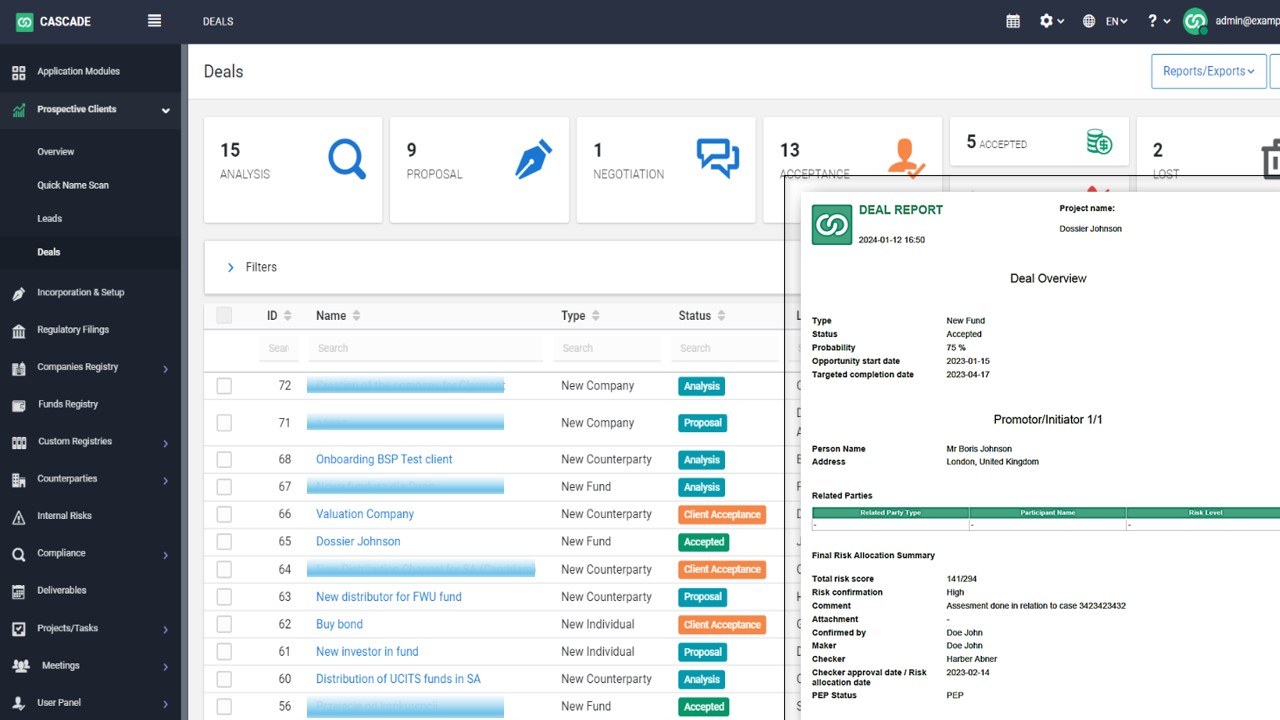
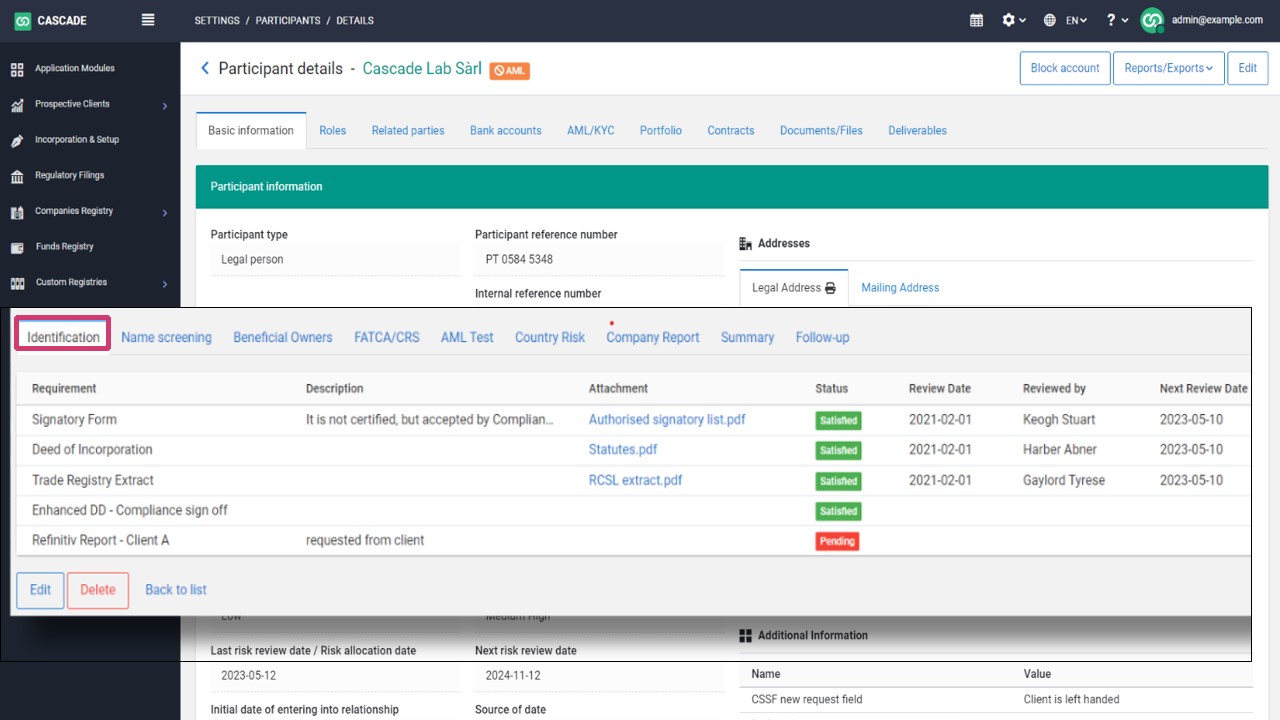
Cascade’s AML Software provides the core environment around which organisations can structure AML processes.
Depending on an organisation’s requirements, additional capabilities can potentially be supported through Cascade’s add-on modules:
- Automated Treatment of Name Screening Alerts, an add-on module requiring the core AML Software platform
- Digital Communication Bridge for Client Onboarding, an add-on module requiring the core AML Software platform
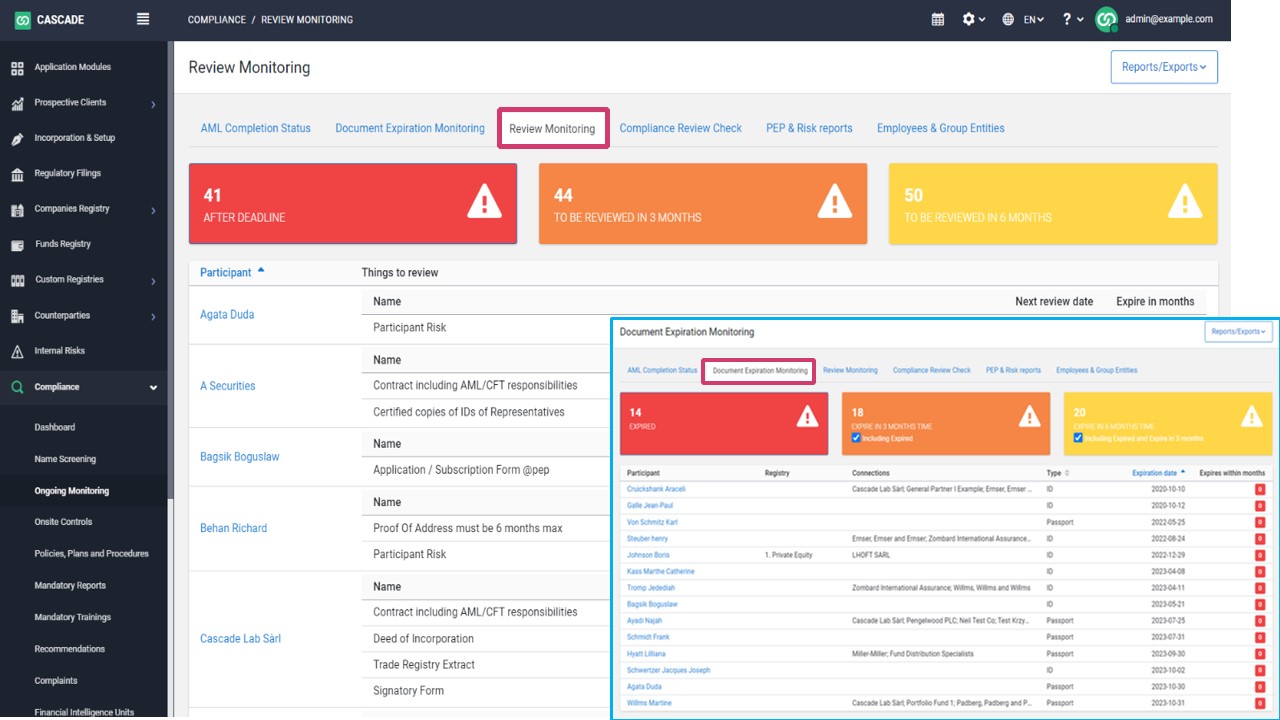
- BI Module for AML Reporting and Analytics, an add-on module requiring the core AML Software platform
The relevant technology objective is not automation for its own sake.
For organisations operating in an environment where risk-based decisions need to be understood and evidenced, connected workflows can help reduce the separation between data, operational decisions and compliance reporting.
Related reading: Cascade Resource: Name Screening Overview
Related reading: Cascade Resource: AML Reporting and Analytics
The bigger RegTech opportunity: connected compliance infrastructure
The Financial Services and Markets Bill 2026 may expose a technology gap that has been hiding in plain sight.
Some firms do not necessarily lack compliance technology. They may already have numerous systems.
What they lack is connectivity between them.
Regulatory simplification could make that distinction more visible.
If regulators remove unnecessary administrative processes while retaining expectations around governance, accountability, consumer protection and risk management, the value of technology could shift.
The question becomes less:
“Did the firm complete the required compliance task?”
And increasingly:
“Can the firm demonstrate how it reached the outcome and why its approach was appropriate?”
That requires more than workflow automation.
It requires data, policies, controls, decisions and evidence to form a coherent chain.
For RegTech providers, this could create an opportunity to evolve from automating isolated compliance tasks towards providing infrastructure that connects the compliance environment.
For regulated firms, it provides a reason to assess whether their current technology supports that transition.
Frequently Asked Questions
What is the Financial Services and Markets Bill 2026?
The Financial Services and Markets Bill is UK legislation intended to reform several aspects of financial services regulation, reduce administrative burdens and modernise regulatory processes and consumer protections. As of September 2026, it is still progressing through Parliament and has not yet received Royal Assent.
How much could the Financial Services and Markets Bill save firms?
The Regulatory Policy Committee reports an estimated £1,087.5 million in administrative savings for firms. The Government’s overall positive monetised estimate is £1,635 million in net present social value. These are impact-assessment estimates rather than guaranteed savings for individual firms.
Will the Financial Services and Markets Bill reduce compliance requirements?
The Government intends to reduce unnecessary administrative burdens and make regulation more proportionate, while retaining core consumer, prudential and market protections. The effect will vary by measure, and some details will depend on subsequent secondary legislation and regulatory rules.
Will the Financial Services and Markets Bill increase demand for RegTech?
The Bill does not itself establish a general requirement to purchase RegTech. However, more proportionate and flexible regulation could increase the practical value of systems that connect data, controls, decisions and evidence, particularly where firms need to demonstrate how judgement-based decisions were reached.
Why are audit trails important in risk-based compliance?
An audit trail can help a firm demonstrate what information was considered, what decision was reached, who was involved and what actions followed. This can support internal governance, audit and regulatory review.
Does the Financial Services and Markets Bill change UK AML requirements?
The Bill contains broad financial services reforms, but firms should not interpret it as removing their separate AML obligations. AML requirements need to be assessed under the applicable UK AML legal and regulatory framework.
Explore Cascade’s AML Software Capabilities
As UK financial services regulation evolves, compliance technology may need to do more than automate individual checks.
Connected AML infrastructure can potentially help organizations bring customer data, risk assessment, screening, investigation, decisions and reporting into a more coherent compliance environment.
Explore how Cascade’s AML Software (SaaS Platform) and its optional add-on modules could support your organization’s approach to risk-based AML compliance.
Disclamer
This article does not constitute legal advice. Organizations affected by the Financial Services and Markets Bill or UK AML requirements should review the applicable legislation, FCA requirements and other regulatory guidance and seek advice from appropriately qualified UK legal or AML professionals.
This article is for general information only and based on publicly available sources at the time of writing. We’ve done our best to make it accurate and useful, but AML rules and business needs can change. Always double-check key details and speak with a qualified expert before making compliance or vendor decisions.



 English
  English (Australia)
  English (UK)