Introduction
Board-level reporting on AML compliance is no longer optional; it’s a regulatory expectation. Yet many compliance teams struggle to translate complex screening alerts, customer risk assessments, and monitoring activity into metrics that resonate with board members who lack technical compliance backgrounds. The result: either over-technical dashboards that obscure key insights or overly simplified reports that fail regulatory scrutiny. This resource provides a practical framework for structuring AML board reporting metrics that satisfy both regulatory oversight and executive decision-making needs.
What are AML board reporting metrics?
AML board reporting metrics are standardized, quantifiable measures that communicate the effectiveness and efficiency of an organization’s anti-money laundering program to senior management and the board. These metrics go beyond transaction counts; they measure risk coverage, detection capability, remediation speed, and regulatory compliance posture.
Key metric categories include:
- Coverage metrics: Percentage of customer base screened, ongoing monitoring coverage, and high-risk segment oversight.
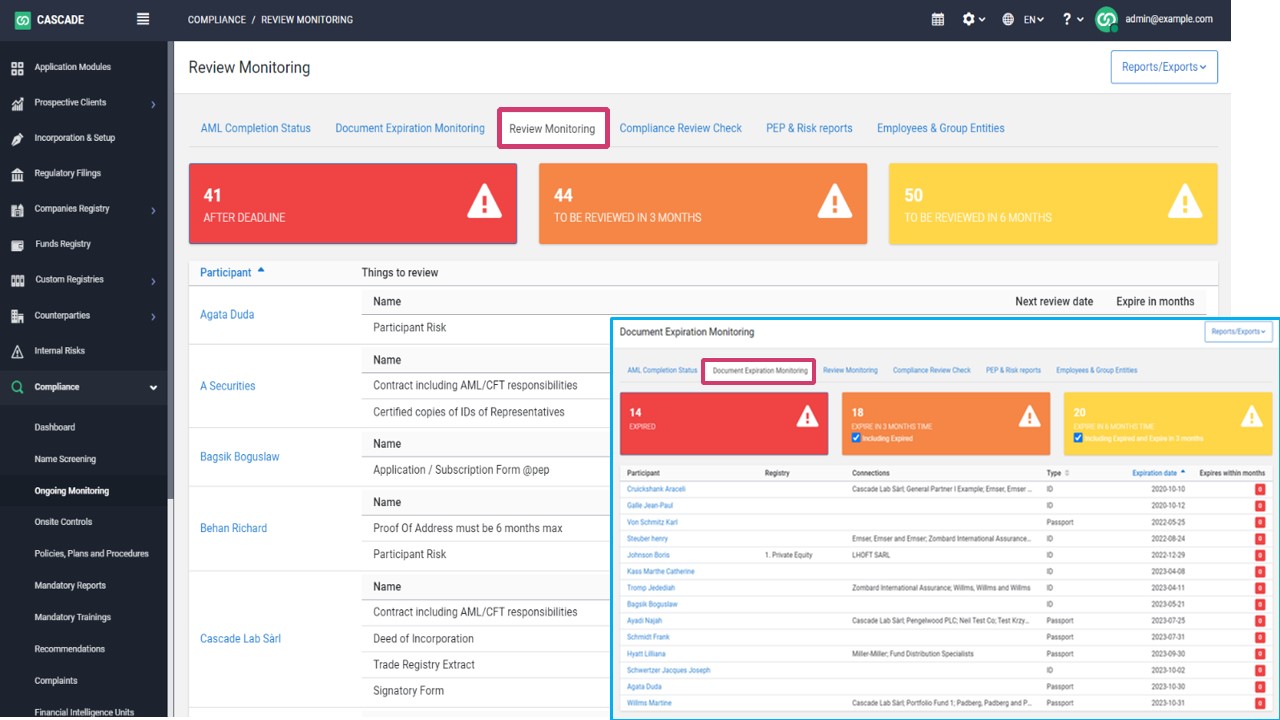
- Detection metrics: Alert volumes, true positive rates, investigation turnaround times, and escalation patterns.
- Remediation metrics: Sanctions action response times, customer remediation rates, and case closure cycles.
- Compliance metrics: Policy adherence rates, training completion, audit findings, and regulatory exam outcomes.
Why AML board reporting matters across jurisdictions
Financial regulators globally, including the Financial Conduct Authority (FCA) in the UK, the Commission de Surveillance du Secteur Financier (CSSF) in Luxembourg, and international bodies like FATF, expect boards to demonstrate active oversight of AML/KYC control effectiveness. Poor board reporting creates three risks:
Regulatory Risk: Regulators view weak board metrics as evidence of inadequate oversight. Enforcement actions often cite boards that lacked visibility into AML program performance.
Operational Risk: Without clear metrics, compliance teams cannot identify process bottlenecks, alert fatigue, or emerging risks. Resource misallocation follows.
Reputational Risk: Undetected compliance failures cascade quickly in today’s media environment, damaging institutional credibility and shareholder confidence.
Regulatory framework and expectations
FCA (UK): Firms must demonstrate that their governing body has effective oversight of compliance risk and receives regular reporting on AML effectiveness. The FCA’s Handbook requires firms to keep AML systems and controls under review and report findings to senior management.
CSSF (Luxembourg): Financial institutions must provide their board or governing body with periodic reports on the state of AML/KYC compliance, including deficiencies and remediation actions.
FATF Mutual Evaluation: Countries are assessed on whether boards and senior management receive AML risk information sufficient to drive strategic decision-making.
The common requirement: metrics must be backward-looking (historical performance), forward-looking (emerging risks), and actionable (driving board decisions).
Operational comparison: manual reporting vs. Cascade automated metrics
| Dimension | Manual Spreadsheet Processing | Cascade Automated Compliance Architecture |
|---|---|---|
| Metric Compilation Time | 8–16 hours (monthly cycle; multiple handoffs; formula reconciliation) | 2–4 hours (real-time dashboard; single source of truth; automated aggregation) |
| Accuracy and Auditability | Prone to formula errors; audit trail fragmented across emails and versioning | Centralized audit trail; all metric calculations logged and traceable |
| Alert True Positive Tracking | Manual categorization; inconsistent classification rules | The rules engine enforces consistent alert coding; alert resolution tracking integrated |
| Risk Segmentation Depth | 3–4 customer cohorts tracked; breakdown by risk tier limited | Unlimited segmentation by jurisdiction, business line, product, and risk score; dynamic filters |
Five steps to clear AML board metrics
Step 1: Define your metric taxonomy
Align metrics to your governance structure. Identify which metrics inform strategic decisions (board-level), which inform operational oversight (committee-level), and which support day-to-day management. This prevents metric sprawl and ensures reports aren’t cluttered with irrelevant data points.
Step 2: Establish baseline and target performance
Use historical data and peer benchmarking to set realistic targets. A large tier-1 bank may target a 2% alert true positive rate; a mid-market firm may reasonably target 5–8% while building detection models. Targets must be defensible to regulators.
Step 3: Integrate monitoring system data
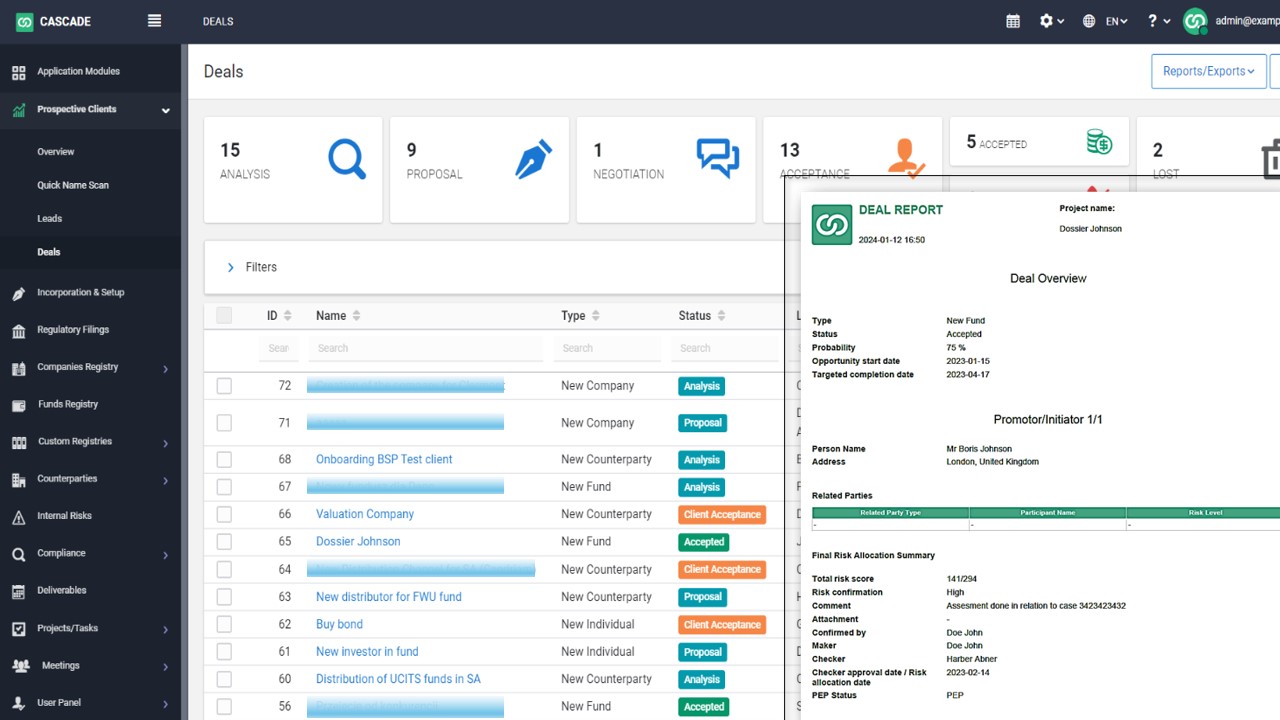
Connect your AML screening, ongoing monitoring, and case management platforms to your reporting layer. Cascade’s automated compliance SaaS platform centralizes alert data, customer risk assessments, and resolution workflows, eliminating manual data pulls and ensuring metrics reflect live system state.
Step 4: Design board-friendly dashboards
Use visual hierarchy: headline metrics (compliance rate, alert volumes, escalation count) at the top; deep-dive tables and trend analysis below. Avoid jargon; define terms on first use. Include variance commentary, why July alerts spiked and why one jurisdiction exceeded targets.
Step 5: Schedule reporting cadence
Monthly reporting to executive committees; quarterly to the board. Ensure consistency in reporting dates, formats, and ownership. Automated systems allow sub-monthly production, supporting ad-hoc requests during regulatory exams.
Template: AML board metrics dashboard
Essential metrics for board reporting:
- Compliance Coverage: % of customer base with valid screening records (target: 98%+)
- Ongoing Monitoring: % of customer base under active ongoing monitoring (target: varies by risk tier)
- Alert Management: Monthly alert volume, true positive rate, average investigation time
- Escalations: Number of escalations, SARs filed, regulatory referrals, SARs turnaround time
- Remediation: Outstanding compliance issues, age of outstanding items, closure rate
- Training: % staff trained, completion rate, assessment scores
- Audit Findings: Open audit findings, remediation status, closure rate
Common challenges in AML board reporting
Challenge 1: Alert Fatigue Obscures True Risk
High-volume, low-fidelity alerts overwhelm boards. Solution: Report alert quality metrics (true positive rate, precision) alongside volume. Focus board attention on escalated items, not raw alert counts.
Challenge 2: Inconsistent Metric Definitions
Different business lines calculate “alert investigation time” differently. Solution: Establish a metric dictionary; enforce definitions at the platform level (Cascade’s configuration ensures consistent calculation rules across teams).
Challenge 3: Lagged Reporting
Monthly reports arrive 10 days after month-end. Solution: Automate extraction; move to real-time dashboards accessible throughout the reporting cycle.
Challenge 4: Lack of Contextual Narrative
Numbers without context confuse boards. Solution: Pair metrics with risk commentary (e.g., “High-risk customer segment alerts up 15% due to sanctions list expansion in September”).
Challenge 5: Regulatory Exam Readiness
Regulators request ad hoc metrics; the team scrambles to compile. Solution: Ensure metrics are available on-demand within your AML compliance platform.
Best practices for effective AML board reporting
✅ Consistency: Use the same metric definitions, reporting frequency, and format each period. Consistency builds board confidence and supports trend analysis.
✅ Relevance: Report only metrics that inform decision-making. Filter noise; highlight exceptions and trends.
✅ Documentation: Maintain a metric methodology document. Define each metric, its calculation, its data source, and any limitations. This supports regulatory exams.
✅ Timeliness: Deliver reports within 5–10 days of the reporting period closing. Timely information supports faster remediation.
✅ Automation: Use a centralized compliance platform (Cascade’s SaaS architecture) to eliminate manual aggregation and reduce error rates.
✅ Risk Alignment: Tie metrics to your risk appetite statement. Report metrics in tiers, e.g., green/yellow/red status based on board-approved thresholds.
✅ Peer Benchmarking: Where available, compare your metrics to industry benchmarks. This contextualizes performance and identifies improvement opportunities.
Roles and responsibilities
| Role | Responsibility |
|---|---|
| MLRO / Chief Compliance Officer | Owns metric methodology, oversees data accuracy, and interprets findings for the board. |
| Data/Analytics Team | Extracts data, validates calculations, and maintains an audit trail |
| Board / Audit Committee | Reviews metrics, approves targets, challenges performance trends |
| Internal Audit | Validates metric calculations, tests control design, and operates effectiveness |
| Compliance Operations | Enters data into the AML platform; ensures alert data quality feeds reporting |
Frequently asked questions
What AML metrics should we report to the board monthly vs. quarterly?
Monthly reporting should cover operational metrics: alert volume, investigation backlog, training completion, and regulatory submissions (SARs, escalations). Quarterly reporting adds strategic analysis: true positive rate trends, risk tier migration, and control effectiveness assessments.
How do we calculate alert true positive rates when many alerts are unresolved?
True positive rate = (alerts escalated to SARs or regulatory referrals) ÷ (closed investigations) × 100. For in-flight cases, use historical closure rates to project outcomes.
What benchmarks should we target for AML board reporting metrics?
Ranges vary by institution size and geography: ongoing monitoring 85–98%, screening deployment 95%+, SAR turnaround 7–15 days, and investigation closure 85%+. Use peer benchmarking and your regulatory exam history to inform targets.
How often should we revise our metric targets?
Review targets annually or after significant business changes (new products, geographic expansion, regulatory updates). Avoid mid-year changes unless justified by material risk shifts.
What is Cascade and how does it simplify AML/KYC compliance?
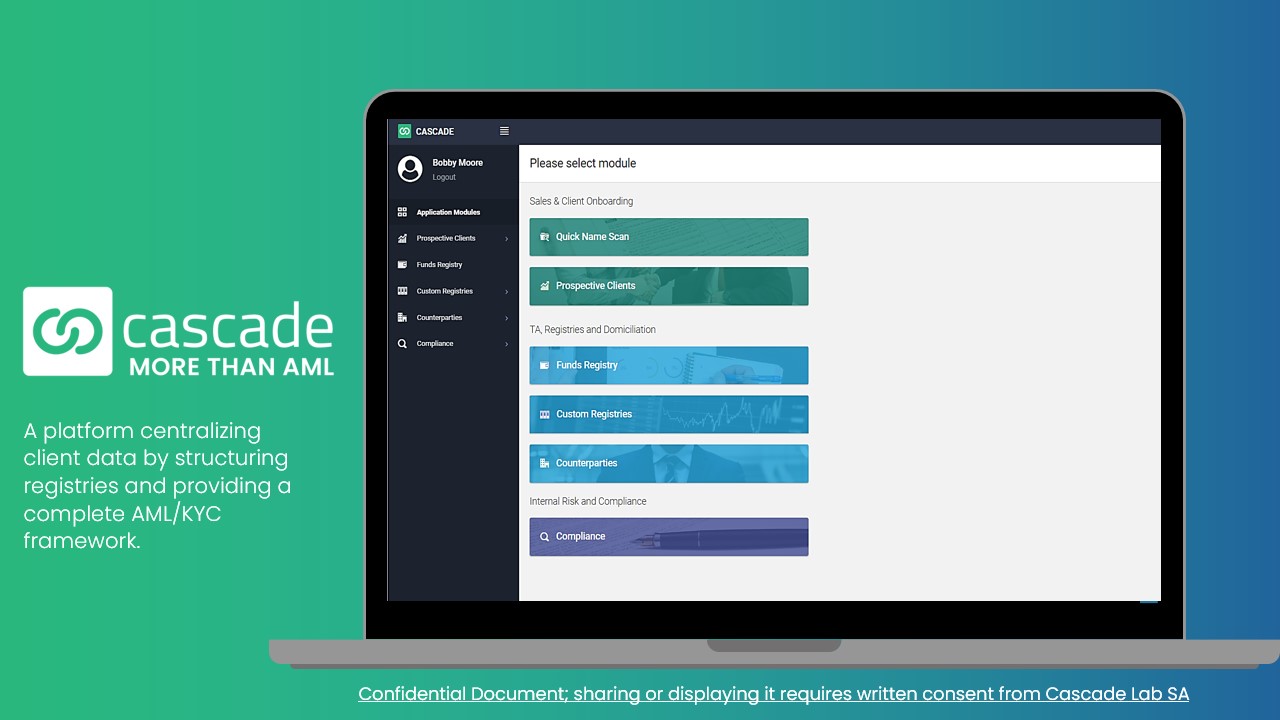
Cascade is an end-to-end AML Software (SaaS Platform) that centralizes client data and AML/KYC workflows from onboarding through ongoing monitoring and reporting. It automates metric aggregation, eliminates manual spreadsheets, and maintains complete audit trails.
Who can benefit from using Cascade?
Cascade supports organizations with AML/KYC obligations: financial services firms, fintechs, wealth managers, law firms, and corporate service providers.
How does Cascade ensure data security and regulatory compliance?
Cascade provides controlled workflows, activity logging, and audit trails to support traceable AML/KYC processes. Compliance depends on your policies, configuration, and applicable regulations.
How can I get started with Cascade?
Book a demo with Cascade to discuss your AML/KYC requirements, explore the platform, and identify how it can support your workflows.
Explore Cascade’s AML board reporting capabilities
Many compliance teams spend 15+ hours monthly extracting and validating AML metrics across disparate systems. This manual overhead delays board reporting and introduces calculation errors. Cascade’s centralized AML compliance platform automates metric aggregation, ensures audit trail integrity, and provides real-time board dashboards that scale as your institution grows.
Rather than wrestling with spreadsheets, your team can focus on the deeper question: What do these metrics reveal about your AML program’s effectiveness?
Explore Cascade to see how automated metrics reporting transforms board oversight and regulatory exam readiness.
Disclaimer
This article is for general information only and based on publicly available sources and industry best practices at the time of writing. Regulatory expectations and AML frameworks evolve continuously. Always verify current regulatory requirements with your local regulator (FCA, CSSF, FinCEN, etc.) and consult with a qualified compliance specialist or legal advisor before implementing reporting frameworks or vendor solutions. This resource does not constitute legal or compliance advice, and Cascade does not accept liability for decisions made based solely on this article.


 English
 English (Australia)
 English (UK)