Irish funds must respond to data breaches, security incidents, and client data loss with documented procedures that meet Central Bank expectations and data protection obligations. When incident response is ad-hoc or undocumented, compliance teams cannot demonstrate timely investigation, regulatory notification, or corrective action. A systematic incident response framework, embedded in compliance workflows, ensures rapid detection, investigation, containment, and reporting.
Data incident response procedures for CBI-regulated funds
The Central Bank of Ireland enforces requirements that regulated funds implement robust incident response procedures addressing data breaches, system failures, and unauthorized access. Data incidents involving client personal information or transaction data trigger specific notification obligations to the Central Bank, the Data Protection Commission (DPC), and potentially affected clients.
Without documented incident response procedures, funds cannot reliably demonstrate that incidents were detected promptly, contained effectively, or reported to regulators within required timeframes. Incident response is not a technical issue, it is a compliance and regulatory risk management function.
What is an AML data incident?
An AML data incident is unauthorized access to, loss of, or corruption of client personal information, transaction data, beneficial ownership records, or screening results that could compromise the integrity of the fund’s AML/KYC compliance obligations. Incidents include data breaches, ransomware attacks, accidental data deletion, insider unauthorized access, and system failures causing data loss or unavailability.
AML data incidents differ from general IT incidents: they involve personal data or compliance information that triggers specific regulatory notification obligations. A data incident is not merely a technical problem, it is a regulatory risk requiring immediate investigation, containment, and reporting.
Why incident response matters for Irish funds
Irish funds face three converging pressures regarding data incident response:
Regulatory notification obligation.
The Central Bank expects firms to report data incidents affecting client information or transaction data. GDPR and Irish data protection law require notification to the DPC where personal data is compromised. Failure to report or delayed reporting triggers regulatory enforcement.
Client trust and reputational damage.
Data breaches involving client beneficial ownership information or transaction records damage trust and create client service obligations. Transparent, prompt incident notification is expected by investors and their advisors.
Operational resilience.
Incidents that disrupt compliance operations (e.g., loss of KYC records, inaccessible screening data) create operational risk. Documented recovery procedures and backup systems are essential to minimize downtime and maintain compliance continuity.
Systematic incident response procedures address each pressure by enabling rapid detection and containment, clear escalation pathways, and compliance-ready regulatory reporting.
Central Bank and data incident expectations
The Central Bank of Ireland’s Prudential Standards and GDPR compliance obligations establish requirements for incident response and notification. Key expectations include:
Incident detection and reporting. Firms must detect data incidents promptly and report to the Central Bank where incidents affect AML/KYC data or system integrity. The Central Bank does not specify a fixed timeframe but expects reasonable speed.
Data Protection Commission notification. GDPR Article 34 requires notification to the DPC within 72 hours of becoming aware of a personal data breach unless the breach presents low risk to data subjects.
Client notification. Where data breach presents substantial risk to individuals, GDPR Article 34 may require notification to affected clients.
Investigation and containment. Firms must investigate incidents to determine scope, cause, and impact. Containment procedures must prevent further unauthorized access.
Documentation and retention. All incident investigation findings, remediation actions, and regulatory notifications must be documented and retained.
Key takeaways
- Incident response procedures must be documented before an incident occurs, with clear escalation pathways, investigation protocols, and regulatory notification templates.
- Automated incident detection (network monitoring, system alerts) combined with documented investigation workflows enables rapid containment and timely regulatory notification.
Data incident response procedure matrix
| Incident Response Component | Manual Ad-Hoc Process | Cascade Integrated Incident Management Workflow |
|---|---|---|
| Incident detection and escalation | Incidents discovered reactively; unclear who should be notified; escalation paths informal | Automated system alerts configured for unauthorized access attempts, data deletion, suspicious user activity; alerts route directly to compliance officer with timestamp and incident classification |
| Investigation documentation | Incident investigation conducted verbally or in brief emails; findings not systematically recorded; timeline unclear | Structured incident record captures detection date/time, reported-by information, incident description, affected data scope, initial assessment; investigation findings linked chronologically |
| Scope and impact assessment | Unclear which client records were affected; affected clients not systematically identified | Incident record links affected data fields, client count, data type (beneficial ownership, screening results, transaction records); scope updated as investigation progresses |
| Regulatory notification tracking | Unclear whether Central Bank or DPC were notified; notification dates not recorded; follow-up actions ad-hoc | Incident template includes regulatory notification checklist (Central Bank, DPC, clients); notification dates, method, and content captured; follow-up actions logged |
| Remediation and closure | Remediation actions informally discussed; closure decisions not documented; lessons learned not captured | Incident record documents remediation steps, completion dates, system improvements implemented, lessons learned captured; incident formally closed with sign-off |
Implementing incident response procedures
Step 1: Define incident classification and escalation pathways
Establish criteria for categorizing incidents by severity: low (isolated unauthorized access, no data loss), medium (data access affecting multiple clients, limited scope), high (large-scale data breach, system outage affecting compliance). Define escalation: low-severity incidents to compliance manager; medium to MLRO; high to senior management and board.
Step 2: Create incident detection and alert configuration
Implement monitoring for suspicious activity: failed login attempts exceeding threshold, after-hours access to client databases, bulk data downloads, deletion of compliance records. Configure automated alerts to route to a designated incident responder immediately. Test alert effectiveness quarterly.
Step 3: Establish investigation protocols and documentation requirements
Design an incident investigation form capturing: date and time of discovery, reported-by information, incident description, affected data scope, initial impact assessment, investigation steps, findings, scope updates, remediation actions, regulatory notification decisions, and closure sign-off.
Step 4: Draft regulatory notification templates
Prepare email and letter templates for Central Bank notification and DPC notification. Include required information: incident description, affected data types, number of clients affected, dates of detection and notification, investigation findings, remediation actions. Test templates with legal advisor before use.
Step 5: Establish incident tracking and metrics
Create a central incident log capturing all incidents, investigation status, regulatory notifications, and closure dates. Track incident resolution time and identify patterns (e.g., repeated unauthorized access attempts) that may indicate systemic security gaps.
Common incident response gaps and solutions
Gap 1: Incident detection is reactive and delayed.
Unauthorized data access occurs; weeks pass before discovery when client complaints surface or system audit reveals discrepancy.
Solution: Implement automated monitoring and alerting for suspicious activity (failed login attempts, unusual data access patterns, bulk downloads). Configure alerts to route immediately to a designated compliance officer. Test alert configuration quarterly.
Gap 2: Investigation scope is unclear.
When an incident occurs, it is unclear which client records were accessed or compromised. Investigation findings lack documentation.
Solution: Establish a structured incident investigation form with fields for affected data scope, client count, data type, investigation timeline, and findings. Link the incident record to affected client records so that scope can be quantified and regulatory notification can be precise.
Gap 3: Regulatory notification decisions are ad-hoc.
Unclear whether Central Bank notification is required or whether DPC notification threshold is met. Notification timing is delayed because decision process is informal.
Solution: Create a regulatory notification checklist integrated into the incident form. Define thresholds for Central Bank notification (any incident affecting AML/KYC data) and DPC notification (any personal data breach affecting 10+ clients or sensitive data). Use the checklist to make notification decisions immediately upon scope assessment.
Gap 4: System recovery is uncoordinated.
After data loss incident, recovery procedures are unclear. Backup restoration efforts lack coordination between IT and compliance teams. System downtime extends.
Solution: Establish a formal incident response team (MLRO, compliance manager, IT manager, legal advisor) with defined roles and escalation contacts. Document recovery procedures and test annually through tabletop exercises.
Gap 5: Lessons learned are not captured.
After incident resolution, no systematic review occurs. Recurring incident patterns go unidentified; systemic security gaps are not addressed.
Solution: Require a post-incident review for all medium and high-severity incidents. Document root cause analysis, systemic security gaps identified, and remediation actions implemented. Track remediation completion and report to senior management.
Best practices for incident response
Establish incident response governance.
Designate an incident response team with clear roles. The MLRO oversees incident response framework; a designated incident responder manages detection and initial triage; IT manages technical response; legal advises on notification obligations.
Implement automated detection and alerting.
Configure system monitoring and alerts for suspicious activity. Manual incident detection is always delayed. Automated alerts enable rapid response.
Document investigation findings consistently.
Use a standardized incident form for all investigations. Ensure investigation findings are recorded in writing, not verbally, creating audit evidence.
Establish pre-drafted regulatory notification templates.
Do not draft notifications under time pressure during active incident. Prepare templates in advance and review with legal advisor.
Define notification obligations clearly.
Establish decision criteria for when Central Bank notification is required and when DPC notification applies. Consult with legal advisor on thresholds specific to your fund’s circumstances.
Test incident response procedures annually.
Conduct tabletop exercises simulating data breach scenarios. Test detection, investigation, notification procedures, and system recovery. Document exercise findings and remediate procedure gaps.
Capture and act on lessons learned.
Require post-incident review for all medium and high-severity incidents. Identify systemic security gaps and implement remediation. Track completion.
Frequently asked questions
When must a data incident be reported to the Central Bank?
The Central Bank expects notification of incidents affecting client AML/KYC data, transaction records, or system integrity that could compromise the fund’s compliance capabilities. While no fixed timeframe is specified, the Central Bank expects notification within a reasonable period (typically interpreted as within 3 business days of scope assessment). Consult your fund’s legal advisor for incident-specific guidance.
What is the DPC’s 72-hour notification deadline?
GDPR Article 34 requires notification to the Data Protection Commission within 72 hours of becoming aware of a personal data breach, unless the breach presents low risk to data subjects. The 72-hour clock starts when the fund becomes aware of the breach, not when it occurred. For incidents involving beneficial ownership, identity documents, or transaction data, this threshold is typically met.
Must affected clients be notified of a data incident?
GDPR Article 34 requires notification to affected individuals where a data breach presents substantial risk. For AML/KYC data breaches involving beneficial ownership or identity documents, notification is typically required. Your legal advisor should assess whether notification is required for each incident. Notification should be made as quickly as possible.
What is considered a reportable data incident for AML compliance purposes?
Reportable incidents include: unauthorized access to client records or AML documentation, loss or corruption of beneficial ownership records or screening results, ransomware affecting compliance systems, accidental deletion of KYC records, insider unauthorized access, and system failures causing data unavailability exceeding 4 hours. Non-reportable incidents include: failed login attempts with no unauthorized access, system maintenance causing planned downtime, minor data entry errors detected and corrected immediately.
What is Cascade and how does it simplify AML/KYC compliance?
Cascade is an end-to-end AML Software (SaaS Platform) that centralises client data and supports AML/KYC workflows from onboarding and risk assessment through to ongoing monitoring and reporting. It helps compliance teams standardise processes, manage documents and screening, apply risk-based workflows, and maintain an audit trail of actions and decisions.
Who can benefit from using Cascade?
Cascade supports organisations with AML/KYC obligations, including financial services firms, fintechs, wealth managers, law firms and corporate service providers.
How does Cascade ensure data security and regulatory compliance?
Cascade provides controlled workflows, activity logging and audit trails to support traceable AML/KYC processes. Compliance still depends on your policies, configuration and applicable regulations.
How can I get started with Cascade?
Book a demo with Cascade to discuss your AML/KYC requirements, explore the platform and identify how it can support your workflows.
Explore Cascade’s AML capabilities
Irish funds managing incident response through informal procedures and ad-hoc documentation expose themselves to Central Bank findings during inspection. Data incidents must be detected promptly, investigated systematically, and reported to regulators on a documented schedule. Incident response is not reactive crisis management, it is a preventive, documented compliance function.
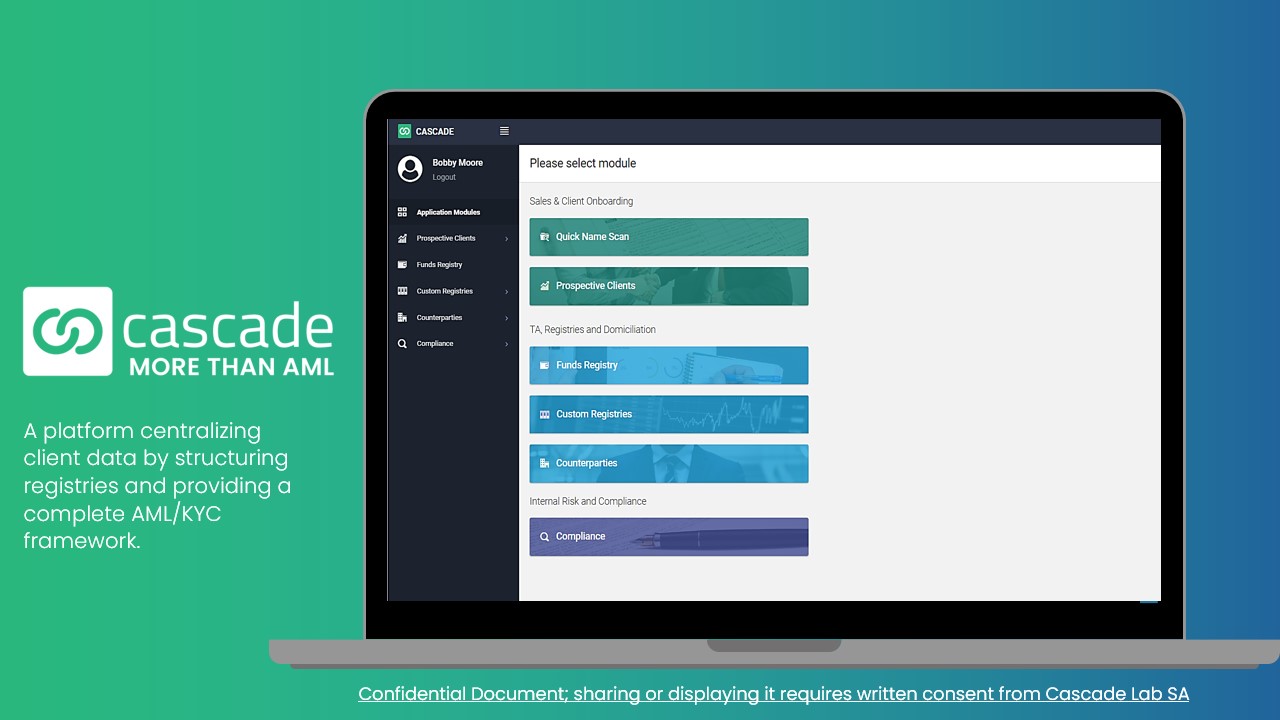
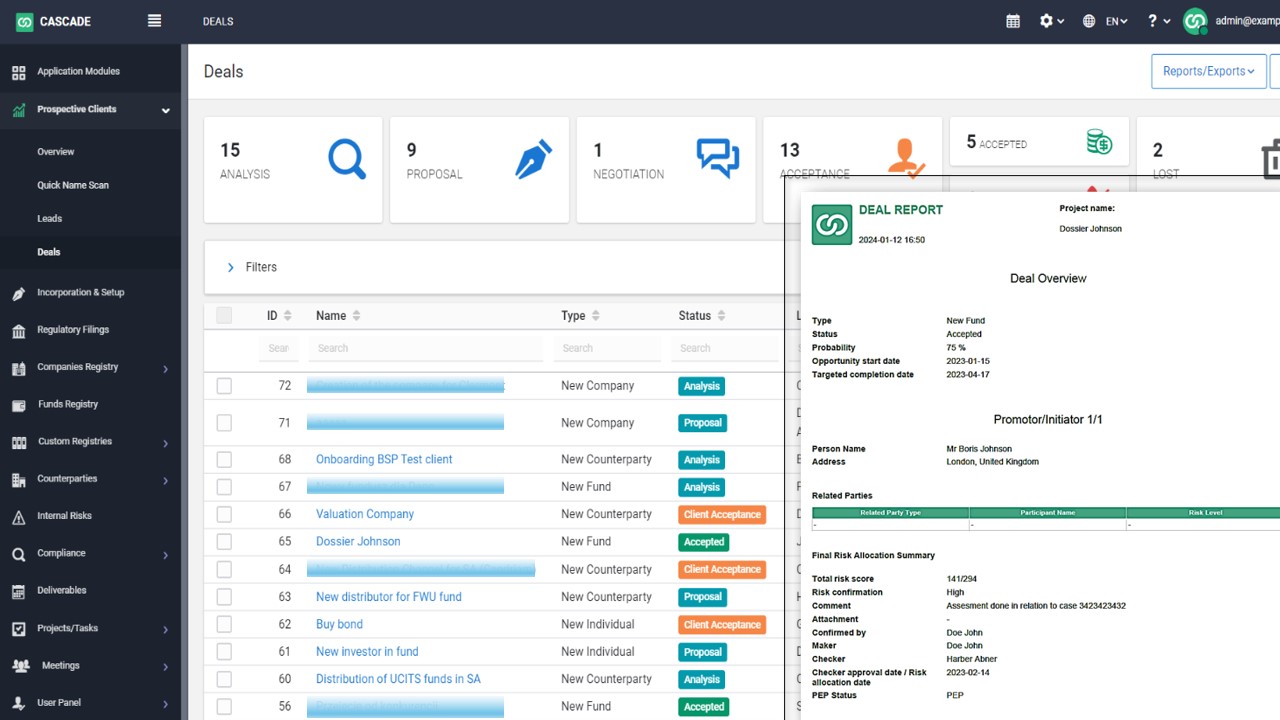
Cascade supports systematic incident response by centralizing incident documentation, automating detection and alerting, and embedding regulatory notification workflows within compliance infrastructure. To see how Cascade can operationalize incident response procedures for your fund, explore Cascade’s AML capabilities.
Disclaimer
This article is for general information only and based on publicly available sources and Central Bank guidance at the time of writing. We have made our best effort to ensure accuracy and relevance to Irish fund AML compliance and data protection obligations, but Central Bank regulations, data protection requirements, and business circumstances can change. Cascade does not provide legal or compliance advice. Use of the Cascade platform does not guarantee regulatory compliance or data security. Always verify key details against current Central Bank publications, GDPR requirements, and consult with qualified legal and data protection advisors before making compliance or vendor decisions.


 English
 English (Australia)
 English (UK)