How to build AML data quality controls that prevent compliance drift
Irish financial institutions maintain customer data across multiple systems, core banking platforms, compliance databases, customer relationship management systems, and regulatory reporting tools. Yet data inconsistencies are inevitable. A customer’s beneficial ownership status may be current in one system but stale in another; screening results may not synchronize across platforms; transaction monitoring thresholds may be applied inconsistently by different business units. The Central Bank of Ireland expects firms to implement data quality controls ensuring that AML-critical data remains accurate, current, and consistent across all systems.
Without systematic data quality controls, compliance teams discover data gaps only when problems escalate. A customer is approved despite being on a sanctions list because screening data wasn’t synchronized; beneficial ownership verification is missed because customer records show conflicting status. Data quality controls prevent these operational failures by systematically validating data integrity and identifying inconsistencies before they create compliance risks.
This guide walks you through building data quality controls that maintain data accuracy while detecting anomalies early.
Data quality as a compliance control
The Central Bank of Ireland’s AML/CFT Supervision framework establishes that firms must maintain systems and controls ensuring data accuracy and integrity. AML data quality is not an IT problem; it is a compliance control that prevents money laundering and terrorist financing risks from slipping through due to data errors.
Yet compliance teams often treat data quality as an operational afterthought. System administrators manage data independently from compliance; discrepancies are discovered through manual audits months after they occur; root causes are rarely investigated. When the Central Bank examines data integrity during on-site inspections, it identifies systemic gaps in data quality monitoring and documents these as control deficiencies.
A systematic data quality framework embeds validation controls into daily operations. Data is validated automatically as it enters systems; inconsistencies are flagged immediately; root causes are investigated and remediated. Your institution demonstrates that AML-critical data is managed with the rigor regulators expect.
What are AML data quality controls?
AML data quality controls are automated and manual procedures that validate the accuracy, completeness, and consistency of customer data, screening results, risk assessments, and monitoring information across all systems. Controls detect data entry errors, missing information, inconsistent values across systems, and outdated information. When anomalies are detected, escalation procedures ensure they are investigated and resolved.
Core data quality controls include:
- Customer identity validation: Verify that customer name, date of birth, address, and identification numbers match across all systems
- Beneficial ownership data consistency: Ensure beneficial ownership information recorded in customer database matches beneficial ownership documentation and verification records
- Screening result synchronization: Verify that screening results from primary screening system are reflected in customer risk profiles and transaction monitoring systems
- Risk assessment consistency: Ensure customer risk categories are applied uniformly across business units
- Monitoring threshold validation: Verify that transaction monitoring thresholds are configured correctly by customer risk category
- Beneficial ownership update timeliness: Monitor whether beneficial ownership has been updated within required timeframes
- Data completeness checks: Identify customers with incomplete data (missing beneficial ownership, missing risk assessment, missing screening results)
Why data quality controls matter for Irish firms
Irish financial institutions face three regulatory pressures that data quality controls address:
Regulatory examination readiness
The Central Bank samples customer files and validates data accuracy during examinations. If data is inconsistent across systems or incomplete, the Central Bank documents control deficiencies. Data quality controls demonstrate that customer data is managed systematically.
Operational risk
Data inconsistencies create operational failures. A customer may be approved for a transaction despite being on a sanctions list because screening data wasn’t synchronized. Risk assessments may be applied inconsistently because beneficial ownership information differs across systems. Data quality controls prevent these failures.
Transaction monitoring effectiveness
Transaction monitoring depends on accurate customer data. If transaction monitoring thresholds are not synchronized with customer risk assessments, monitoring will not effectively detect suspicious activity. Data quality controls ensure monitoring operates as designed.
Central Bank data quality expectations
The Central Bank establishes explicit data quality expectations:
The AML/CFT Regulations require that firms maintain systems and controls ensuring customer due diligence information is accurate and current.
The Central Bank’s AML/CFT Supervision Manual specifies that firms must implement data quality assurance procedures.
Your data quality framework is the documentary evidence that you maintain accurate, reliable AML data.
Building your data quality controls: Four-step framework
Step 1: Define AML-critical data elements
Identify which customer data elements are essential for AML compliance and require quality validation:
- Customer identity (name, date of birth, address, identification number)
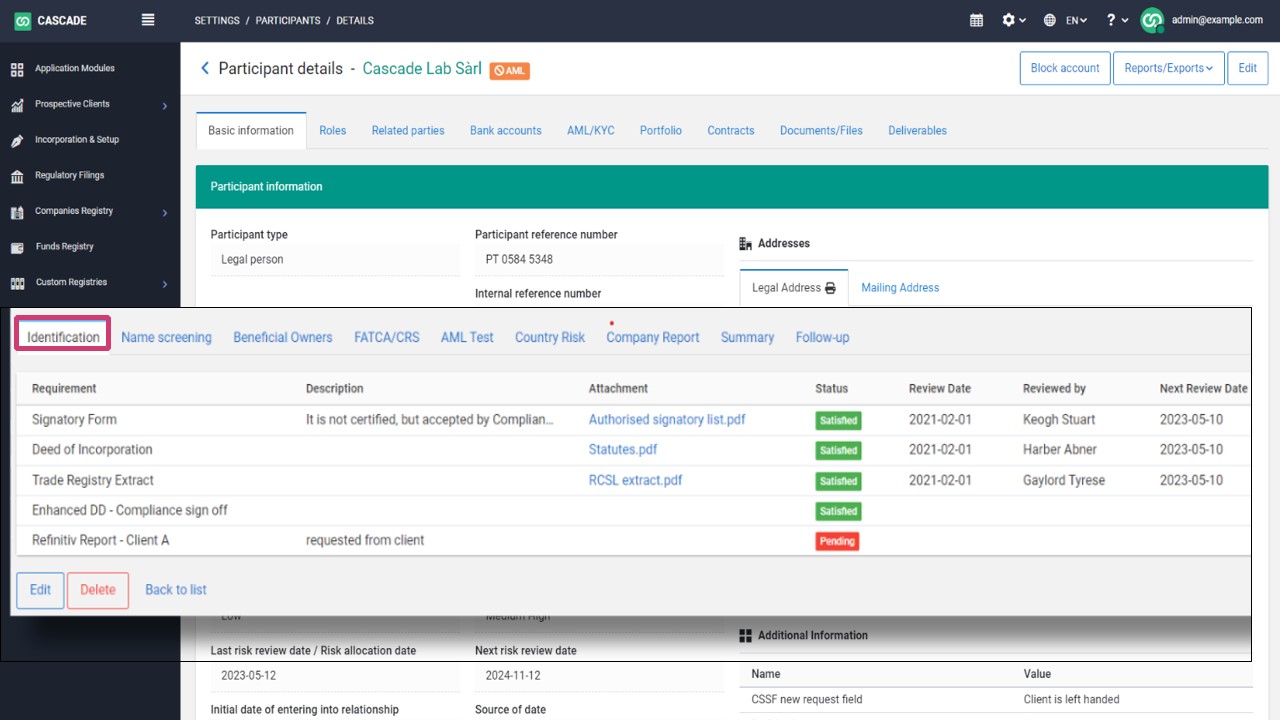
- Beneficial ownership information (identification, verification status, verification date)
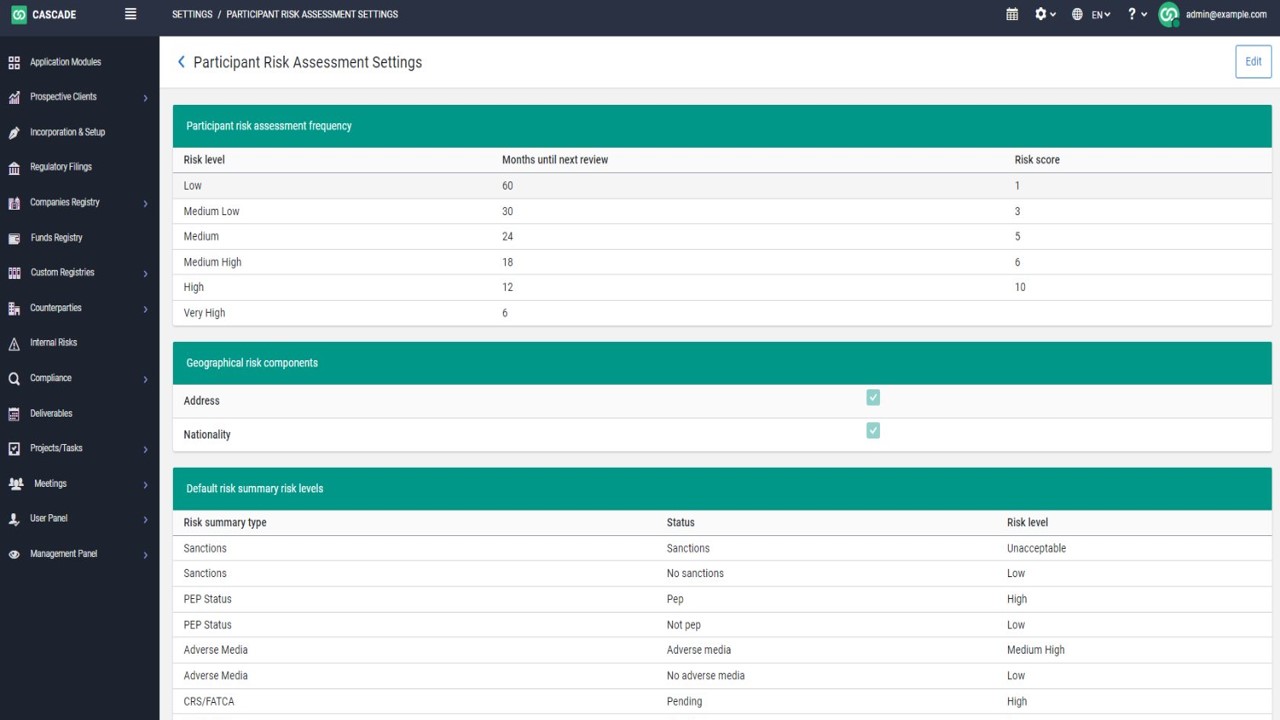
- Risk assessment (risk category, assessment date, assessment rationale)
- Screening status (screening date, screening source, results, match status)
- Monitoring configuration (transaction thresholds, monitoring frequency, monitoring start date)
- Compliance history (prior findings, regulatory escalations, termination status)
For each data element, define the authoritative source system (which system holds the primary record) and identify systems that should be synchronized with the primary record.
Step 2: Configure automated data validation checks
Implement automated validations that occur when data is entered or updated:
- Format validation: Ensure data format is correct (date fields contain valid dates, identification numbers are properly formatted)
- Completeness checks: Ensure required fields are populated before records can be saved
- Cross-system consistency: When a customer is updated in the primary system, verify that related systems receive the update
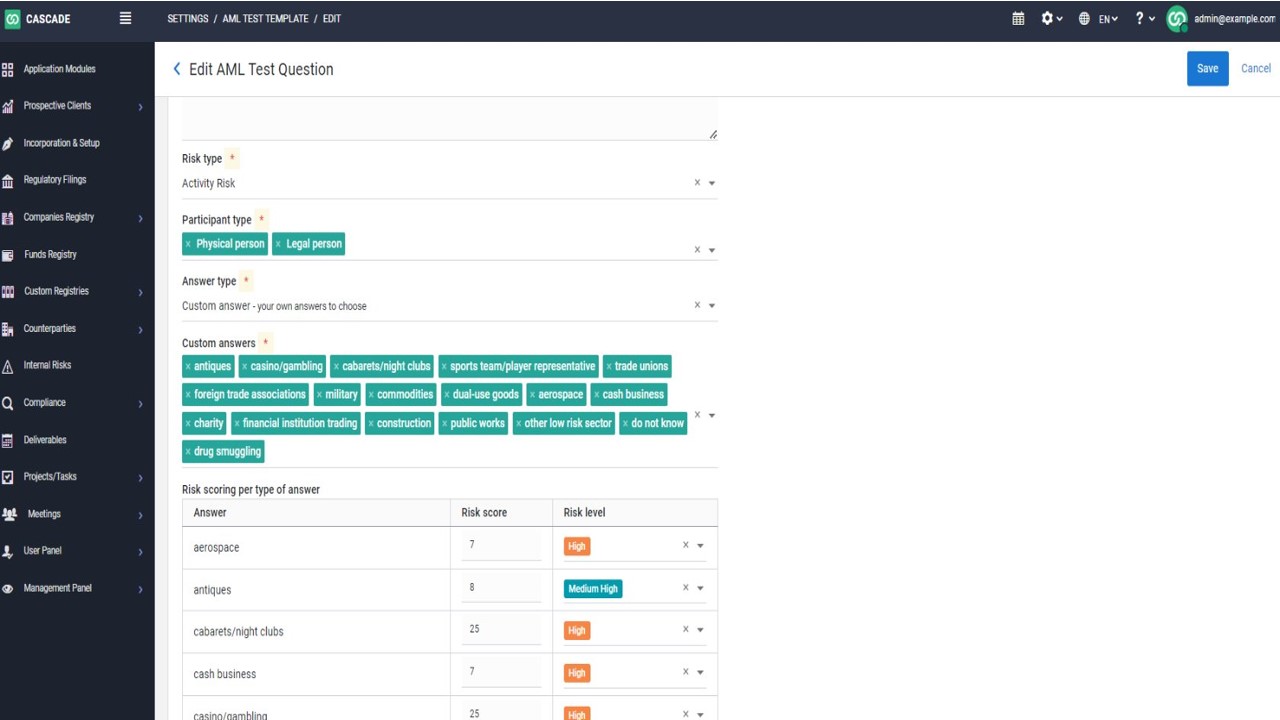
- Range validation: Ensure values fall within expected ranges (risk scores between 1-10, monitoring thresholds above zero)
- Historical consistency: Flag unusual changes (beneficial ownership changing multiple times in short period, risk assessment changing without documented rationale)
Configure alerts when validation fails so that data entry staff are notified immediately and can correct errors before they propagate.
Step 3: Establish periodic data quality audits
Implement scheduled audits to detect data gaps that automated checks may miss:
- Monthly data completeness audit: Sample customer records and verify all required data elements are present
- Quarterly cross-system reconciliation: Reconcile customer data across primary and secondary systems to identify synchronization gaps
- Semi-annual beneficial ownership verification audit: Verify that beneficial ownership has been updated within required timeframes
- Annual risk assessment review: Sample risk assessments to verify risk categorization is appropriate and consistent with assessment criteria
Document all audit findings and establish remediation procedures for identified gaps.
Step 4: Implement escalation and remediation procedures
Define how data quality issues are escalated and resolved:
- Issue logging: Record all data quality issues identified through automated checks or audits
- Root cause analysis: Investigate why issues occurred (data entry error, system synchronization failure, outdated information)
- Remediation: Correct the underlying data issue and update all affected systems
- Prevention: Implement changes to prevent recurrence (additional validation, revised procedures, staff retraining)
- Escalation: For material data quality issues affecting multiple customers, escalate to senior management and the Compliance Officer
Data quality execution: Manual audits vs. automated controls
| Data Quality Component | Manual Audit Approach | Cascade Systematic Data Validation |
|---|---|---|
| Data Entry Validation | Data entry staff input customer data manually; errors occur but are not detected immediately; incorrect data propagates to multiple systems. | Data entry is validated automatically as it occurs. Format errors, missing required fields, and inconsistent data trigger immediate alerts. Errors must be corrected before data is saved. |
| Cross-System Synchronization | Data is updated in primary system; secondary systems are updated manually or through batch processes; synchronization gaps occur; different systems show different customer information. | Data updates in primary system automatically synchronize to secondary systems. Synchronization is verified automatically; gaps are flagged immediately for investigation. |
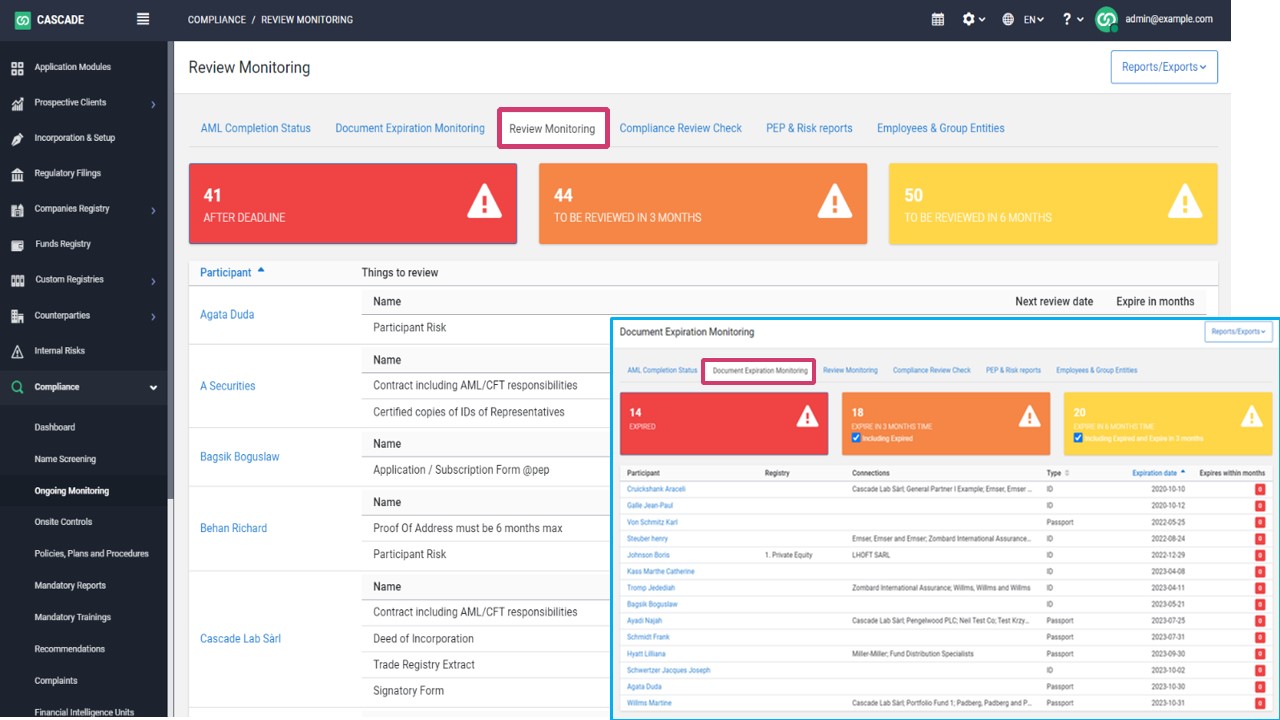
| Beneficial Ownership Timeliness | Beneficial ownership verification dates are not tracked systematically; verification deadlines are missed; you cannot easily identify which customers have outdated beneficial ownership. | Verification dates are tracked automatically. System alerts when beneficial ownership is approaching re-verification deadline. Overdue re-verifications are escalated to supervisory staff. |
| Risk Assessment Consistency | Risk assessments are assigned manually by different analysts; risk categorization inconsistency is widespread; different analysts assign different risk categories to similar customers. | Risk assessment criteria are configured once; scoring is applied consistently to all customers. Risk reassessment is triggered automatically when customer circumstances change. |
| Data Quality Auditing | Periodic manual audits discover data gaps months after they occurred; root causes are unclear; remediation is ad hoc. | Automated data quality reports are generated monthly identifying incomplete customer records, outdated beneficial ownership, and other data gaps. Issues are addressed systematically. |
Operationalizing data quality through automation
Manual data quality audits create inevitable blind spots. Data inconsistencies accumulate undetected until audits surface them, by which time, the stale data may have already affected compliance decisions. Beneficial ownership verification deadlines are missed because tracking is manual; risk assessments are inconsistent because standards are informal; customers are approved for transactions despite being on sanctions lists because screening data wasn’t synchronized across systems.
A systematic data quality framework eliminates these gaps by validating data automatically as it is entered, synchronizing data across systems in real-time, and flagging inconsistencies immediately. Monthly data quality reports identify incomplete records and trigger remediation. Cross-system reconciliation verifies that customer data is consistent everywhere it is used. Your institution demonstrates that AML-critical data is managed with rigor and that compliance controls operate as designed.
For Irish firms subject to Central Bank examination, systematic data quality controls provide the documentary evidence that customer data is accurate, current, and reliable.
Common data quality challenges and solutions
Challenge 1: Beneficial ownership data inconsistency
Beneficial ownership information differs across systems. Customer profile shows different beneficial owners than beneficial ownership documentation. Re-verification dates are unclear.
Solution: Implement a data consistency check comparing beneficial ownership recorded in customer database against beneficial ownership documentation and verification records. Flag discrepancies for investigation. Establish a single authoritative source for beneficial ownership data.
Challenge 2: Screening result synchronization failures
Screening results are not synchronized across systems. A customer may be approved for a transaction in one system despite a sanctions match recorded in the screening system.
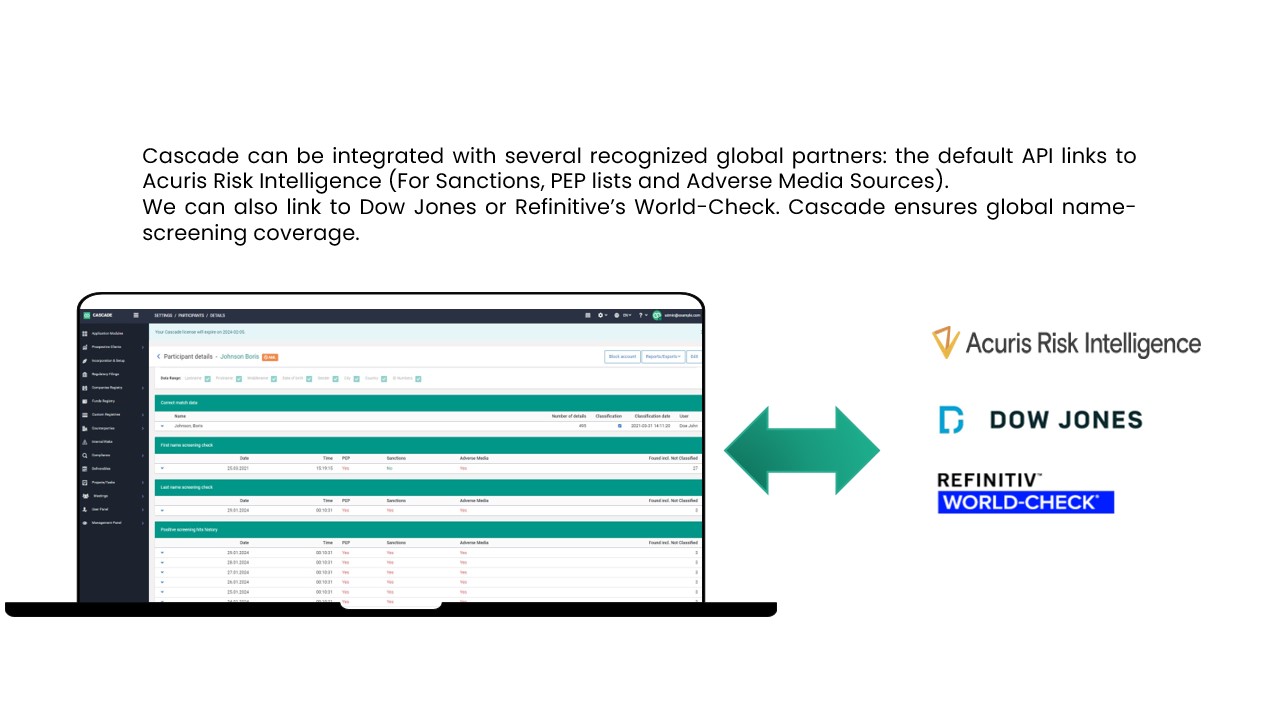
Solution: Integrate screening system directly with customer database and transaction monitoring system. When a screening result changes, all systems are updated simultaneously. Verify synchronization through automated reconciliation reports.
Challenge 3: Risk assessment inconsistency
Different business units apply different risk assessment criteria. Similar customers receive different risk categories. Monitoring thresholds are not aligned with risk categories.
Solution: Configure risk assessment criteria once in a centralized system. Risk scoring is applied consistently. Risk categories automatically configure monitoring thresholds. Verify consistency through monthly reports.
Challenge 4: Data completeness gaps
Customer records are missing beneficial ownership information, missing risk assessments, or missing screening results. You cannot confidently state that all customers have complete due diligence.
Solution: Implement mandatory data entry fields ensuring all required information is captured before records are saved. Conduct monthly completeness audits identifying incomplete records. Establish escalation procedures for records that remain incomplete.
Challenge 5: Outdated customer information
Customer information becomes stale. Beneficial ownership verification is not updated within required timeframes; risk assessments are not reviewed annually.
Solution: Implement automated tracking of verification dates and review dates. System alerts when updates are due. Escalate overdue updates to supervisory staff. Generate reports showing update compliance rates by business unit.
Best practices for data quality management
Define data ownership
Assign clear responsibility for maintaining accuracy of each data element. Data quality is not purely an IT function, compliance must own AML-critical data.
Validate data automatically
Implement validation rules that prevent incorrect data from entering systems. Manual validation creates errors and delays.
Synchronize data across systems
Integrate systems so that data updates in one place are reflected everywhere automatically. Avoid manual synchronization.
Monitor data quality continuously
Automated checks detect problems immediately rather than waiting for periodic audits. Real-time monitoring enables faster remediation.
Investigate root causes
When data quality issues occur, investigate why. Implement changes to prevent recurrence rather than just correcting individual data errors.
Frequently asked questions
How often should I conduct data quality audits?
Monthly data completeness audits as minimum. Quarterly cross-system reconciliation for high-risk data elements. Annual beneficial ownership and risk assessment reviews. More frequent audits are appropriate for high-risk customer populations or firms with complex systems.
What should I do if I discover data quality issues during an audit?
Log the issue with location (which customer, which system, which data element). Investigate root cause (data entry error, system synchronization failure, outdated information). Correct the data in all affected systems. Implement prevention (validation rules, procedure changes, retraining) to prevent recurrence.
What is Cascade and how does it simplify AML/KYC compliance?
Cascade is an end-to-end AML Software (SaaS Platform) that centralises client data and supports AML/KYC workflows from onboarding and risk assessment through to ongoing monitoring and reporting. It helps compliance teams standardise processes, manage documents and screening, apply risk-based workflows, and maintain an audit trail of actions and decisions.
Who can benefit from using Cascade?
Cascade supports organisations with AML/KYC obligations, including financial services firms, fintechs, wealth managers, law firms and corporate service providers.
Explore Cascade’s data quality capabilities
Irish financial institutions managing customer data across fragmented systems struggle to maintain data accuracy and consistency. Beneficial ownership information differs across platforms; screening results aren’t synchronized; risk assessments are applied inconsistently. Central Bank examinations discover data gaps and inconsistencies that should have been caught through quality controls.
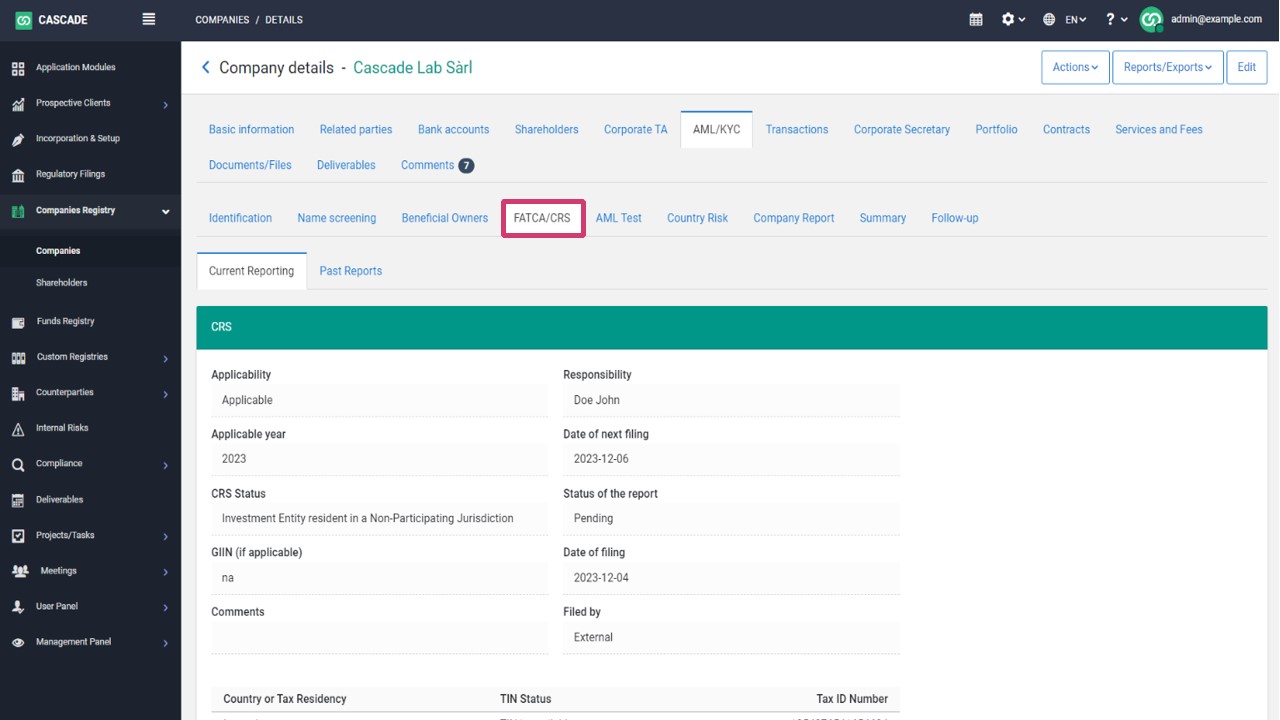
Cascade purpose-built to centralize customer data, validate data automatically as it is entered, synchronize data across systems in real-time, and generate monthly data quality reports identifying gaps. Data consistency is maintained systematically. Beneficial ownership verification dates are tracked automatically. Risk assessments are applied uniformly. Your institution demonstrates to the Central Bank that AML-critical data is managed with rigor and compliance controls operate as designed.
To see how Cascade operationalizes your data quality controls, explore Cascade’s AML capabilities.
Disclaimer
This article is for general information only and based on publicly available sources at the time of writing. We have made our best effort to ensure accuracy and relevance to Irish AML compliance, but Central Bank regulations and business requirements can change. Always verify key details against current Central Bank publications and consult with a qualified compliance specialist before making compliance decisions.


 English
 English (Australia)
 English (UK)