How to build an AML operating model that aligns compliance across fund operations
Fund administrators manage complex investment portfolios across multiple funds, each with distinct AML/KYC requirements. Yet compliance teams often implement AML procedures inconsistently across funds because roles, responsibilities, and decision criteria are not clearly defined. Investors receive inconsistent treatment depending on which administrator team processes their relationship. When regulators examine compliance, they discover that operating procedures differ across funds and some funds lack adequate AML controls.
An AML operating model establishes the standardized procedures, roles, responsibilities, and decision criteria that fund administrators apply consistently across all managed funds. The model ensures that AML controls function uniformly and regulators see systematic, governance-driven compliance.
This guide walks you through building an operating model that standardizes compliance while accommodating fund-specific variations.
Why AML operating models matter for fund administrators
Fund administrators serve as gatekeepers for investor onboarding, beneficial ownership verification, ongoing monitoring, and regulatory reporting. Yet complexity creates inconsistency. A UK fund may require enhanced due diligence for certain jurisdictions, while a Luxembourg fund applies different standards; an Irish fund may screen customers quarterly, while a US fund screens monthly; beneficial ownership verification may be documented differently across funds.
Regulators expect fund administrators to maintain documented operating procedures that are applied consistently across all administered funds (or document fund-specific variations and explain why they exist). When regulators examine compliance, they expect to see consistent application of procedures or documented rationale for variations.
An AML operating model provides the standardized framework that enables fund administrators to apply consistent procedures across diverse fund mandates while accommodating legitimate fund-specific requirements.
What is an AML operating model?
An AML operating model is a comprehensive framework documenting the standardized AML/KYC procedures, roles, responsibilities, decision criteria, and governance that fund administrators apply across all administered funds. The model establishes consistency while permitting fund-specific variations where justified by fund characteristics, investor base, or regulatory requirements.
A complete operating model includes:
- Operating principles: Core AML/KYC principles that apply across all funds
- Roles and responsibilities: Which personnel perform which AML functions; approval authorities; escalation procedures
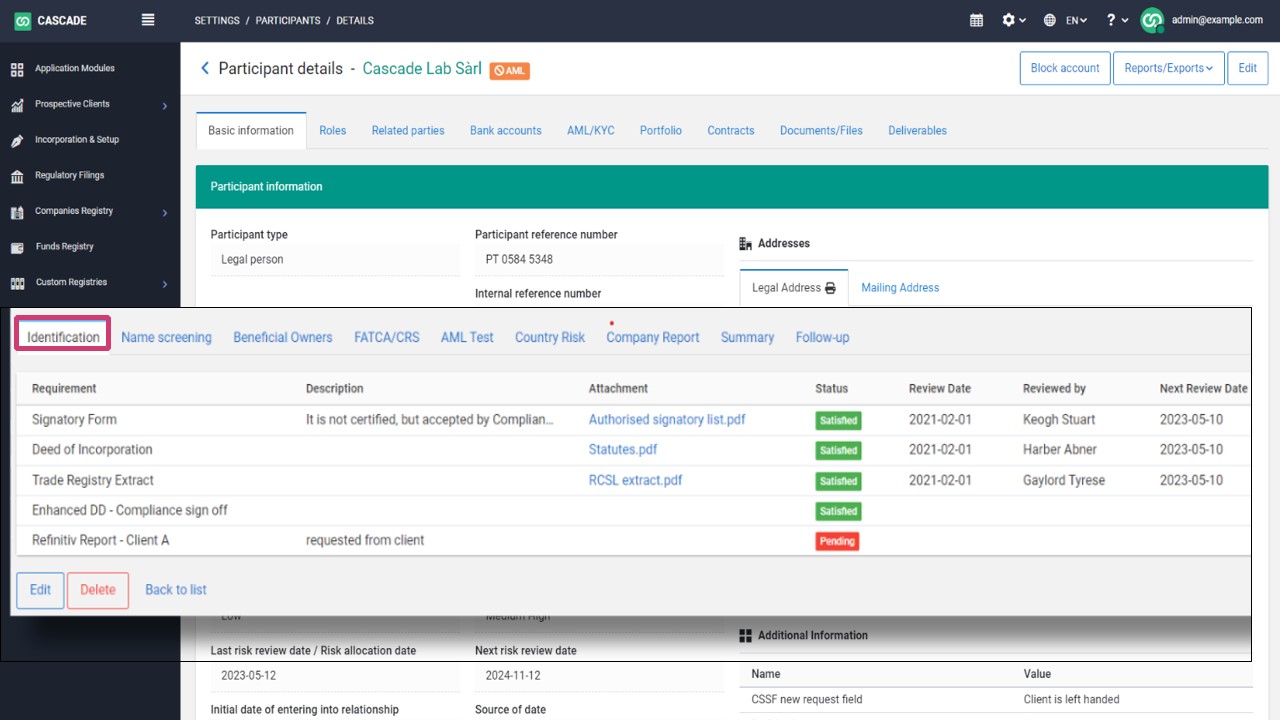
- Customer due diligence procedures: Standardized procedures for customer identification, beneficial ownership verification, source of funds assessment
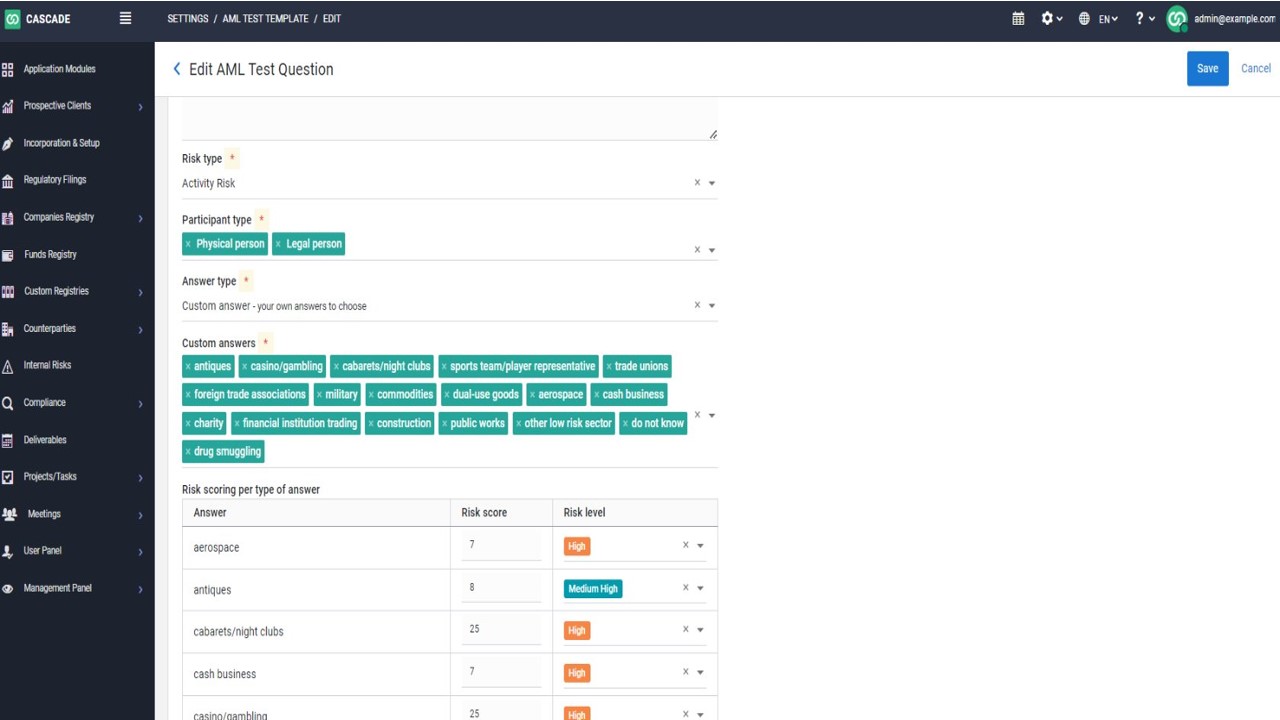
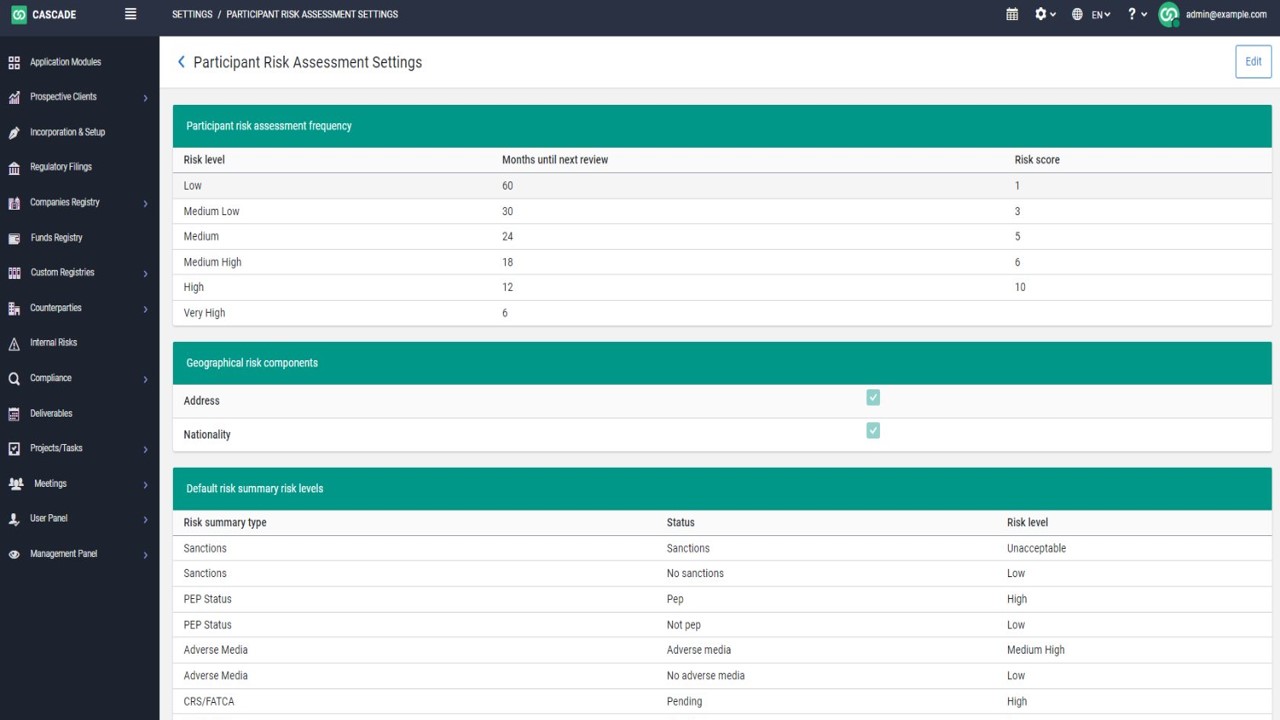
- Risk assessment methodology: Risk assessment criteria and scoring methodology applied consistently across funds
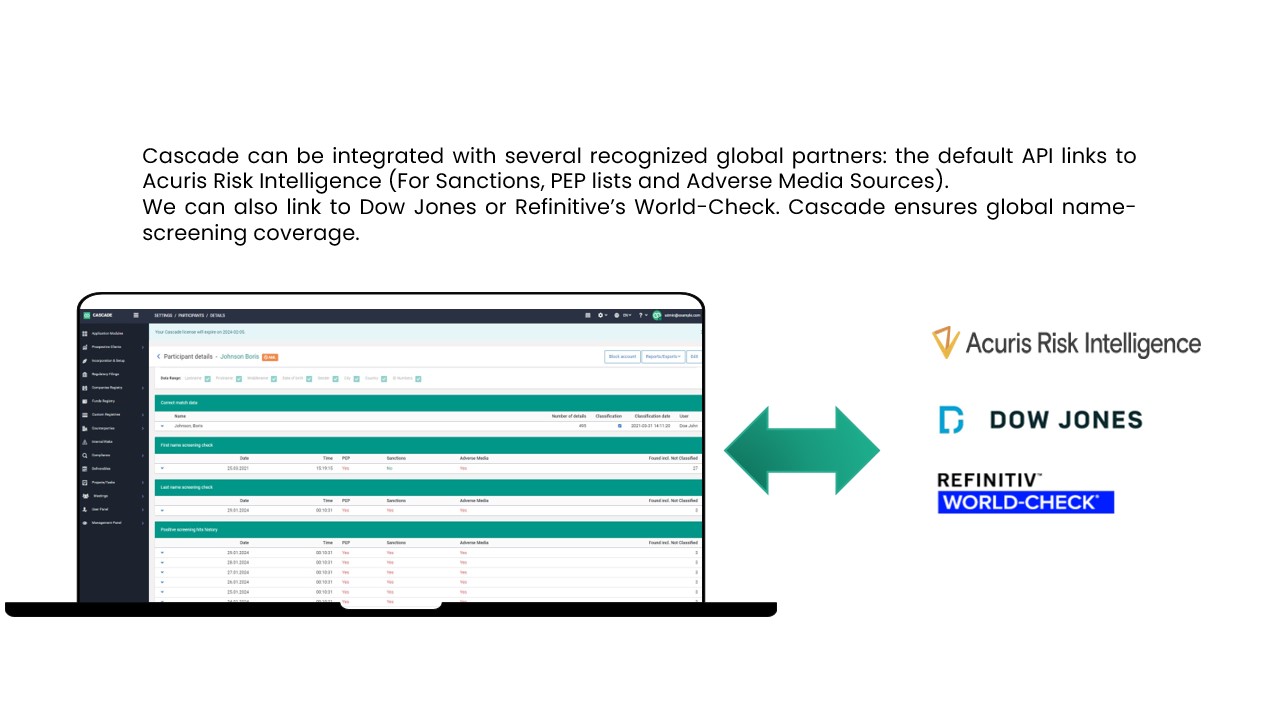
- Screening procedures: Screening data sources, screening frequency, match resolution procedures
- Transaction monitoring: Monitoring thresholds, alert investigation procedures, investigation escalation
- Ongoing monitoring: Beneficial ownership update frequency, customer review frequency, adverse media monitoring
- Exceptions and fund-specific variations: Any procedures that vary by fund, with documented rationale
- Governance and oversight: How operating model compliance is monitored and maintained
- Documentation and audit trail: How procedures are documented and audit trails are maintained
Why operating models matter for fund administrators
Fund administrators face three regulatory pressures that operating models address:
Regulatory consistency expectations
Regulators expect consistency in AML procedures across all administered funds (or documented fund-specific rationale). If procedures vary arbitrarily, regulators will document control inconsistency.
Operational efficiency
Standardized procedures enable operational efficiency. Staff trained on core procedures can operate across multiple funds. Variations are exceptions requiring documented rationale, not the default.
Compliance effectiveness
Consistency ensures that AML controls are reliably effective. If procedures vary inconsistently, some funds may have stronger controls than others, creating risk concentration in weaker-controlled funds.
Regulatory framework: Operating model expectations
Regulators establish operating model expectations:
Fund regulatory frameworks in the UK, Luxembourg, Ireland, and the US expect consistent AML implementation or documented fund-specific variations.
Your operating model is the documentary evidence that AML procedures are standardized and governance ensures consistency.
Building your operating model: Five-component framework
Component 1: Establish operating principles
Define core AML/KYC principles that apply across all funds:
- Risk-based approach: AML procedures and monitoring intensity are proportionate to assessed customer risk
- Beneficial ownership transparency: All legal entity customers have identified, verified beneficial ownership
- Transaction monitoring: Transaction patterns are monitored for suspicious activity consistent with customer profile
- Regulatory compliance: AML procedures comply with applicable regulations across all jurisdictions where funds operate
- Governance accountability: AML compliance is governed, monitored, and escalated to appropriate decision-makers
These principles are non-negotiable; variations require documented rationale from fund governance.
Component 2: Define roles and responsibilities
Establish who performs AML functions:
- Fund administrator compliance officer: Oversees AML operating model implementation across all administered funds
- Fund-level compliance officer: Implements operating model procedures for assigned fund, may customize within defined parameters
- Operations staff: Perform day-to-day AML functions (customer onboarding, screening, ongoing monitoring)
- Fund governance: Board or Investment Committee oversight of AML program effectiveness
- Escalation authorities: Who approves exceptions, who receives high-risk customer escalations, who receives regulatory escalations
Document approval authorities and escalation procedures clearly.
Component 3: Standardize customer due diligence procedures
Establish standardized CDD procedures applied across all funds:
- Customer identification: Government-issued identification requirements, acceptable documents, verification methods
- Beneficial ownership assessment: Criteria for identifying beneficial owners, documentation requirements, verification thresholds
- Source of funds assessment: Which customer types require source of funds verification, acceptable verification methods
- Risk assessment: Standardized risk assessment criteria (jurisdiction, business type, beneficial ownership opacity)
- Screening: Which screening sources are used, screening frequency (initial, periodic, adverse media)
Specify whether variations are permitted by fund (e.g., different beneficial ownership verification thresholds for different fund types) and document rationale.
Component 4: Define transaction monitoring and ongoing monitoring
Establish standardized monitoring procedures:
- Transaction monitoring: Standardized thresholds by customer risk category, alert investigation procedures, investigation escalation
- Beneficial ownership updates: Frequency of beneficial ownership re-verification (annually minimum, quarterly for high-risk)
- Adverse media monitoring: How adverse media is monitored, escalation procedures
- Customer review: Annual review of customer information to ensure it remains current
- Documentation: How monitoring is documented, where records are retained
Specify whether thresholds vary by fund type or transaction volume (with documented rationale).
Component 5: Establish governance and consistency monitoring
Define how operating model compliance is monitored:
- Operating model updates: Procedures for proposing changes to operating model, approval authorities, communication of changes
- Compliance testing: Procedures for testing whether operating model is being followed (file sampling, control testing, metrics tracking)
- Fund-specific variations: Procedures for requesting fund-specific variations from operating model, approval process, documentation
- Escalation procedures: How control deficiencies or compliance issues are escalated
- Audit and reporting: Periodic audit of operating model compliance, reporting to governance
Operating model architecture: Inconsistent vs. documented framework
| Operating Model Component | Ad Hoc Procedures Approach | Cascade Documented Operating Model |
|---|---|---|
| Procedure Standardization | AML procedures are documented separately for each fund; different funds apply different procedures for similar transactions; consistency is accidental. | Standardized AML procedures are documented in centralized operating model. All funds apply consistent procedures. Fund-specific variations are documented with rationale. |
| Customer Due Diligence | CDD requirements differ by fund; beneficial ownership verification thresholds vary; source of funds assessment is inconsistent. | Standardized CDD procedures applied across all funds. Risk assessment criteria are consistent. Variations are documented (e.g., different beneficial ownership verification thresholds for different fund types). |
| Risk Assessment | Risk assessment criteria are informally defined; different fund staff apply criteria inconsistently; similar customers receive different risk ratings in different funds. | Standardized risk assessment methodology applied across all funds. Risk criteria are documented. Risk scoring is consistent. Variations are justified by documented fund characteristics. |
| Screening And Monitoring | Screening frequency differs by fund; transaction monitoring thresholds are inconsistent; some funds conduct robust ongoing monitoring while others do minimal monitoring. | Standardized screening procedures and transaction monitoring thresholds applied across all funds. Monitoring frequency is consistent. Fund-specific variations are documented with rationale. |
| Governance And Compliance Monitoring | Operating model compliance is not systematically monitored; control deficiencies are discovered through audit; no procedures exist for proposing operating model updates. | Operating model compliance is tested regularly. Variations are tracked and validated. Changes to operating model are formally approved. Compliance testing results are documented. |
Operationalizing the operating model through documentation
Ad hoc fund-specific procedures create inconsistency. Different funds apply different AML procedures; similar customers receive different treatment depending on which fund processes their relationship; beneficial ownership verification standards differ across funds without documented rationale. When regulators examine compliance, they discover inconsistent procedures and question why controls vary across funds.
A documented operating model embeds consistency by establishing standardized procedures applied across all funds. Fund-specific variations are exceptions requiring documented rationale and approval. Operating model compliance is tested regularly ensuring procedures are actually being applied. Governance oversight ensures the operating model remains current as regulations change. Regulators see evidence of systematic, consistent AML governance across all administered funds.
For fund administrators serving multiple funds, a documented operating model provides the evidence of systematic compliance governance that regulators expect.
Common operating model challenges
Challenge 1: Procedures differ across funds without rationale
Different funds apply different AML procedures; it is unclear why procedures vary. Regulators question inconsistency.
Solution: Document a standardized operating model applicable to all funds. For any fund-specific variations, document the rationale (fund characteristics, investor base, regulatory requirements). Obtain approval for variations from fund governance.
Challenge 2: Risk assessment inconsistency
Similar customers receive different risk ratings in different funds. Monitoring intensity varies without documented rationale.
Solution: Establish standardized risk assessment methodology applied across all funds. Risk criteria and scoring are consistent. Variations by fund (if any) are documented and approved.
Challenge 3: Operating model compliance not monitored
Operating model exists but compliance with the model is not systematically monitored. Procedures are not actually being applied as documented.
Solution: Implement monthly compliance testing where sample files are reviewed to verify procedures are being applied. Document testing results. Escalate control deficiencies to governance.
Challenge 4: Operating model not updated when regulations change
Operating model becomes outdated as regulations change. Procedures described in the model are no longer compliant.
Solution: Establish procedures for updating operating model when regulations change. Changes are approved by governance. Staff are trained on updated procedures. Operating model version control ensures everyone is working from current procedures.
Challenge 5: Fund-specific variations not documented
Some funds claim unique circumstances justify different procedures; rationale is not documented. Governance cannot assess whether variations are appropriate.
Solution: Establish a formal process for requesting fund-specific variations from operating model. Variations require documented rationale and governance approval. Retain documentation of approved variations.
Best practices for operating model development
Start with principles
Establish core AML/KYC principles that are non-negotiable across all funds. Variations should be exceptions, not defaults.
Standardize core procedures
Customer identification, beneficial ownership verification, risk assessment, and screening procedures should be standardized across funds. Limited variations with documented rationale are acceptable.
Establish clear roles
Define who performs AML functions, who approves decisions, who receives escalations. Clarity prevents confusion and ensures accountability.
Document variations formally
If fund-specific variations are permitted, document them formally with approved rationale. Do not permit ad hoc variations.
Test compliance regularly
Monitor whether operating model is actually being followed. Sample files monthly to verify procedures are applied as documented.
Govern updates formally
When operating model changes, use formal approval process. Communicate changes to all staff. Require training on updated procedures.
Frequently asked questions
Should I have a separate operating model for each fund type or one consolidated model for all funds?
One consolidated operating model with standardized core procedures is preferred. Fund-specific variations should be exceptions with documented rationale and governance approval. This approach maintains consistency while accommodating legitimate fund differences.
How often should I review and update the operating model?
At minimum annually, or immediately when regulatory requirements change. When regulations change, update operating model within 30 days. More frequent reviews (quarterly or semi-annual) may be appropriate if fund products or customer base are rapidly evolving.
What is Cascade and how does it simplify AML/KYC compliance?
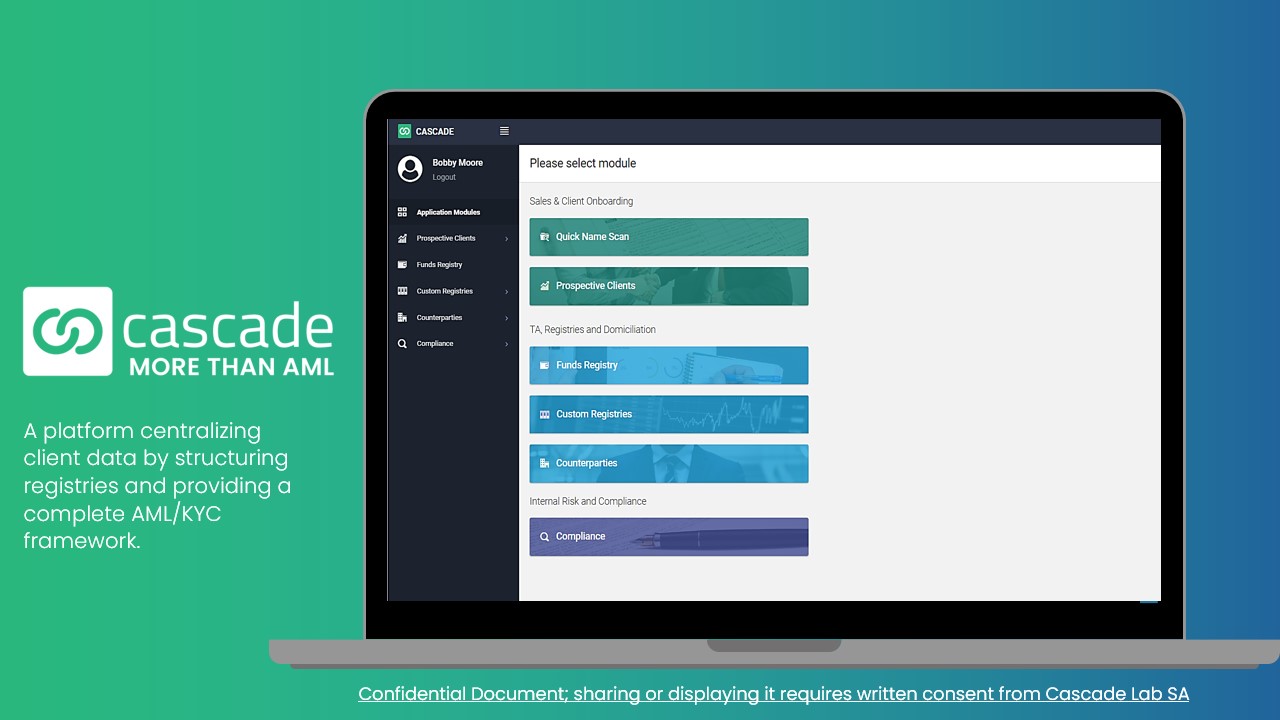
Cascade is an end-to-end AML Software (SaaS Platform) that centralises client data and supports AML/KYC workflows from onboarding and risk assessment through to ongoing monitoring and reporting. It helps compliance teams standardise processes, manage documents and screening, apply risk-based workflows, and maintain an audit trail of actions and decisions.
Who can benefit from using Cascade?
Cascade supports organisations with AML/KYC obligations, including financial services firms, fintechs, wealth managers, law firms and corporate service providers.
Explore Cascade’s operating model capabilities
Fund administrators managing multiple funds with inconsistent AML procedures struggle to demonstrate systematic compliance governance. Different funds apply different procedures; consistency is accidental; regulators cannot determine whether control variations are justified. Compliance testing discovers that procedures documented in the operating model are not actually being applied.
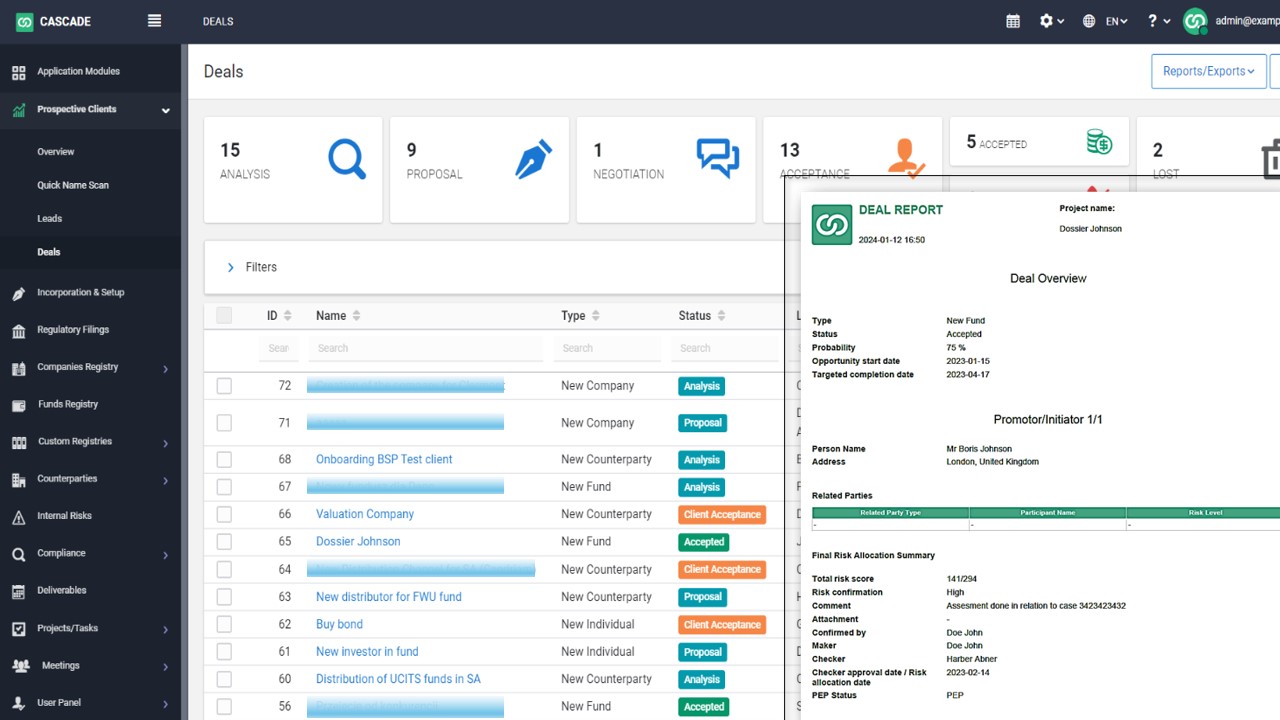
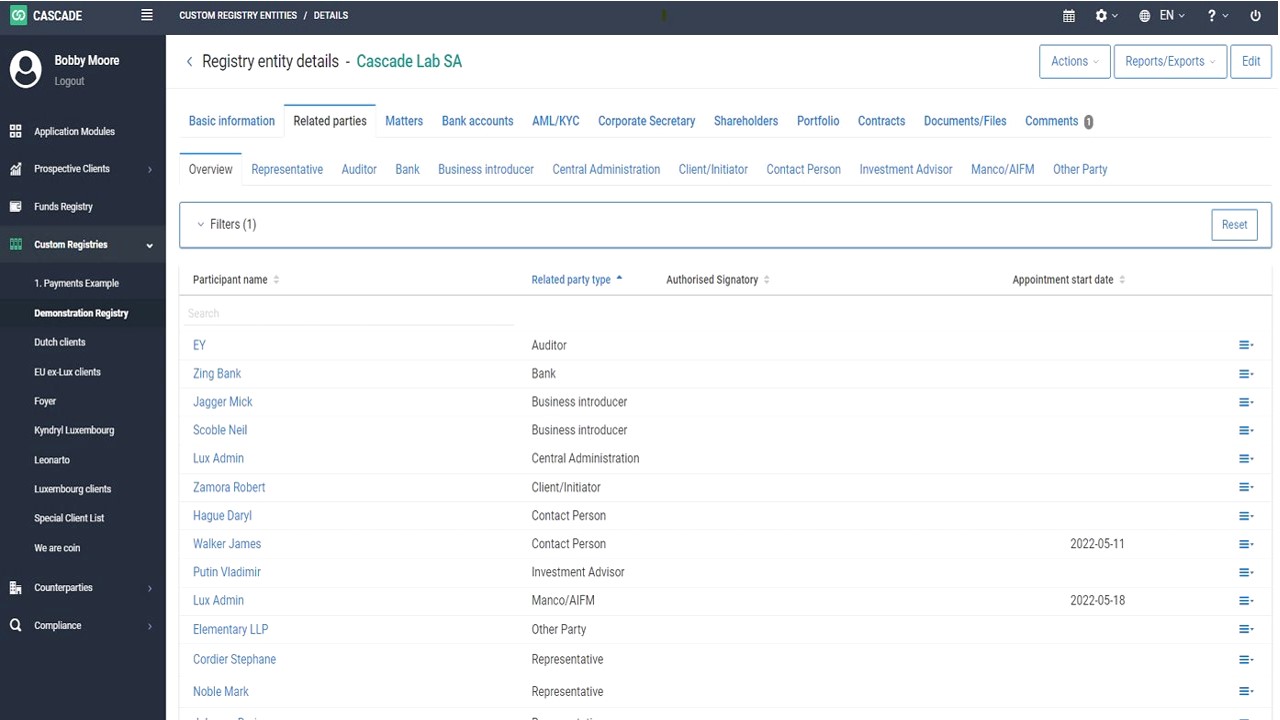
Cascade purpose-built to operationalize operating models by embedding standardized procedures across all administered funds while accommodating documented fund-specific variations. Compliance testing verifies that operating model procedures are being applied. Governance dashboards show compliance metrics by fund enabling comparison and trend analysis. Operating model updates are formally approved and communicated to all staff. Audit trails document that operating model is being followed consistently.
To see how Cascade operationalizes your fund administrator operating model, explore Cascade’s AML capabilities.
Disclaimer
This article is for general information only and based on publicly available sources at the time of writing. We have made our best effort to ensure accuracy and usefulness, but regulatory requirements can change. Always verify key details against current regulatory publications and consult with a qualified compliance specialist before finalizing your operating model.


 English
 English (Australia)
 English (UK)