The operating model trap: why software alone won’t pass your audit
Compliance teams evaluating AML solutions often fall into a critical mistake: they assume that purchasing the “right software” automatically solves their anti-money laundering obligations. In reality, an AML operating model (your policies, processes, roles, and governance structure) determines whether software delivers compliance or becomes an expensive, underutilized tool. Software is a critical enabler, while an operating model is the engine. Without both working together, neither delivers measurable risk reduction. This guide explains the distinction, reveals where buyers go wrong, and shows you how to evaluate AML platforms through the lens of operational readiness.
What is an AML operating model vs. software features?
An AML operating model comprises the end-to-end governance architecture that defines how your organization detects, investigates, and reports money laundering risk. It includes:
- Policies and procedures that specify who does what, when, and how.
- Roles and accountability (Compliance Officer, MLRO, Business Unit Leads, Analysts).
- Workflow design that maps investigation, escalation, and approval pathways.
- Documentation standards ensuring auditability and regulatory defensibility.
- Technology requirements that specify what software must do to support the model.
Software features, by contrast, are the technical capabilities you purchase: alert tuning, entity resolution, workflow management, reporting automation, audit trails, and screening. A platform may offer sophisticated features like machine learning-powered case ranking, API-driven screening, or multi-jurisdictional monitoring, but if your operating model doesn’t define how to use them, the features remain untapped.
The critical insight: Your operating model should drive your software selection, not the reverse.
Why this distinction matters for compliance teams
Regulatory authorities, whether the Financial Crimes Enforcement Network (FinCEN), the European Commission (for AML5/6 Directives), or national Financial Intelligence Units, assess compliance based on your organization’s demonstrable risk management capability. They audit:
- Documented procedures that show how AML decisions are made.
- Role clarity ensuring accountability and segregation of duties.
- Audit trails and evidence proving that monitoring and investigation actually occurred.
- Control effectiveness measured by timeliness, accuracy, and consistency.
None of these audit focal points is primarily about your software, they’re about your operating model. When regulators find deficiencies, the root cause is rarely “the software didn’t catch this.” It’s usually “the process didn’t catch this” or “we didn’t have a process for this” or “accountability was unclear.”
Software amplifies a well-designed operating model. It cannot substitute for one.
The common buyer mistake: mistaking feature richness for operating readiness
Most procurement processes fail because they invert the logic. Teams define software requirements first, “We need automated screening,” “We need workflow management,” “We need dashboards,” then build an operating model around the features they purchased.
This backward approach leads to the following:
| Mistake | Impact | Root Cause |
|---|---|---|
| Over-reliance on defaults | Alerts are tuned to vendor presets, generating false positives. Analysts ignore them. | Operating model never specified alert tuning strategy or risk appetite. |
| Feature bloat | Platform has 40 capabilities; organization uses 5. High cost, low adoption. | No operating model was designed first to clarify what’s actually needed. |
| Audit trail gaps | System logs actions, but no one reviews logs. Regulators find unaddressed findings. | Operating model didn’t define who owns audit oversight or how frequently to review. |
| Inconsistent escalation | Compliance decisions vary by analyst, jurisdiction, or time. Standards are unclear. | Operating model never documented escalation thresholds or approval authority. |
| Knowledge loss | When analysts leave, processes disappear. No documented procedures. | Operating model was never codified; it only existed in people’s heads. |
The regulatory framework: operating model as your control baseline
Global AML standards, including the Financial Action Task Force (FATF) Recommendations, EU AML Directives, and Basel Committee guidance, mandate that financial institutions establish a framework of internal controls aligned with risk. Specifically:
- FATF Recommendation 18 requires policies and procedures proportionate to risk.
- AML5 Directive (EU 2018/843) mandates risk-based approaches embedded in organizational procedures.
- KYC standards require documented customer due diligence workflows.
Regulators explicitly recognize that controls depend on organizational design, not just technology. A regulator’s examination report will state findings like “The organization lacks a documented procedure for X” or “Accountability for screening decisions is unclear,” not “The software doesn’t have feature X.”
Step-by-step: defining your operating model first
Step 1: Map Current State Risk and Jurisdictional Complexity
Audit your existing AML activities to identify which customer segments, jurisdictions, and products carry the highest risk, where manual handoffs, gaps, or bottlenecks exist today, and what your regulators expect specifically. Document this reality, as it becomes your operating model baseline.
Step 2: Define Roles, Escalation Paths, and Decision Authority
Create a RACI matrix (Responsible, Accountable, Consulted, Informed) for:
- Initial customer risk classification.
- Suspicious activity alert investigation.
- Case escalation and approval.
- Regulatory reporting.
- Audit and policy review.
Each role must have a clear decision authority and accountability. Software should enforce this clarity through workflow rules; it cannot create it.
Step 3: Design Investigation and Monitoring Workflows
Document step-by-step how your team investigates alerts: what data sources you check, what constitutes “sufficient investigation,” under what conditions you file a Suspicious Activity Report (SAR) or equivalent, and who approves filing. This workflow design determines what software features you actually need. For instance, if your workflow requires cross-checking PEP lists, sanctions data, and transactional patterns before closing an alert, you need software that surfaces all three data types in one investigation view.
Step 4: Specify Software Requirements Based on Operating Model
Only after designing your operating model, ask: “What software capabilities must I have to execute this model at scale?” Required software features might include workflow management and task assignment, entity resolution and data enrichment (API integrations for screening data), case note and audit trail logging, risk-based alert tuning and suppression rules, regulatory reporting automation, and performance metrics with SLA tracking. This specificity drives better procurement decisions and faster time-to-value post-implementation.
Operating model + software: a comparative framework
| Dimension | Operating Model Focus | Software Feature Support |
|---|---|---|
| Risk stratification | Policies defining high-risk customer/transaction profiles | Alert tuning, segmentation logic, threshold configuration |
| Investigation standards | Documented procedures for what constitutes adequate investigation | Workflow templates, mandatory fields, evidence collection |
| Escalation clarity | Defined thresholds and approvers for SAR decisions | Workflow routing rules, approval gates, audit logging |
| Timeliness | SLAs for alert resolution and reporting deadlines | Task management, deadline tracking, performance dashboards |
| Consistency | Training and periodic procedure review | Case templates, standardized note fields, decision frameworks |
The operating model is governance; the software is execution infrastructure. Both are mandatory.
Common challenges when aligning operating model and software
Challenge 1: Legacy workflows don’t fit modern software.
Your organization has always done onboarding via email and spreadsheet, but new software requires structured data input. Solution: Redesign the workflow to match the software’s data model, then retrain teams. This is an operating model update, not a software compromise.
Challenge 2: Your industry has no “standard” operating model.
Private equity, law firms, and corporate service providers each have different AML risks and regulatory expectations. Solution: Benchmark against similar-sized firms in your sector and work with your software vendor to configure workflows that match your risk profile.
Challenge 3: Analysts resist process standardization.
Staff say “My way works” or “This case is different,” and standardization feels rigid. Solution: Frame standardization as risk reduction and audit defensibility, not micromanagement. Train on the “why,” not just the “what.”
Challenge 4: Software claims to automate your operating model but requires extensive customization.
The vendor says “best practices built in,” but your deployment takes 6+ months. Solution: Recognize that “best practices” are generic and your operating model is specific. Expect customization and budget accordingly.
Best practices for procurement and deployment
✅ Define your operating model before you select software.
Write it down. Review it with your MLRO and compliance committee.
✅ Specify software requirements by workflow step.
For each documented procedure, list the software features required to execute it.
✅ Demand software configurability, not just features.
Can you customize alert thresholds, workflow routing, and reporting logic? Or are you locked into vendor defaults?
✅ Plan for change management and training. Introducing new software is often an operating model refresh. Budget time and resources for retraining.
✅ Audit the audit trail.
Ensure the software logs who did what and when. Then define who owns reviewing those logs.
✅ Periodically review alignment.
Every 12–18 months, revisit your operating model. Markets, regulations, and business risks shift. Your software should adapt to changes.
Evaluating AML platforms through an operating model lens
When you’re evaluating AML platforms, whether Cascade, LexisNexis, Dow Jones, ComplyAdvantage, or others- ask:
- Does this platform support my documented workflows?
Show the vendor your written procedures. Can they configure the software to match? - What data integrations does it support?
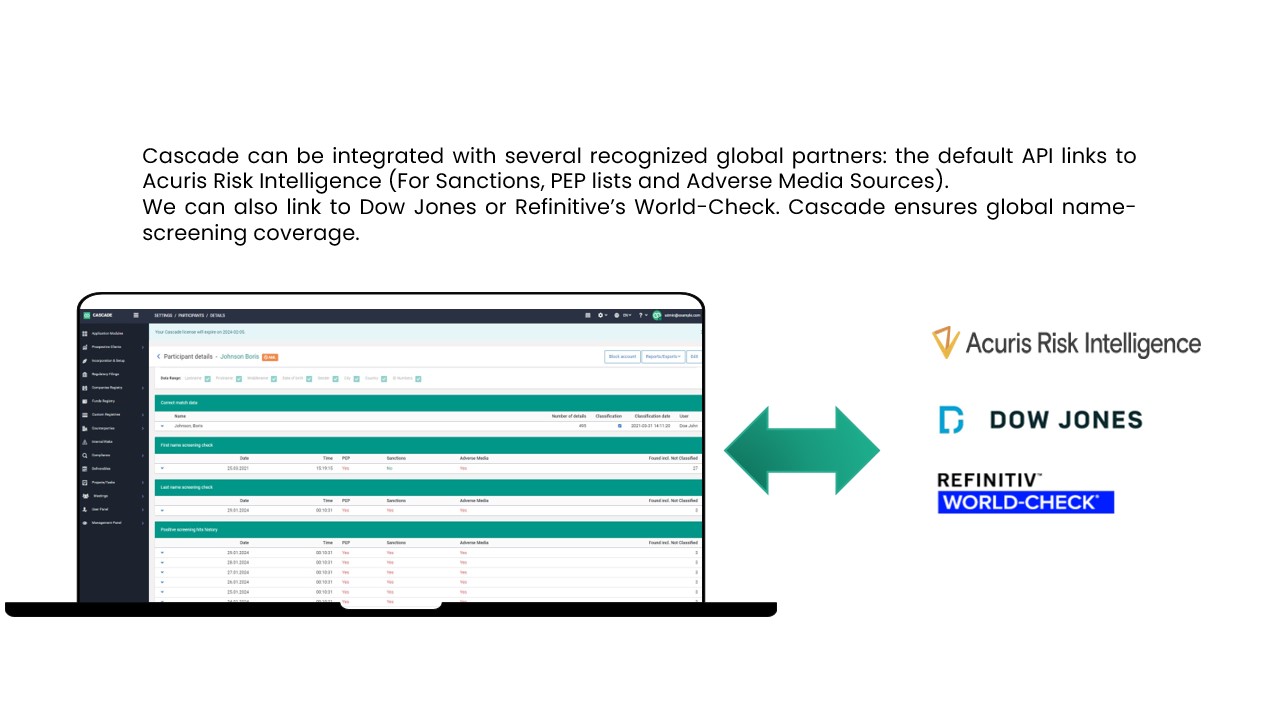
Your operating model specifies data sources (PEP lists, sanctions, transaction systems). Does the platform integrate with those sources natively or via API? - How granular is audit logging?
You need evidence of every decision. Can the software log case notes, approvals, escalations, and closures with timestamps and user IDs? - What reporting and metrics does it generate?
Your operating model likely requires SLA tracking, case volume metrics, and regulatory reporting. Does the software automate these, or will you build manual reports? - How much customization is required?
Understand implementation complexity. Custom workflows increase cost and timeline.
Frequently asked questions
What if we don’t have a documented operating model yet?
Many organizations run AML processes implicitly, relying on experienced staff. This is a compliance risk. Start by documenting current state: interview your Compliance Officer and analysts about how investigations actually happen, then formalize it into written procedures. This becomes your baseline operating model.
Can we use one AML platform across multiple jurisdictions with different regulatory requirements?
Yes, but your operating model must accommodate jurisdiction-specific rules. Configure the software to apply different alert thresholds, escalation workflows, or reporting logic by jurisdiction. This is software-level operating model variation.
How often should we update our operating model?
Review it annually, or whenever there’s a significant regulatory change, business expansion, or software upgrade. Don’t treat it as static; regulations and business risks evolve.
What is Cascade and how does it simplify AML/KYC compliance?
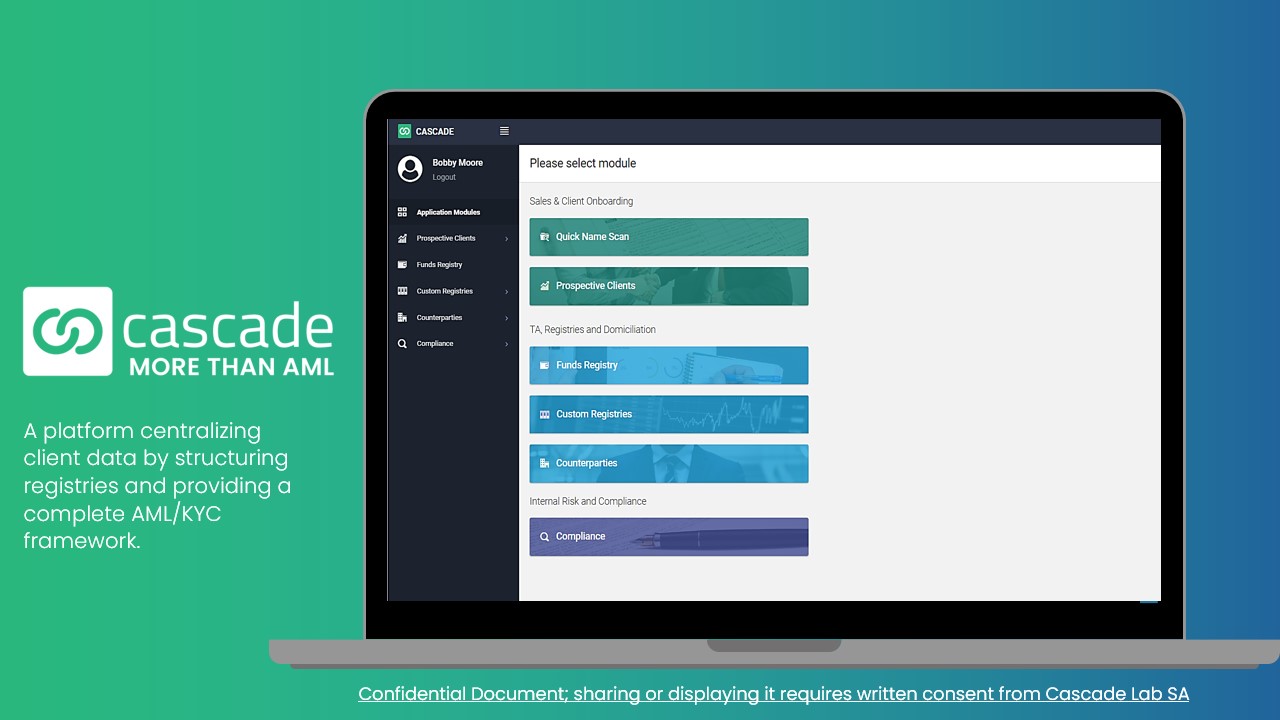
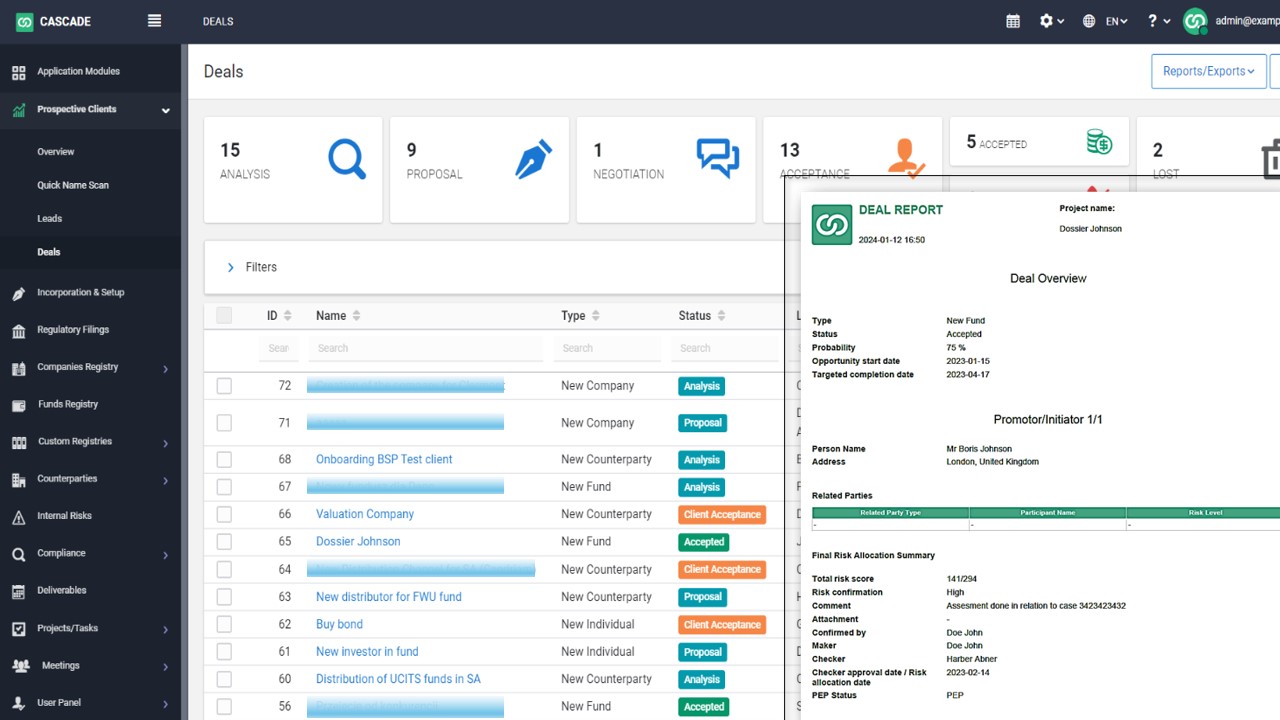
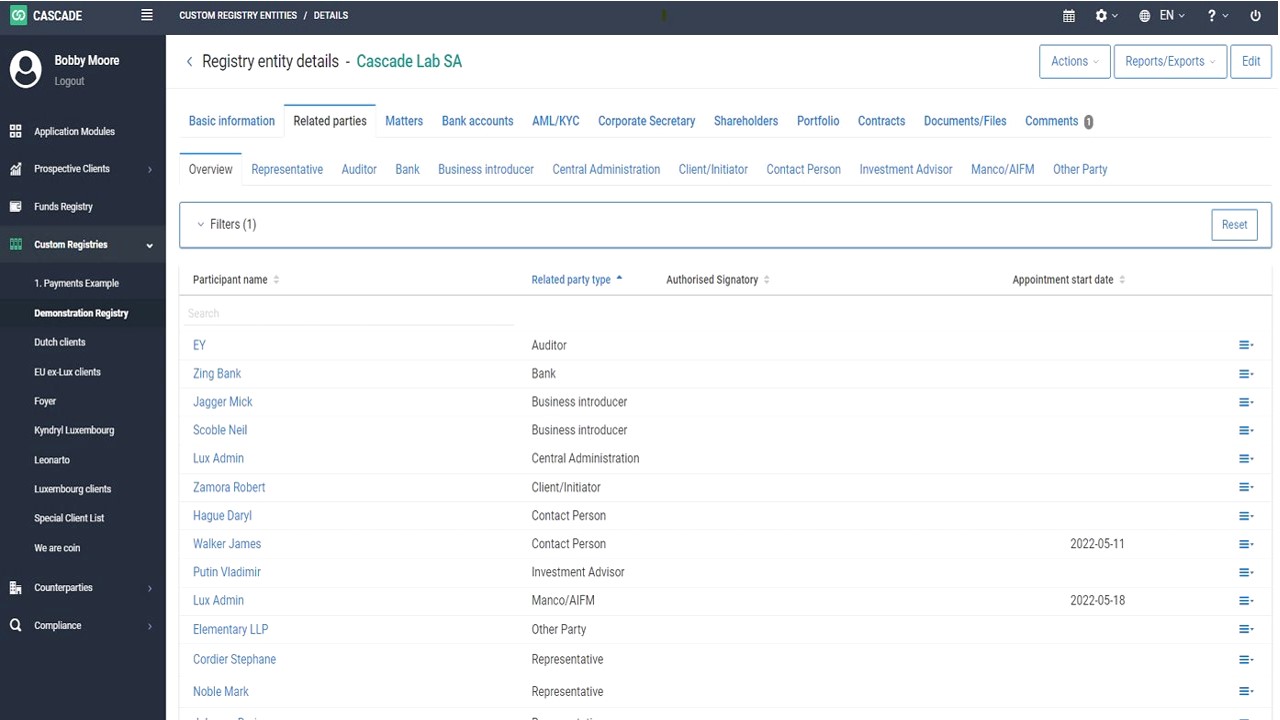
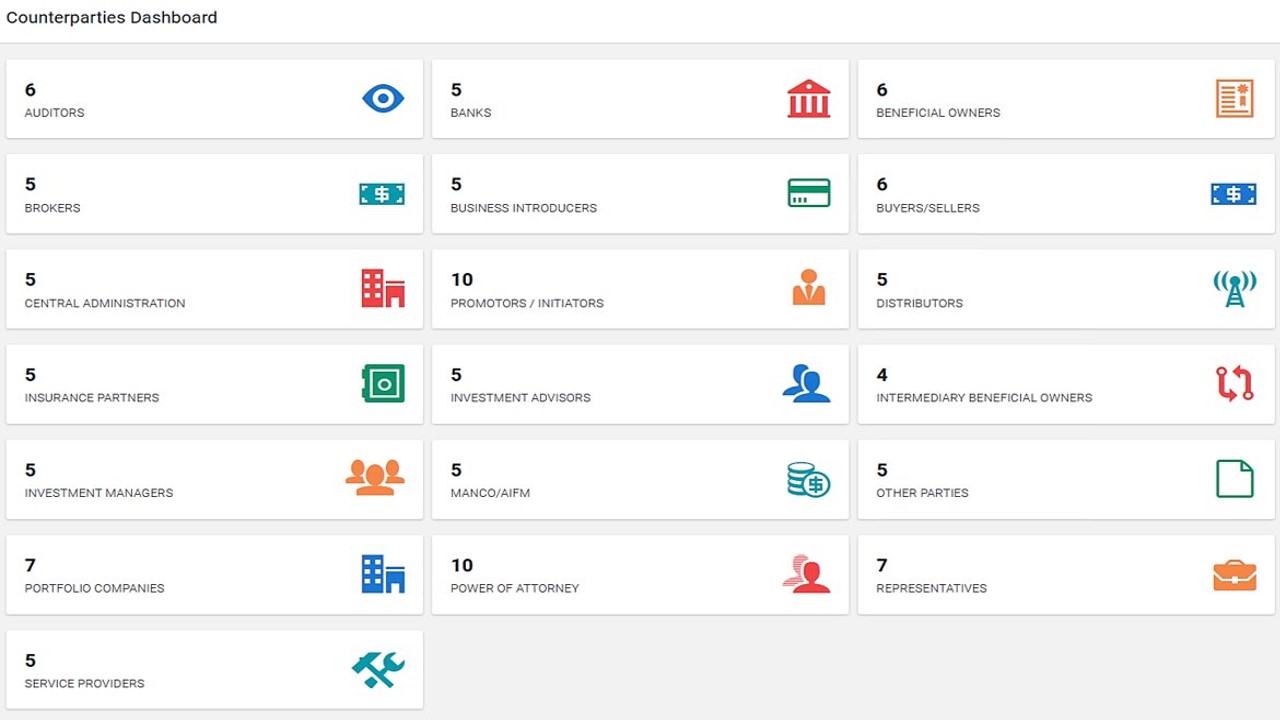
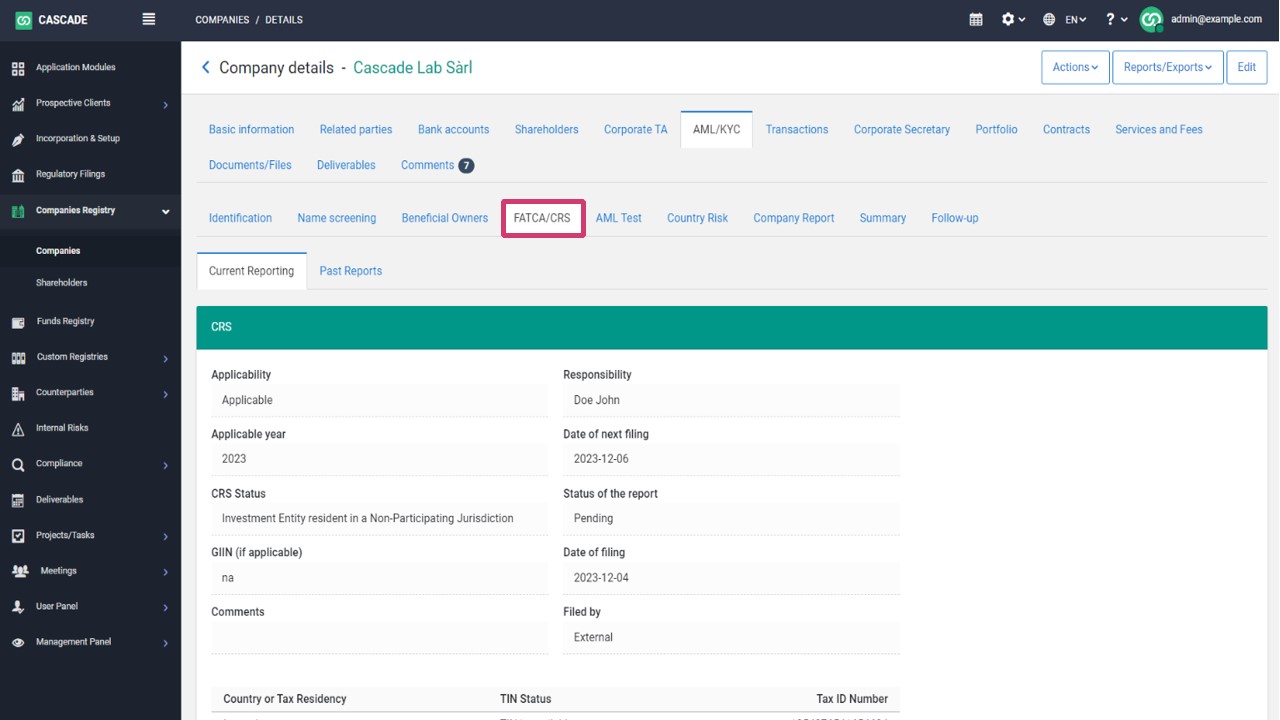
Cascade is an end-to-end AML Software (SaaS Platform) that centralizes client data and supports AML/KYC workflows from onboarding and risk assessment through to ongoing monitoring and reporting. It helps compliance teams standardize processes, manage documents and screening, apply risk-based workflows, and maintain an audit trail of actions and decisions.
Who can benefit from using Cascade?
Cascade supports organizations with AML/KYC obligations, including financial services firms, fintechs, wealth managers, law firms and corporate service providers.
How does Cascade ensure data security and regulatory compliance?
Cascade provides controlled workflows, activity logging and audit trails to support traceable AML/KYC processes. Compliance still depends on your policies, configuration and applicable regulations.
How can I get started with Cascade?
Book a demo with Cascade to discuss your AML/KYC requirements, explore the platform and identify how it can support your workflows.
Explore Cascade’s AML capabilities
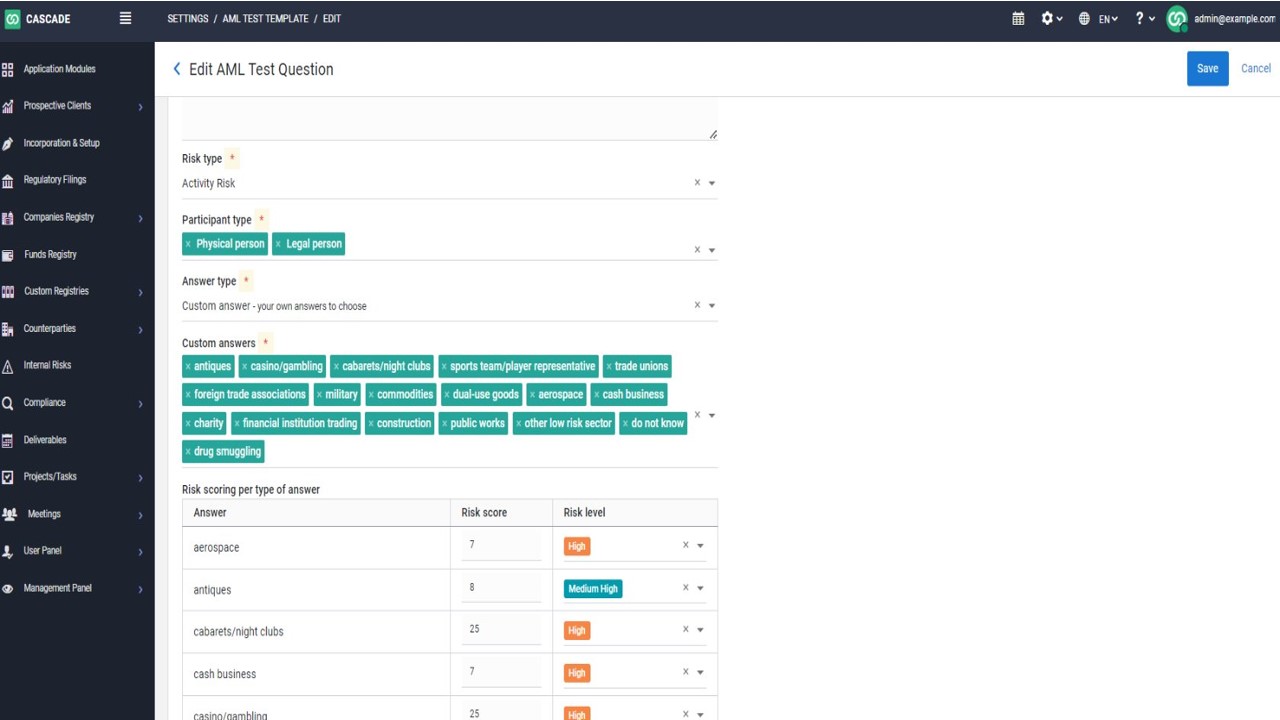
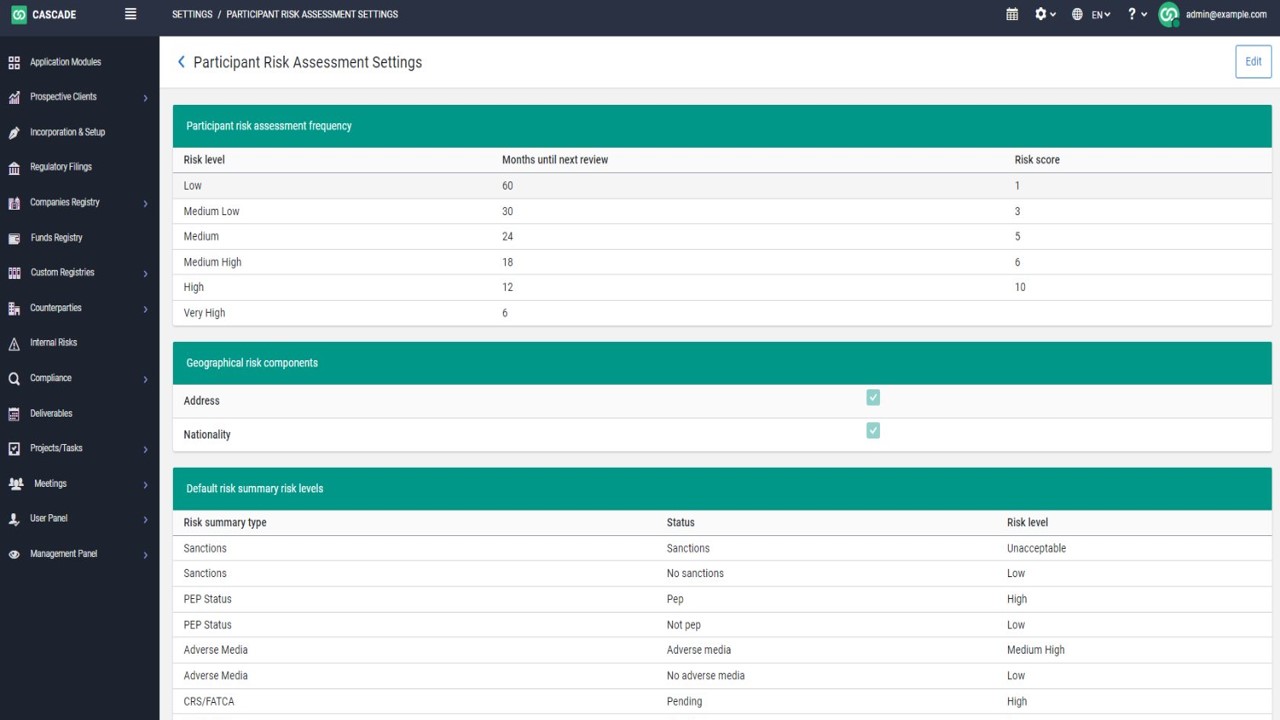
If your organization is building or refining an AML operating model, the right software partner can accelerate execution. Cascade is purpose-built to support sophisticated compliance operating models at scale. It provides:
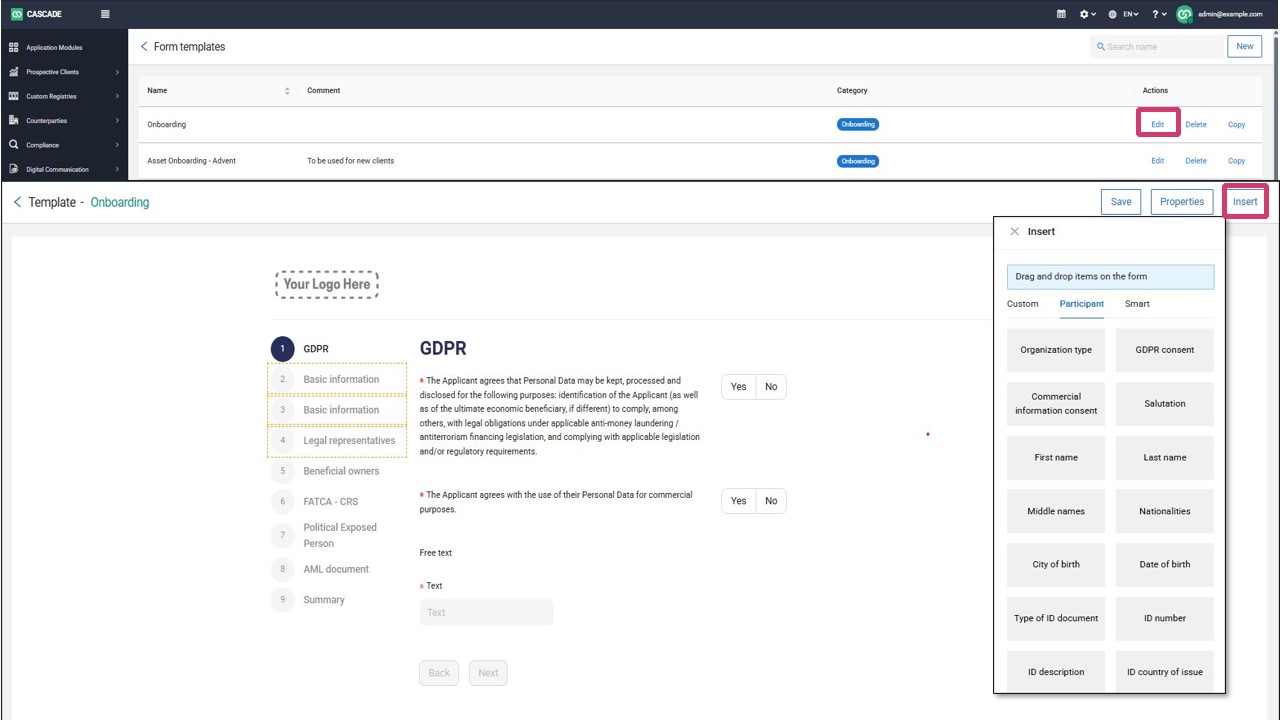
- Workflow configuration that matches your documented procedures, not the reverse
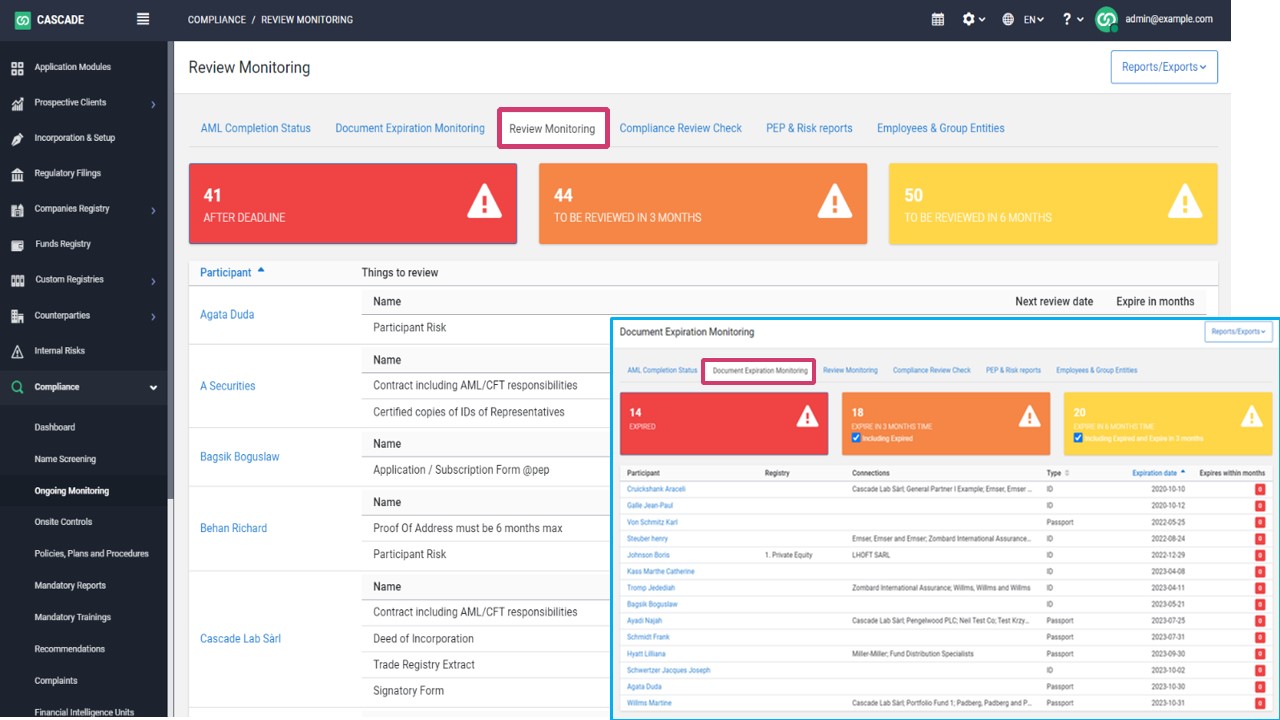
- Risk-based alert tuning and entity resolution to reduce false positives and analyst fatigue
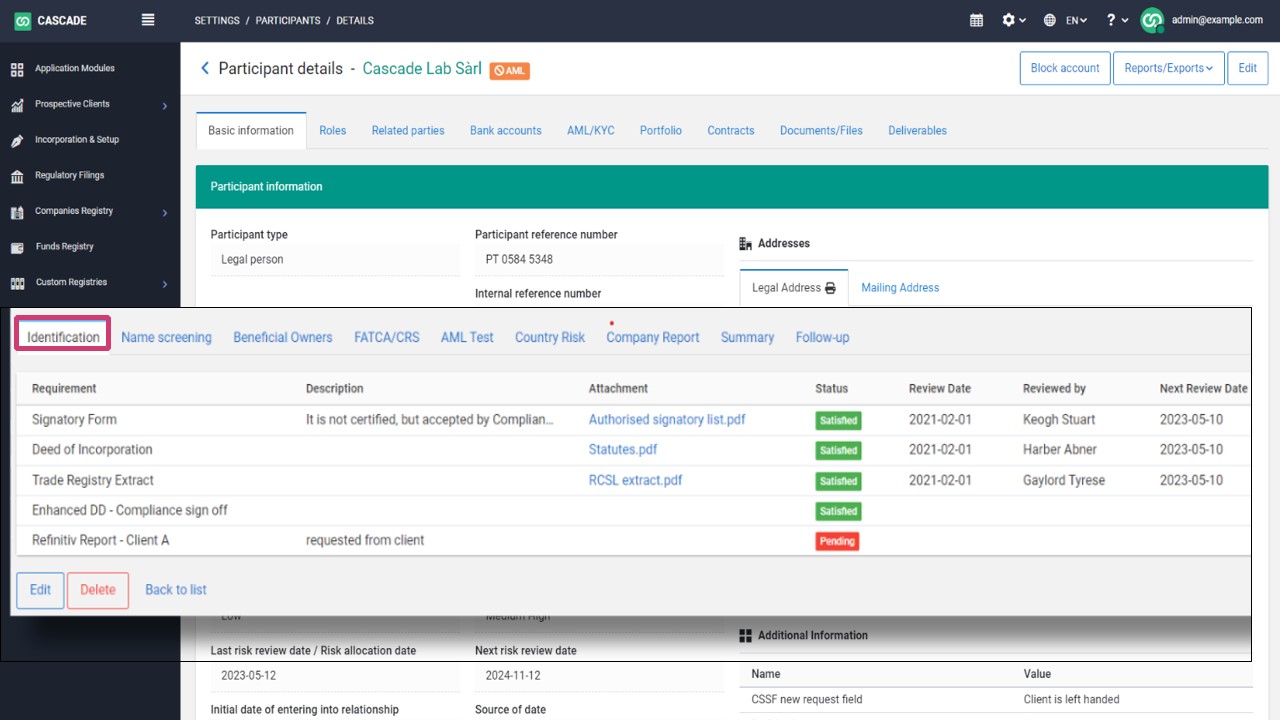
- Audit trails and case logging that generate regulatory defensibility
- Performance dashboards tracking SLAs, case volume, and reporting metrics
Explore how Cascade’s operational architecture aligns with your AML operating model. Schedule a demo to discuss your specific requirements and see how the platform can support your compliance workflows.
Disclaimer
This article is for general information only and based on publicly available sources at the time of writing. We’ve done our best to make it accurate and useful, but AML rules and business needs can change. Always double-check key details with your Compliance Officer, MLRO, or qualified legal expert before making compliance or vendor decisions.


 English
 English (Australia)
 English (UK)