How an AML system optimisation checklist for Luxembourg reduces compliance friction and audit risk
Luxembourg fund managers and financial services firms operating under CSSF oversight scatter AML workflows across disconnected systems, manual spreadsheets, and fragmented approval chains, creating redundant due diligence effort, missed screening updates, and incomplete audit trails. An AML system optimisation checklist for Luxembourg embeds documented compliance procedures into unified workflows, automates routine AML tasks, and creates timestamped evidence of control execution that meets CSSF inspection standards. Without systematic optimisation, compliance teams allocate resources to administrative repetition rather than substantive risk assessment.
What is an AML system optimisation checklist for Luxembourg?
An AML system optimisation checklist for Luxembourg is a structured assessment and implementation framework that evaluates your current AML/KYC operations against CSSF standards and best practices, identifies operational gaps and inefficiencies, and systematizes compliance workflows to eliminate manual administration. The checklist addresses client onboarding procedures, beneficial ownership verification, screening protocols, ongoing monitoring workflows, suspicious activity investigation, and audit trail management.
The framework helps Luxembourg firms operationalize risk-based AML controls proportionate to client complexity and perceived money laundering or terrorist financing risk. Optimisation means embedding compliance decisions into documented workflows, automating screening and monitoring, and creating audit-ready evidence that controls are consistently executed across your entire client base.
Why it matters for Luxembourg firms
Luxembourg financial services and fund management firms face three regulatory and operational pressures that an AML system optimisation checklist for Luxembourg directly addresses.
CSSF inspection readiness.
The Commission de Surveillance du Secteur Financier expects firms to maintain documented evidence of risk assessment, due diligence, and ongoing monitoring. Without systematic procedures, compliance teams cannot demonstrate consistent, proportionate control application during regulatory visits. An AML system optimisation checklist for Luxembourg ensures controls are documented and consistently executed.
Operational inefficiency.
Manual AML procedures create bottlenecks. Beneficial ownership verification requires manual file review; screening results are managed by email; risk assessments are informal; ongoing monitoring decisions are undocumented. Compliance officers spend time on administrative tasks rather than evaluating substantive risk. Systematic optimisation shifts resource allocation toward risk analysis.
Cross-border complexity.
Luxembourg funds often accept EU and third-country investors. Each investor may trigger different due diligence intensity based on jurisdiction, beneficial ownership opacity, and transaction patterns. Without consistent procedures, compliance intensity varies unpredictably, creating audit exposure and inconsistent risk management.
An AML system optimisation checklist for Luxembourg operationalizes CSSF expectations into documented, repeatable workflows that allocate compliance resources proportionately.
Regulatory framework for Luxembourg AML system optimisation
The CSSF Regulation 23-02 and the CSSF’s Guidelines on Money Laundering and Terrorist Financing Risk Assessment establish explicit expectations for risk-based AML system optimisation in Luxembourg firms.
Key regulatory expectations include:
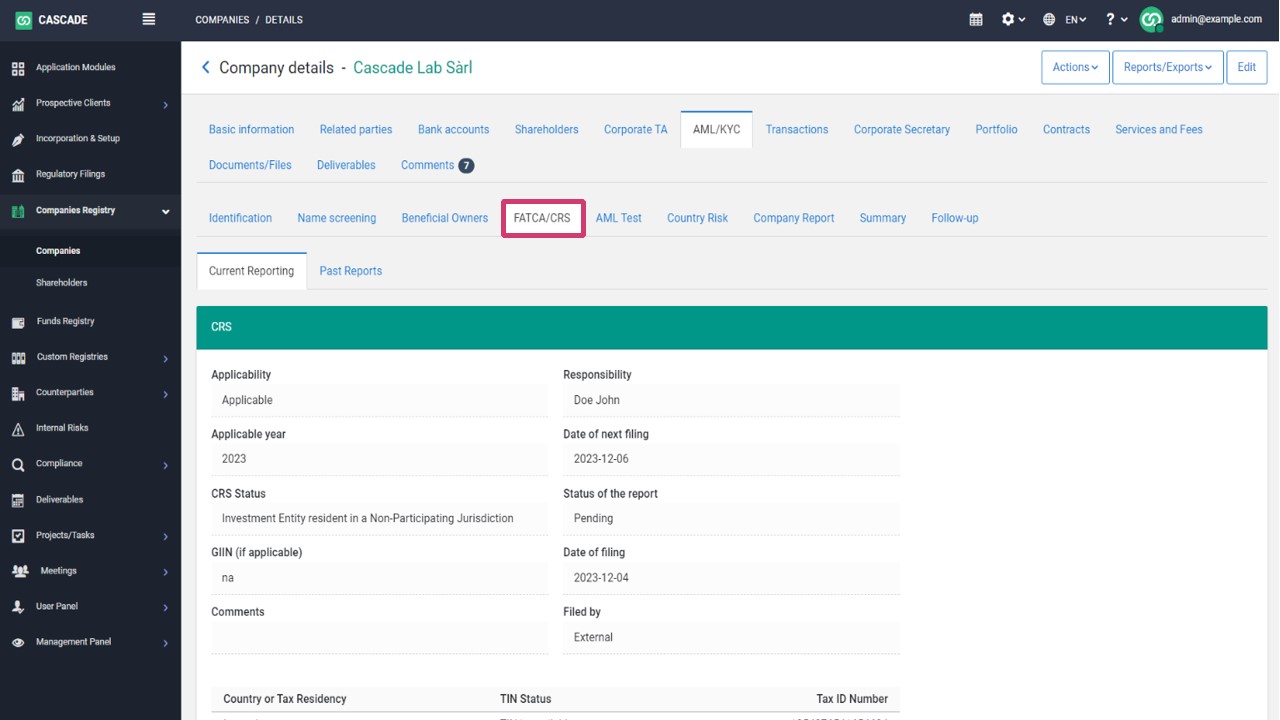
Client risk assessment documented at the time of onboarding and periodically reviewed. Due diligence intensity adjusted based on assessed risk, with streamlined procedures for low-risk clients and enhanced due diligence for high-risk clients. Beneficial ownership verification proportionate to ownership complexity, with documented evidence of verification. Screening at onboarding and periodically thereafter against sanctions and adverse media sources. Ongoing monitoring workflows adjusted based on client risk and transaction patterns. Documented audit trails of all compliance decisions retained for minimum 6 years. Regular assessment of whether existing AML controls remain adequate and whether procedures require updating.
Practical framework for AML system optimisation checklist implementation
Step 1: Audit current AML workflows and identify gaps
Map your existing AML procedures across client onboarding, beneficial ownership assessment, screening, risk rating, ongoing monitoring, and suspicious activity reporting. Document which procedures are manual, which rely on spreadsheets, which require email approval chains, and which lack audit trails. Identify where the same task is performed differently by different team members and where procedures are undocumented.
Use this audit to populate the AML system optimisation checklist for Luxembourg with baseline findings on your current state.
Step 2: Benchmark against CSSF standards and best practices
Cross-reference your current procedures against CSSF regulatory expectations and industry best practices. For each workflow area, assess whether your procedures are documented, whether execution is consistent, whether audit trails are complete, and whether risk-based differentiation is applied appropriately.
An AML system optimisation checklist for Luxembourg compares your procedures to a comprehensive framework, highlighting gaps where your implementation falls short of regulatory expectation.
Step 3: Prioritize optimisation opportunities
Rank improvement opportunities by regulatory impact and operational efficiency gain. High-priority optimisations typically include: automating client screening to eliminate email-based results; centralizing beneficial ownership documentation so verification is visible across your firm; establishing documented risk assessment criteria to ensure consistent application; implementing transaction monitoring thresholds linked to client risk ratings; and creating investigation workflows that maintain audit trails of alert decisions.
An AML system optimisation checklist for Luxembourg helps prioritize which improvements deliver the highest compliance and operational benefit.
Step 4: Design optimized workflows and technology infrastructure
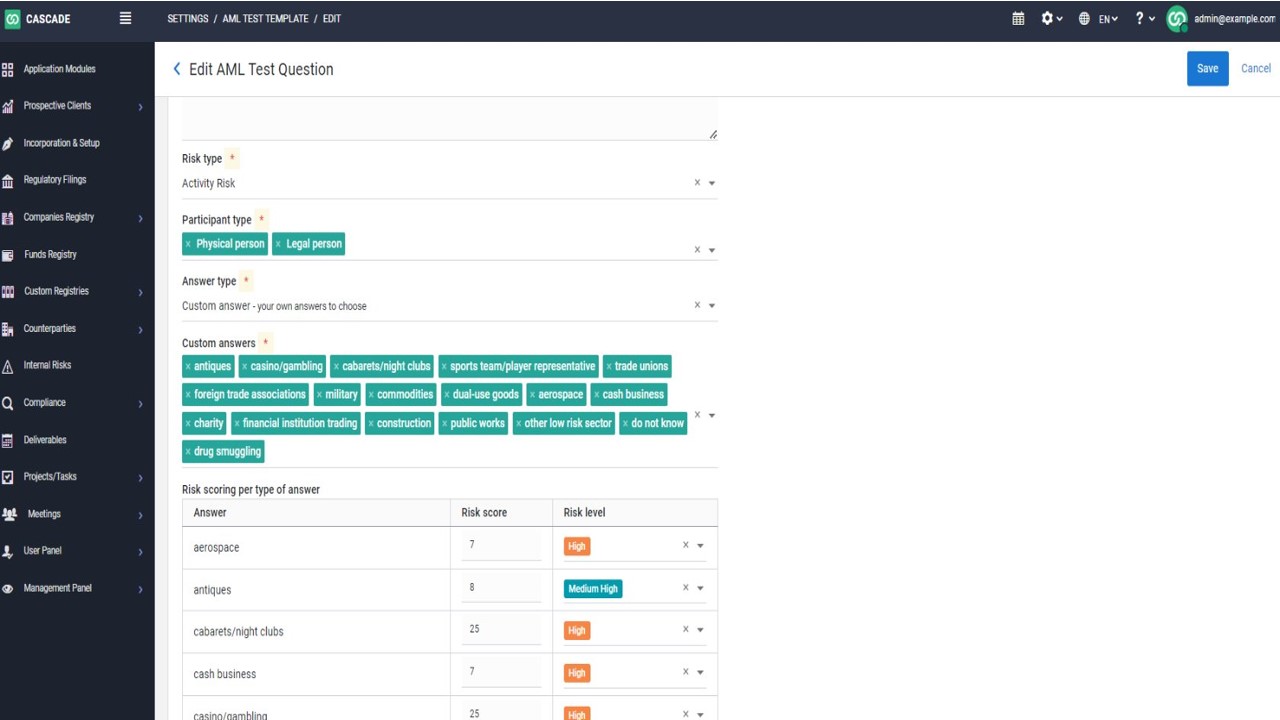
Document optimized procedures for each workflow area. Define who performs each task, what data must be collected, what decision criteria apply, and how decisions are documented. Configure your AML system to automate routine tasks (screening, data collection, alert generation) and maintain automatic audit trails of all actions.
An AML system optimisation checklist for Luxembourg ensures that optimised procedures are systematized into technology rather than remaining as informal practices.
Step 5: Test, document, and train
Before rolling out optimized procedures firm-wide, test them on a representative sample of clients to verify that workflows operate as intended and that all audit trail elements are captured. Document training materials and conduct team training on new procedures. Use the AML system optimisation checklist for Luxembourg as a training reference to ensure all staff understand updated workflows.
Implementing these five steps systematizes AML control execution across your entire firm.
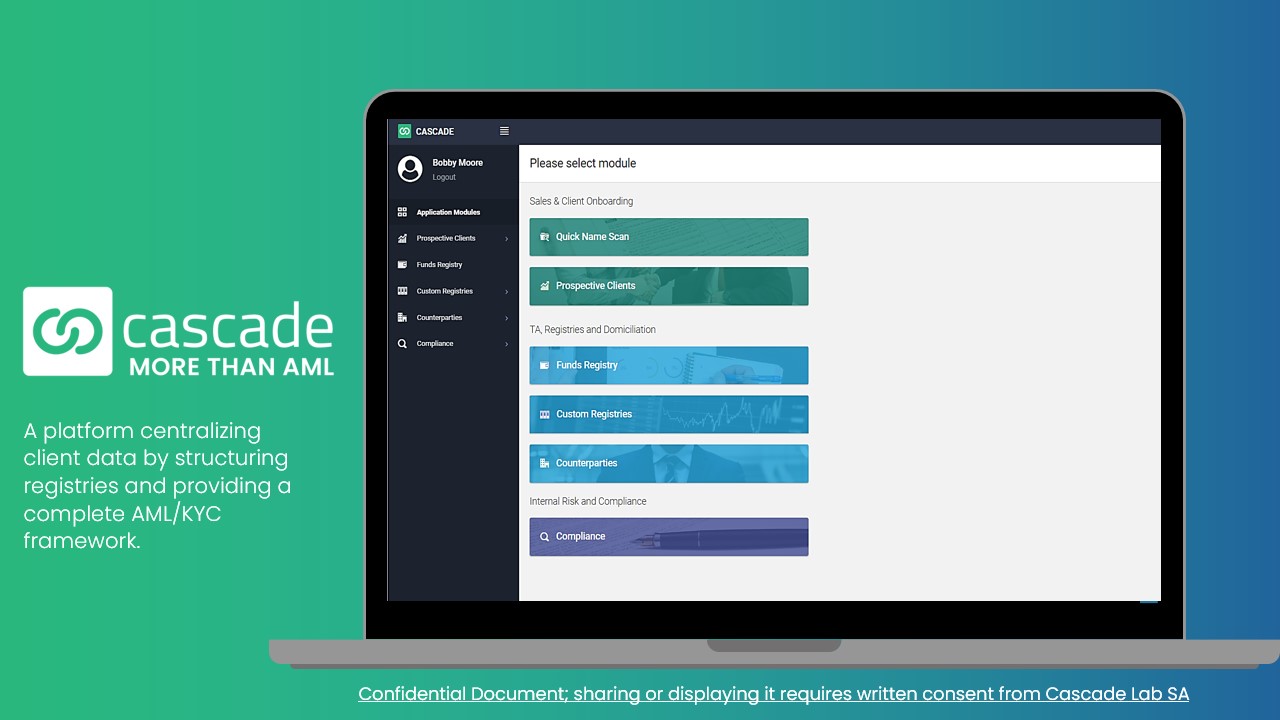
Cascade embeds AML system optimisation by automating client risk assessment, consolidating beneficial ownership verification, integrating screening workflows, configuring transaction monitoring thresholds by client risk, and maintaining audit-ready investigation trails.
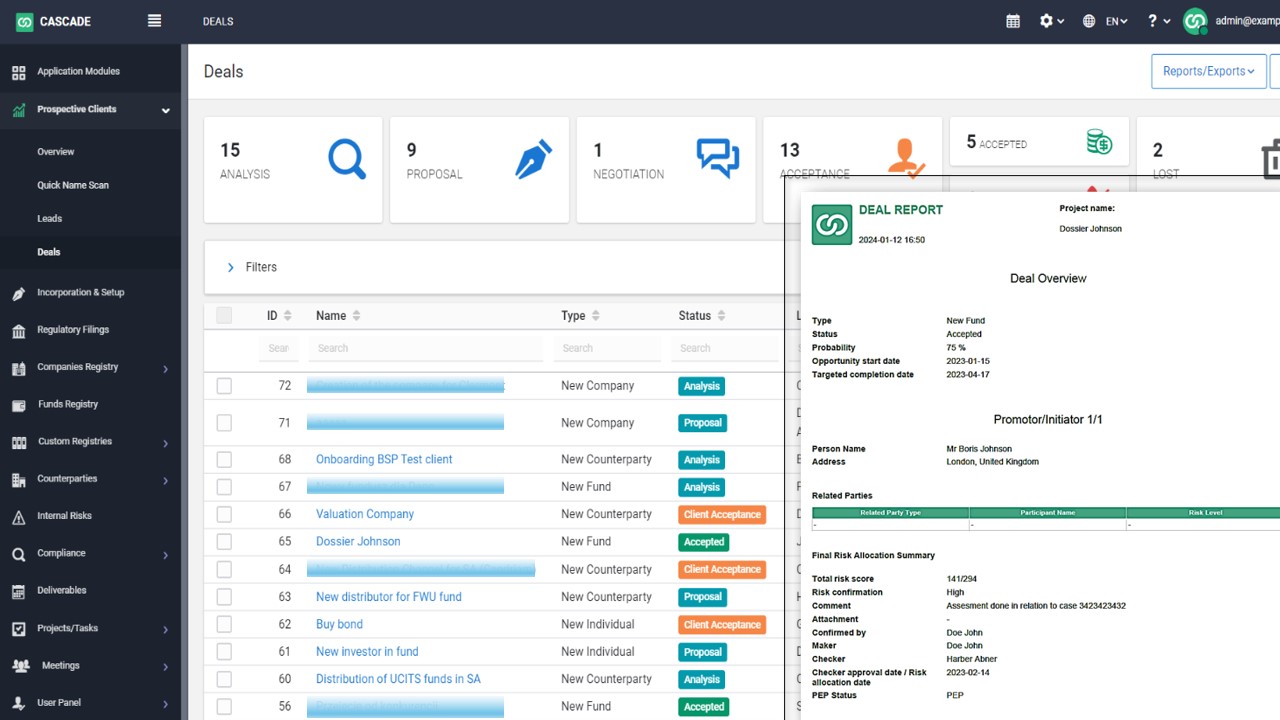
With Cascade, you populate your AML system optimisation checklist for Luxembourg not through manual procedure review but through configuration of unified compliance workflows that apply consistently across all clients and fund entities. Audit evidence is automatically generated; compliance decisions are timestamped and linked to supporting documentation; monitoring intensity adjusts automatically based on client risk; and regulatory inspection-ready reports demonstrate consistent control execution.
AML system optimisation comparison: manual procedures vs. systematic workflows
| Operational Metric | Manual Spreadsheet-Based AML System | Cascade Optimised AML System for Luxembourg |
|---|---|---|
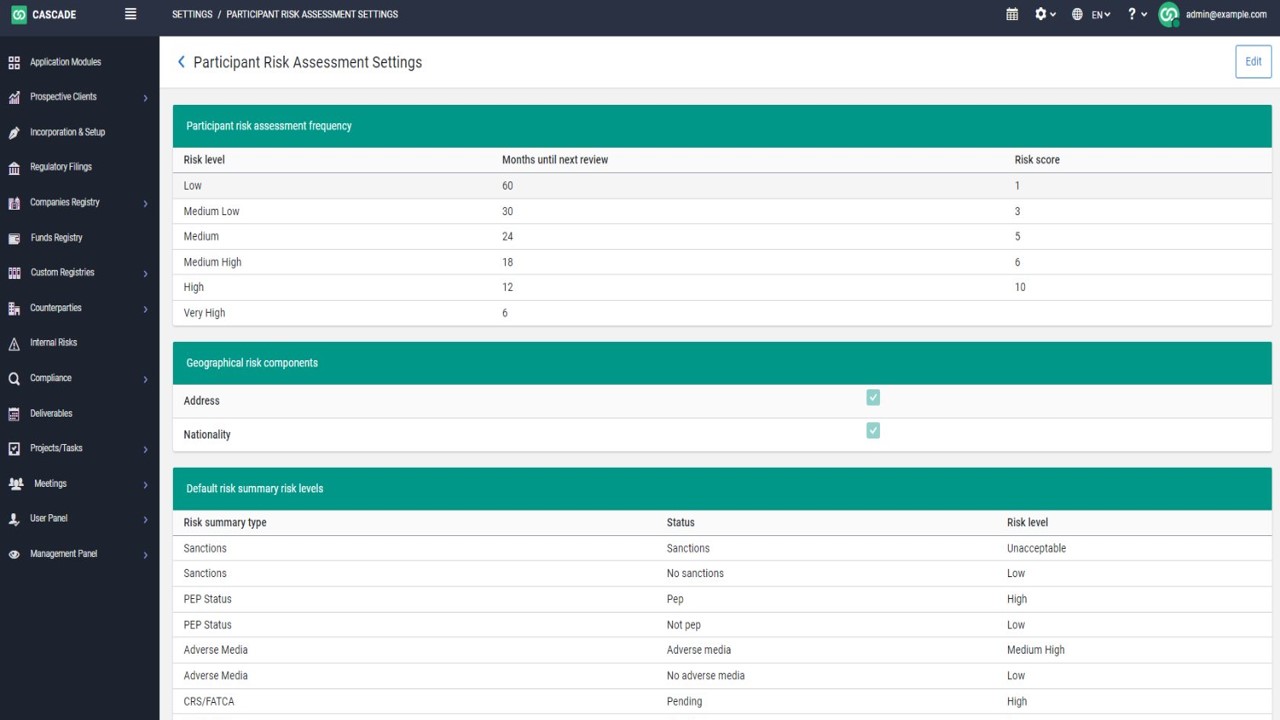
| Client risk assessment | Risk ratings assigned manually by different team members using informal criteria; inconsistent application; no audit trail of assessment rationale; reassessment triggered ad hoc or missed entirely. | Documented risk assessment criteria configured once; applied consistently across all clients; automatic recalculation when client data changes; complete audit trail of assessment rationale and evidence linked to each rating. |
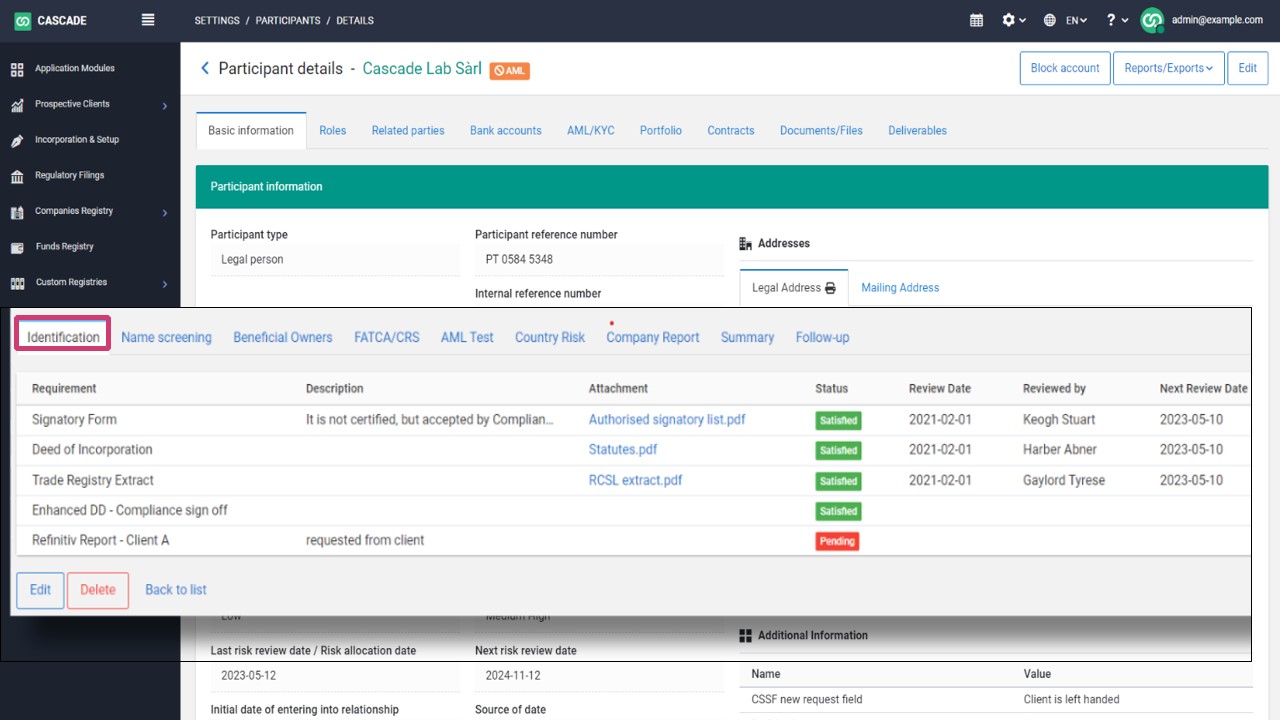
| Beneficial ownership verification | Beneficial ownership collected via email or manual file review; verification standards inconsistent; complex structures inadequately explored; no central record; re-verification manual and inconsistent. | Structured beneficial ownership workflow captures complete ownership information; automated verification for simple structures; escalation triggers for complex or opaque ownership; central record visible across firm; re-verification automatically triggered by policy. |
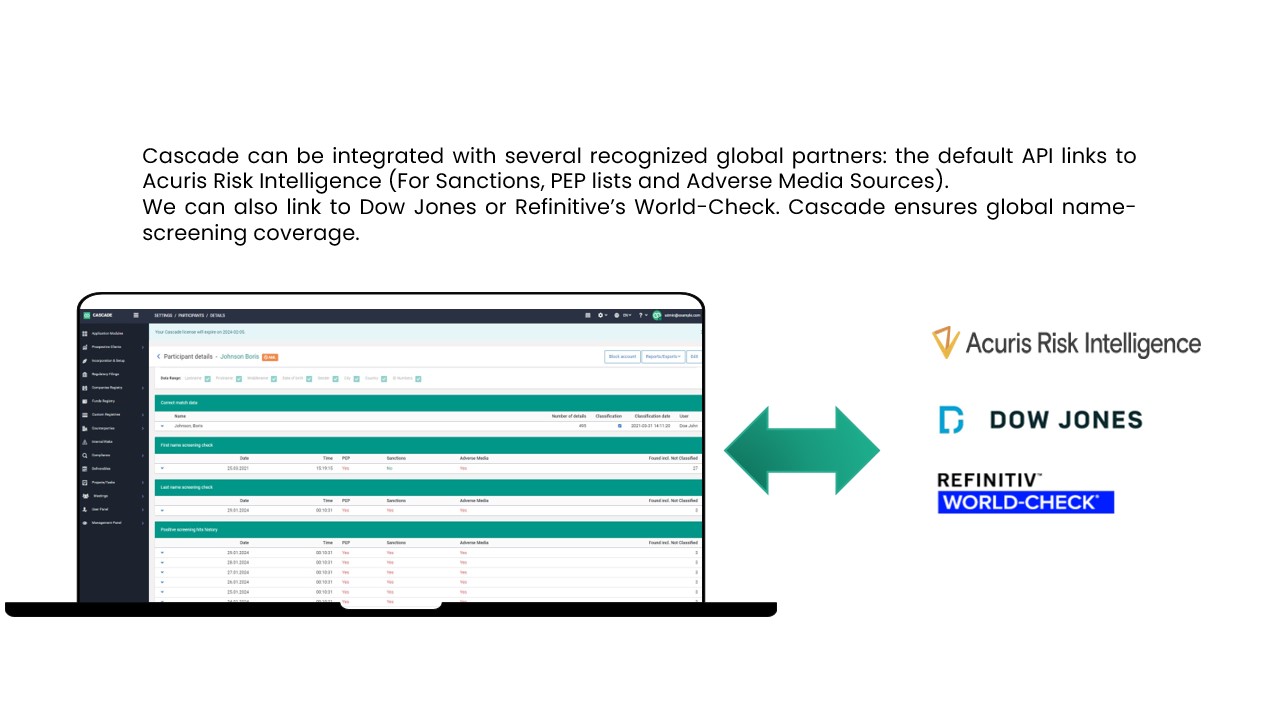
| Screening and alert management | Screening conducted manually; results collected via email or system exports; same client screened multiple times unnecessarily; alert investigation undocumented; decisions unknown to other team members. | Automated screening integration via API; deduplication prevents redundant screening; screening results captured automatically; investigation workflow maintains audit trail; investigation decisions documented and accessible firm-wide. |
| Ongoing monitoring and audit trail | Transaction monitoring thresholds manual and inconsistent; monitoring decisions undocumented; audit trail fragmented across email and spreadsheets; regulatory inspection requires manual file assembly. | Monitoring thresholds configured by client risk tier and applied uniformly; investigation workflows automatically maintain audit trails; all monitoring decisions timestamped and linked to evidence; regulatory audit trail available on demand. |
Common challenges with AML system optimisation in Luxembourg
Challenge 1: Inconsistent risk assessment.
Different compliance officers assign different risk ratings to identical investor profiles. Without documented criteria, assessment becomes subjective. Risk-based due diligence intensity varies inconsistently, creating audit gaps.
Solution: Establish written risk assessment criteria with worked examples. Document the criteria in an AML system optimisation checklist for Luxembourg and train all staff. Implement a secondary review process to validate assessment consistency.
Challenge 2: Beneficial ownership verification gaps.
Beneficial ownership collected informally; complex structures (trusts, corporate entities) not adequately verified; verification evidence not retained systematically. CSSF inspections reveal incomplete beneficial ownership files.
Solution: Configure structured beneficial ownership workflows that escalate complex structures for enhanced verification. Retain all beneficial ownership documentation linked to client records. Implement periodic re-verification triggers.
Challenge 3: Screening duplication and missed updates.
Clients screened at onboarding but not periodically; same client screened multiple times by different team members; screening results scattered across email. Recent sanctions matches missed because periodic screening is manual.
Solution: Automate screening via API integration and configure periodic screening by client risk tier. Deduplicate screening so results apply to all client relationships. Implement escalation workflows for screening matches.
Challenge 4: Undocumented investigation procedures.
Alerts generated but investigation decisions undocumented; staff unclear on investigation thresholds; suspicious activity reporting decisions not recorded; audit trail absent.
Solution: Document investigation procedures with clear thresholds for escalation. Implement investigation workflows that capture decision rationale and link to supporting evidence. Require documented approval for suspicious activity reporting decisions.
Challenge 5: Audit trail fragmentation.
When CSSF requests evidence of control execution, compliance teams manually search multiple systems. Documentation incomplete; decisions unclear; assembly effort time-consuming.
Solution: Implement centralized audit logging in your AML system. Ensure all control execution (screening, risk assessment, beneficial ownership verification, investigations) is timestamped and linked to supporting evidence. Generate audit-ready reports on demand.
Best practices for AML system optimisation checklist implementation
Establish clear ownership.
Assign accountability for AML system optimisation to the MLRO or Chief Compliance Officer. Define roles for policy design, workflow implementation, staff training, and ongoing monitoring of compliance adherence.
Document procedures comprehensively.
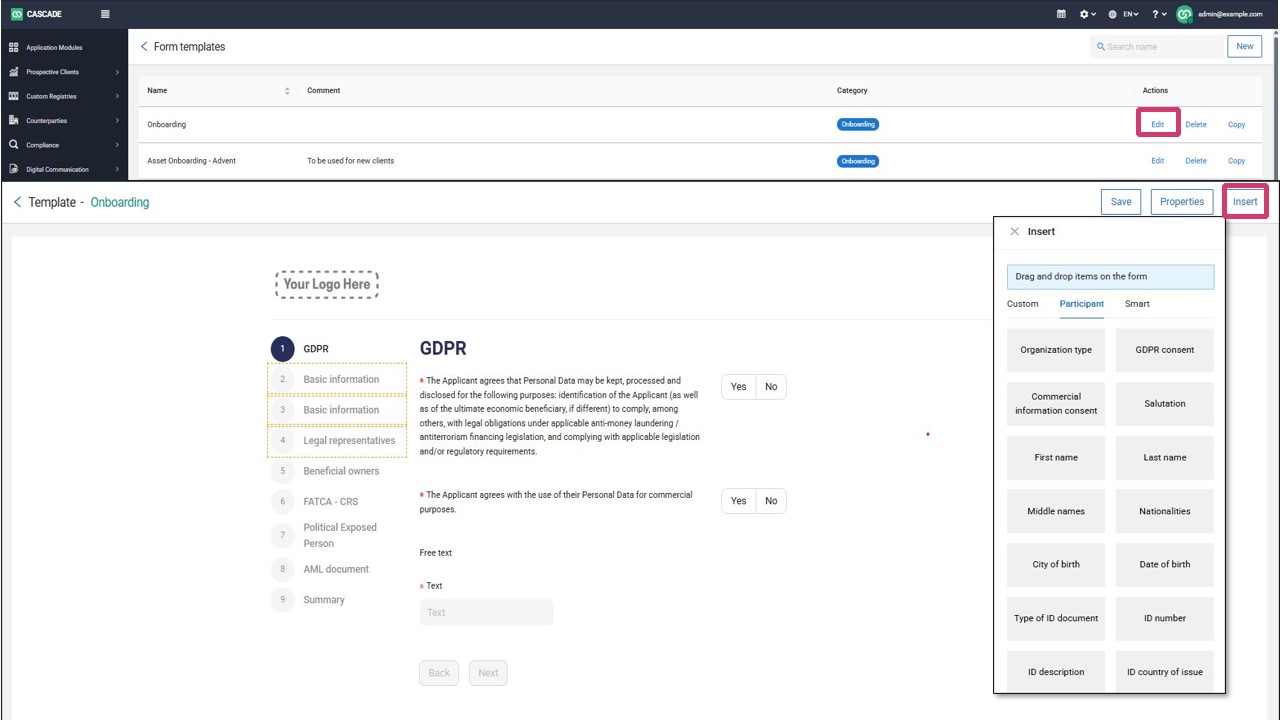
Write detailed procedures with decision trees and checklists. Procedures should be detailed enough that different team members applying the same procedure reach the same conclusions.
Use technology to systematize.
Don’t rely on staff discipline to maintain consistency. Configure your AML system to enforce documented procedures, capture audit trails automatically, and flag deviations.
Test before deployment.
Before firm-wide rollout, test optimized workflows on a representative sample. Identify workflow gaps and refine procedures based on testing feedback.
Maintain an audit-ready evidence trail.
Ensure all control execution is documented and timestamped. Retain supporting evidence (KYC documents, screening results, beneficial ownership charts, investigation memos) linked to client records.
Monitor compliance metrics.
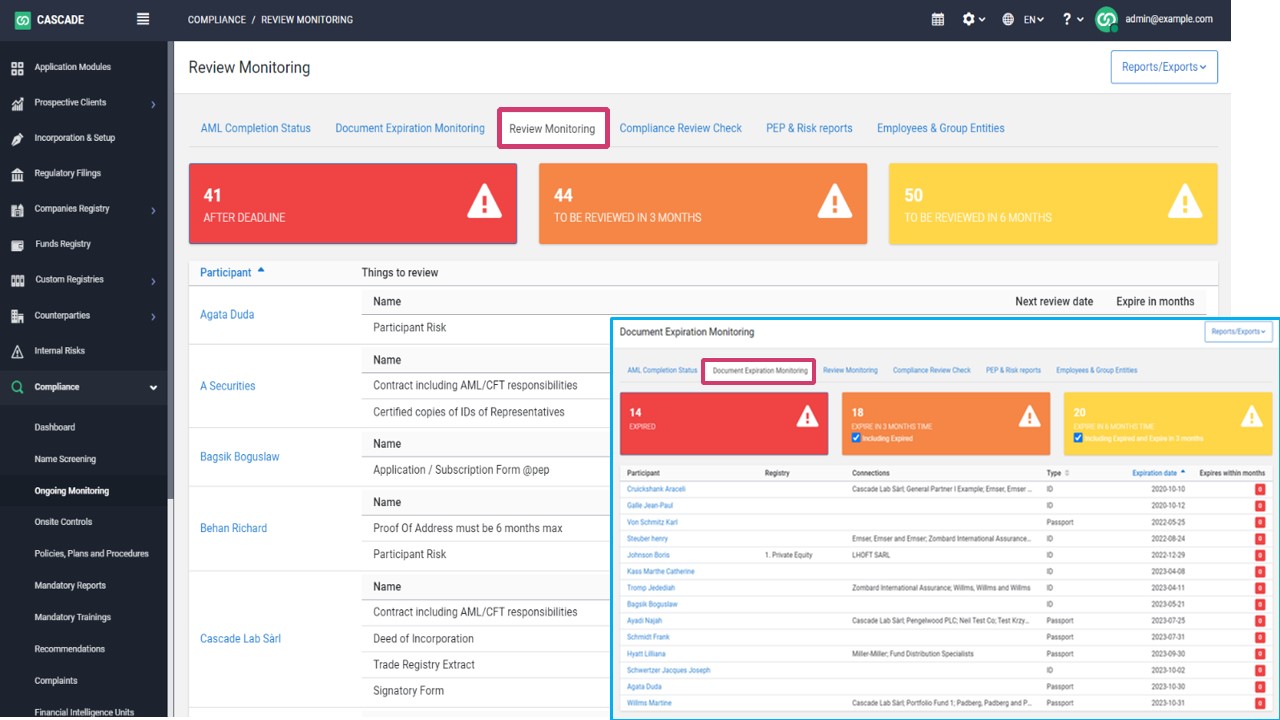
Generate monthly reports on control execution (% of clients with completed beneficial ownership verification, screening completion rates, investigation closure timeframes). Identify and remediate gaps promptly.
Review and update periodically.
When CSSF guidance changes, when audit findings emerge, or when control testing identifies gaps, update procedures and communicate changes to staff.
Frequently asked questions
What should an AML system optimisation checklist for Luxembourg include?
A comprehensive checklist covers client onboarding procedures, risk assessment criteria, beneficial ownership verification standards, screening protocols, ongoing monitoring workflows, investigation procedures, suspicious activity reporting thresholds, and audit trail requirements.
How often should I review my AML system optimisation checklist for Luxembourg?
Review at least annually or whenever CSSF guidance changes materially. After regulatory findings or control testing identifies gaps, update procedures and reassess your checklist.
Can an AML system optimisation checklist for Luxembourg be automated?
Yes. A purpose-built AML system embeds checklist requirements into workflows so that compliance procedures are systematized rather than relying on manual checklist review.
What is the most common gap identified in Luxembourg AML systems during CSSF inspection?
Inconsistent beneficial ownership verification and undocumented risk assessment rationale are the most frequently cited gaps. Firms often collect beneficial ownership information informally and lack documented evidence of verification.
What is Cascade and how does it simplify AML/KYC compliance?
Cascade is an end-to-end AML Software (SaaS Platform) that centralises client data and supports AML/KYC workflows from onboarding and risk assessment through to ongoing monitoring and reporting. It helps compliance teams standardise processes, manage documents and screening, apply risk-based workflows, and maintain an audit trail of actions and decisions.
Who can benefit from using Cascade?
Cascade supports organisations with AML/KYC obligations, including financial services firms, fintechs, wealth managers, law firms and corporate service providers.
How does Cascade ensure data security and regulatory compliance?
Cascade provides controlled workflows, activity logging and audit trails to support traceable AML/KYC processes. Compliance still depends on your policies, configuration and applicable regulations.
How can I get started with Cascade?
Book a demo with Cascade to discuss your AML/KYC requirements, explore the platform and identify how it can support your workflows.
Explore Cascade’s AML capabilities
Luxembourg firms managing AML compliance through manual procedures face CSSF inspection exposure and operational inefficiency. An AML system optimisation checklist for Luxembourg requires more than a spreadsheet assessment of your current state; it requires systematization of procedures into documented, auditable workflows. Cascade is purpose-built to operationalize your AML system optimisation checklist for Luxembourg by automating client risk assessment, centralizing beneficial ownership verification, integrating screening, configuring transaction monitoring by risk tier, and maintaining complete audit trails of control execution. To see how Cascade can operationalize your AML system optimisation framework, explore Cascade’s AML capabilities.
Disclaimer
This article is for general information only and based on publicly available sources and regulatory guidance at the time of writing. We’ve made our best effort to ensure accuracy and relevance to Luxembourg AML compliance, but CSSF regulations, guidance, and business requirements can change. Always verify key details against current CSSF publications and consult with a qualified compliance specialist or legal advisor before making compliance or vendor decisions.


 English
 English (Australia)
 English (UK)