AML UAT acceptance criteria: Testing standards for software deployment
AML software procurement fails when acceptance criteria are undefined or misaligned with regulatory expectations. Buyers evaluate platforms against feature lists rather than compliance-ready workflow evidence. UAT execution becomes incomplete; critical control testing is skipped; software goes live without proof that due diligence automation actually works. This guide explains how software buyers define AML UAT acceptance criteria, the regulatory benchmarks that drive testing scope, and how to validate that purchased platforms deliver audit-ready compliance.
Introduction
When fund administrators, compliance teams, and financial services firms procure AML software, User Acceptance Testing (UAT) is the final validation before deployment. UAT acceptance criteria are the specific, measurable tests that prove the software delivers promised functionality and meets regulatory compliance expectations. Without rigorous criteria, UAT becomes a checkbox exercise: the platform is deployed, discovered to be misconfigured or missing critical features, and compliance teams workarounds gaps manually.
Regulators expect software to enable systematic, auditable compliance. Buyers must validate this during UAT. This resource explains how to construct AML UAT acceptance criteria aligned with regulatory expectations, what compliance testing should cover, and how to validate that purchased software performs as promised.
What are AML UAT acceptance criteria?
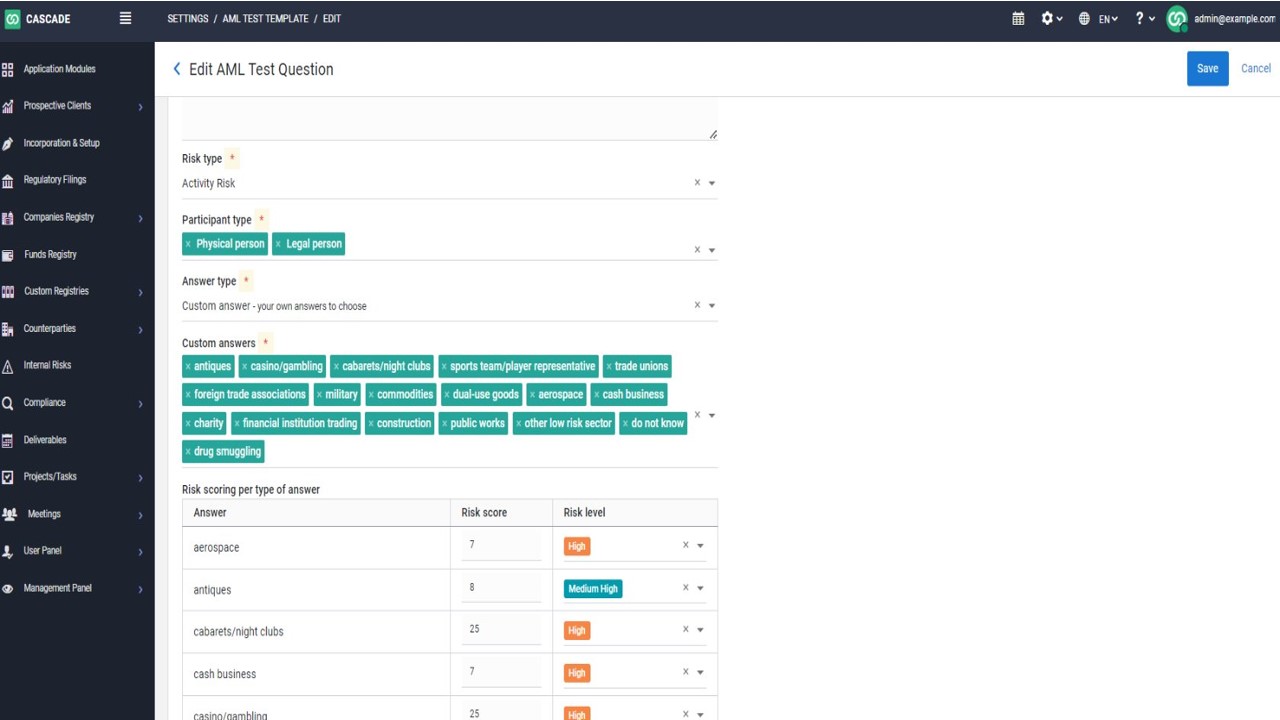
AML UAT acceptance criteria are documented, measurable test cases that validate whether purchased AML software executes required compliance workflows correctly, produces auditable evidence, and meets regulatory expectations. Criteria address functional requirements (does the platform screen clients against sanctions lists?), operational requirements (are audit trails timestamped and complete?), and compliance requirements (does the platform enforce risk-based workflows?).
Acceptance criteria differ from vendor product demos. Demos showcase functionality in ideal conditions; UAT tests real-world workflows, data volumes, and exception handling. UAT acceptance criteria are the bridge between vendor claims and operational reality.
Why UAT acceptance criteria matter for AML software buyers
Three risks emerge when buyers skip or weaken UAT acceptance criteria:
Deployment failure.
Software goes live, but critical workflows are misconfigured. Client screening doesn’t integrate with your sanctions vendors; beneficial ownership verification doesn’t link to KYC documents; audit trails don’t capture all required data points.
Compliance gap discovery.
Post-deployment, compliance teams discover that the platform cannot produce evidence of control execution. Regulators request audit trails; compliance cannot export timestamped investigation decisions. Workarounds proliferate.
Vendor accountability erosion.
Without documented acceptance criteria and UAT sign-off, vendors claim that compliance gaps are buyer configuration issues, not platform defects. Disputes over responsibility stall remediation.
Rigorous UAT acceptance criteria prevent each risk by validating, before go-live, that software actually delivers promised functionality.
Decision matrix: Core UAT acceptance criteria for AML software
| Compliance Function | Test Objective | Acceptance Standard | Regulatory Relevance |
|---|---|---|---|
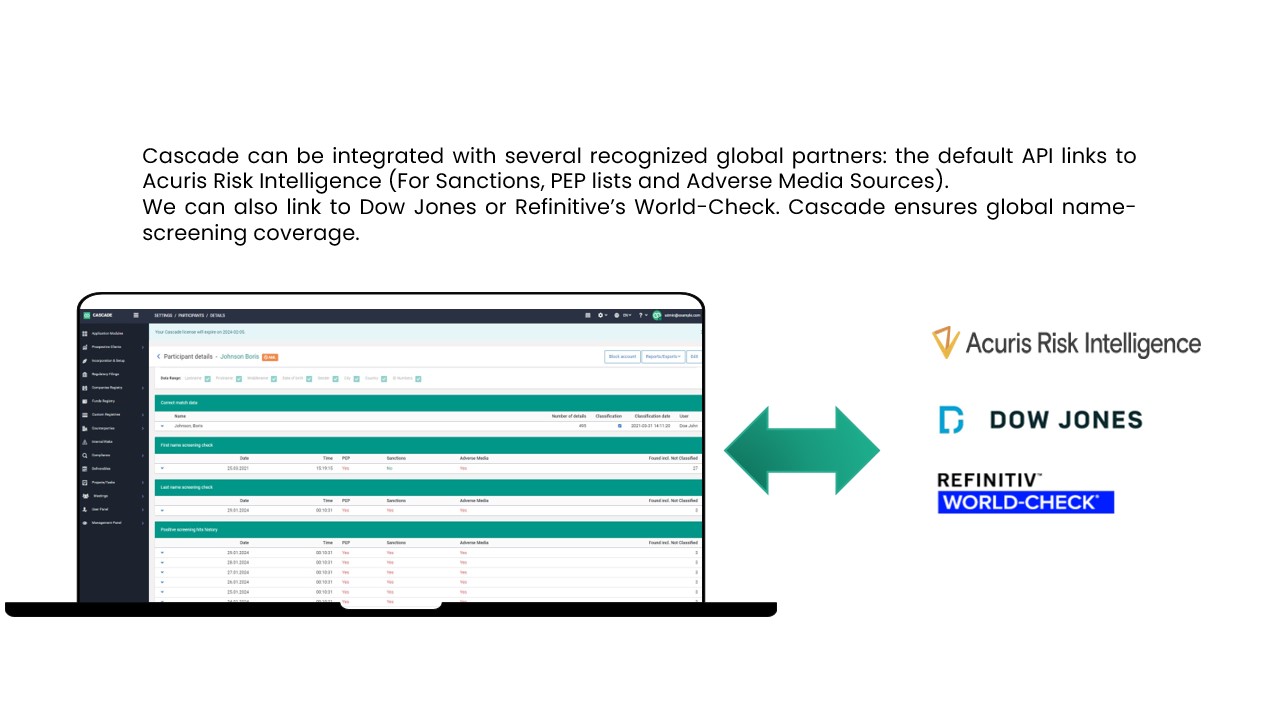
| Client screening integration | Validate that client data is screened against configured sanctions/adverse media vendors; results are captured and linked to client file | Successful screening of test client population; 100% of screened clients linked to results; results timestamped | FCA, CSSF, and CBI expect evidence that screening occurred; audit trail must prove systematic execution |
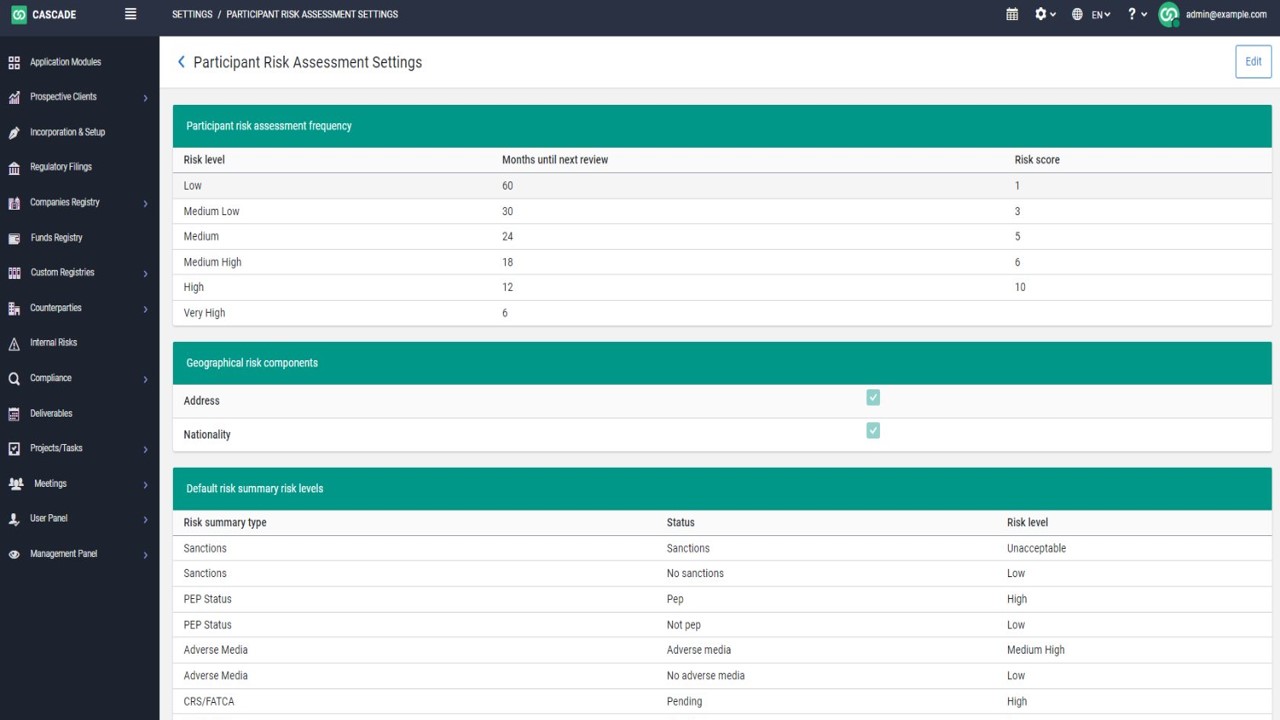
| Risk assessment automation | Validate that risk scores are calculated consistently; rationale is documented; scoring updates are triggered by policy changes | Test 50+ clients across risk tiers; verify consistent scoring; confirm documentation is captured for each assessment | Regulators expect risk-based workflows; score consistency demonstrates non-arbitrary decisions |
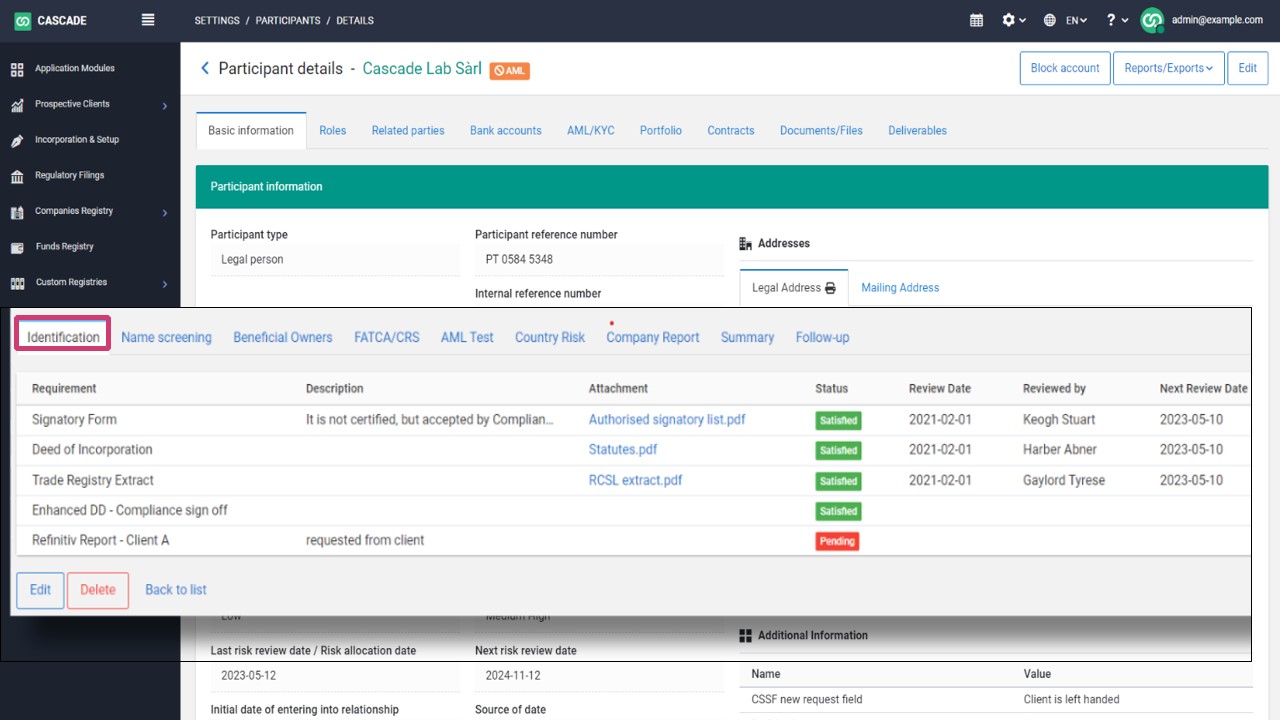
| Beneficial ownership verification tracking | Validate that beneficial ownership update schedules are tracked; overdue updates are flagged; verification evidence is linked to client file | Confirm system calculates due dates, escalates overdue updates; retains all verification documentation | CBI and CSSF require evidence of systematic beneficial ownership re-verification on defined schedules |
| Audit trail completeness | Validate that all compliance actions (screening, risk assessment, investigations, approvals) are timestamped and retained with user attribution | Export audit trail for 20+ test clients; verify timestamp accuracy; confirm all decisions are documented with user ID | All regulators expect complete, unbroken audit trails proving who did what, when |
| Alert investigation workflow | Validate that alerts are created, investigated, and decisions are documented; escalation rules work as configured | Create test alerts (sanctions match, adverse media); verify the investigation checklist executes; confirm the decision is documented with rationale | Regulators expect systematic, documented investigation procedures; arbitrary closures create audit risk |
| Ongoing monitoring configuration | Validate that transaction thresholds are applied by risk category; monitoring frequency is configurable; alerts are generated per configuration | Configure thresholds by risk tier; test transaction flows; verify alerts trigger correctly for high/medium/low-risk clients | Risk-based monitoring is a regulatory requirement; buyers must validate that software enforces configuration |
Five-step UAT framework for AML software acceptance
Step 1: Document acceptance criteria aligned to your regulatory landscape
Define criteria specific to your regulator (FCA, CSSF, CBI) and your firm’s AML program. Criteria should map to regulatory expectations: client screening, beneficial ownership verification, risk assessment, transaction monitoring, and investigation procedures. Write criteria as testable statements: “The system shall screen all new clients against World-Check and Dow Jones within 24 hours of onboarding” rather than “The system screens clients.”
Step 2: Prepare test data and test scripts
Construct realistic test populations: low-risk EU investors, high-risk third-country clients, PEP-affiliated entities, beneficial ownership structures of varying complexity. Write scripts that walk through entire workflows: client onboarding through screening, risk assessment, and monitoring. Test exception cases: what happens if a sanctions match occurs? Can users investigate and resolve?
Step 3: Execute UAT with live platform configuration
Deploy the software in your environment with your actual screening vendors, fund accounting integrations, and document repositories connected. Run test scripts against realistic data volumes. Do not rely on vendor-hosted demos; UAT must occur in your infrastructure.
Step 4: Validate audit trail and evidence production
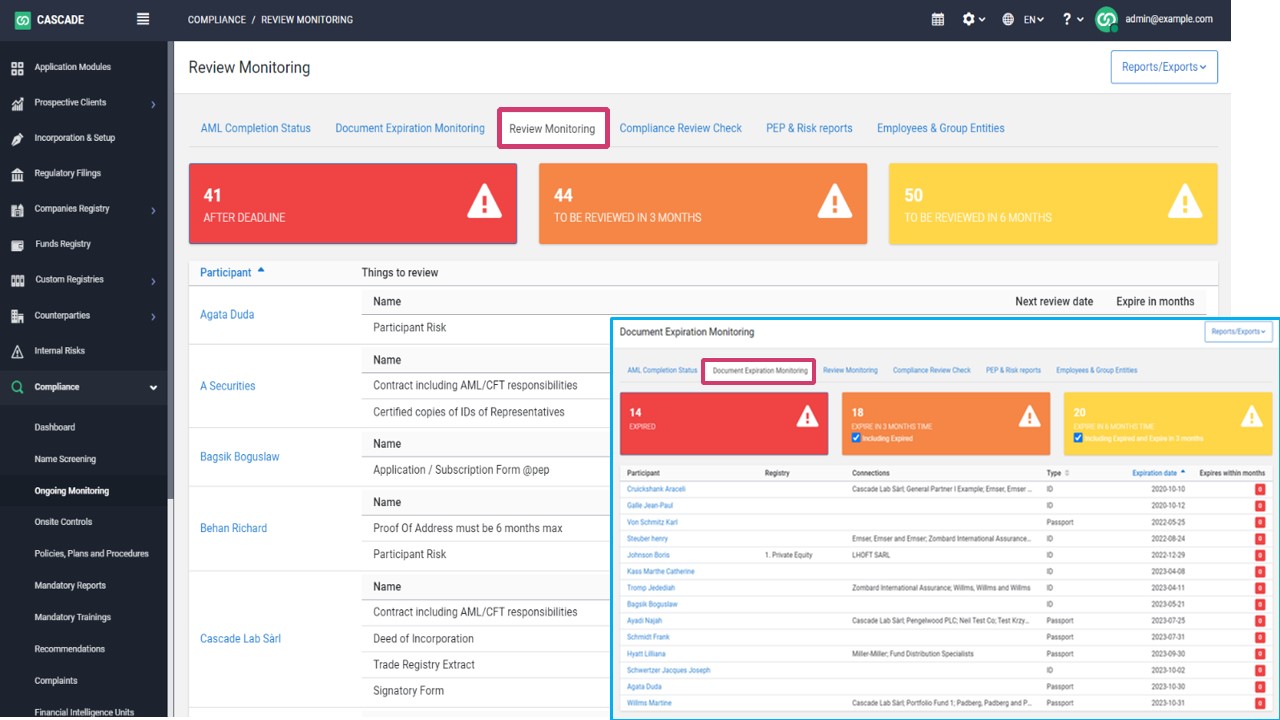
Export audit trails for test clients. Verify that all actions are timestamped, attributed to users, and complete. Confirm that the platform can produce audit-ready evidence on demand: screening reports, risk assessment memos, investigation findings, and approval chains.
Step 5: Document UAT sign-off and remediation plan
Document which criteria passed and which failed. For failures, require vendor remediation commitments with specific deadlines. Obtain written sign-off from compliance and IT leadership confirming that the platform meets acceptance standards before go-live authorization.
Common UAT failures and remediation
Failure 1: Audit trail gaps. Compliance actions are not timestamped, or user attribution is missing. Solution: Validate audit trail export format before UAT; confirm that the platform captures all required metadata (user ID, timestamp, action type, evidence reference).
Failure 2: Screening integration incomplete. Client data is not automatically fed to screening vendors; results are not returned to the platform. Solution: Test end-to-end screening workflow with actual vendor connections; verify that screening delays (vendor API latency) are handled correctly.
Failure 3: Risk assessment rationale undocumented. Risk scores are calculated, but scoring logic and supporting evidence are not captured. Solution: Require that platform exports a risk assessment memo for each client, including criteria applied and supporting evidence; validate completeness during UAT.
Failure 4: Re-assessment triggers not working. Beneficial ownership updates are not scheduled automatically; compliance must manually track calendars. Solution: Validate that re-assessment due dates are calculated correctly; test that overdue re-assessments are escalated; confirm that reminders are sent to managers automatically.
Best practices for AML UAT acceptance criteria
Define criteria collaboratively
Include compliance, IT, and vendor in the criteria definition to ensure feasibility and regulatory alignment.
Test with production-scale data
Small test datasets mask performance issues. UAT should include 100+ test clients to validate screening performance, audit trail scalability, and reporting capabilities.
Validate regulatory reporting
If the platform must produce regulatory submissions (SARs, compliance certifications), test this during UAT. Require that outputs match the exact regulator format and submission procedures.
Include staff usability testing
Compliance officers should execute real workflows during UAT. Identify usability gaps before go-live.
Document known issues and workarounds
If UAT uncovers issues, the vendor will fix them post-deployment, documenting clearly with remediation deadlines and interim workarounds.
Schedule post-deployment validation
Plan a 30-day post-go-live UAT follow-up confirming that production workflows match tested scenarios and no new issues emerged.
Frequently asked questions
What is the minimum scope for AML software UAT?
Minimum scope should cover client onboarding and initial screening, risk assessment and categorization, beneficial ownership verification procedures, ongoing transaction monitoring alert generation, suspicious activity investigation procedures, and audit trail export. UAT must include testing with production data volume (typically 500+ test clients for mid-market firms) and integration with actual screening vendors and fund accounting systems.
How long should AML software UAT take?
UAT duration typically ranges from 4 to 8 weeks depending on platform complexity, integration scope, and data volume. The timeline includes criteria definition (1 week), test data preparation (1 week), test script execution (2 to 4 weeks), remediation of identified issues (1 to 2 weeks), and sign-off. Parallel UAT running (testing while the live system operates) can compress the timeline.
What is the difference between UAT and parallel running?
UAT tests software functionality in isolation before production deployment. Parallel running operates both old and new systems simultaneously during a transition period, comparing outputs to ensure consistency before fully cutover to the new platform. Both are important: UAT validates that the platform works; parallel running validates that the platform produces consistent results with your existing operations.
Should UAT acceptance criteria include performance and scalability testing?
Yes. Criteria should include performance thresholds: screening should complete within 24 hours for batches of 100+ clients; audit trail exports should complete within 5 minutes for 1-year client data; concurrent user load should support your user population without system slowdown. Performance failures during UAT often indicate misconfiguration or infrastructure gaps discovered too late.
What is Cascade, and how does it simplify AML/KYC compliance?
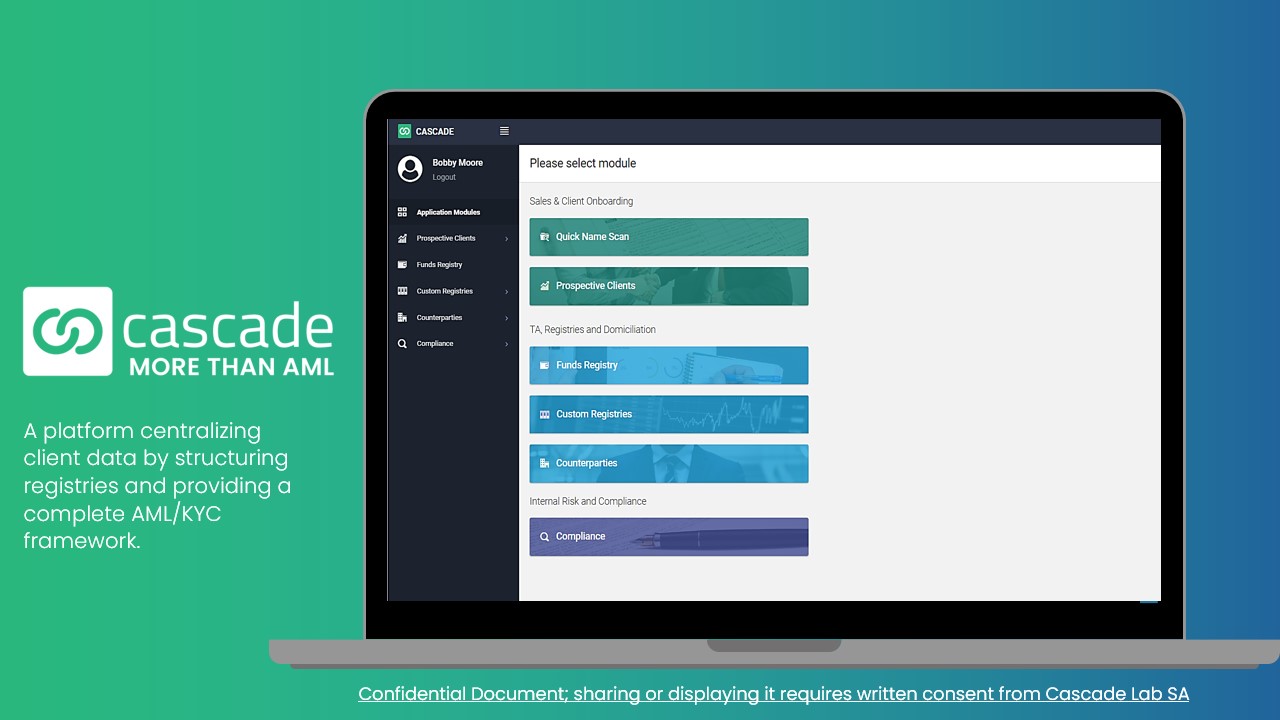
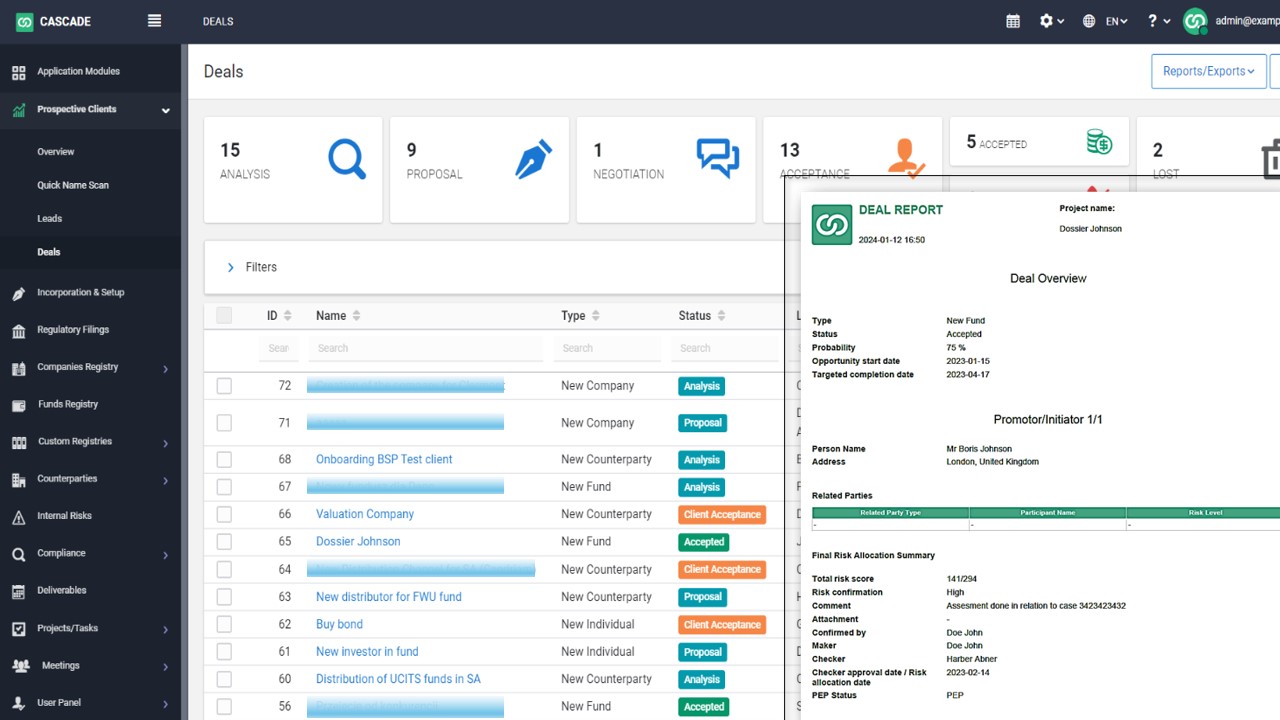
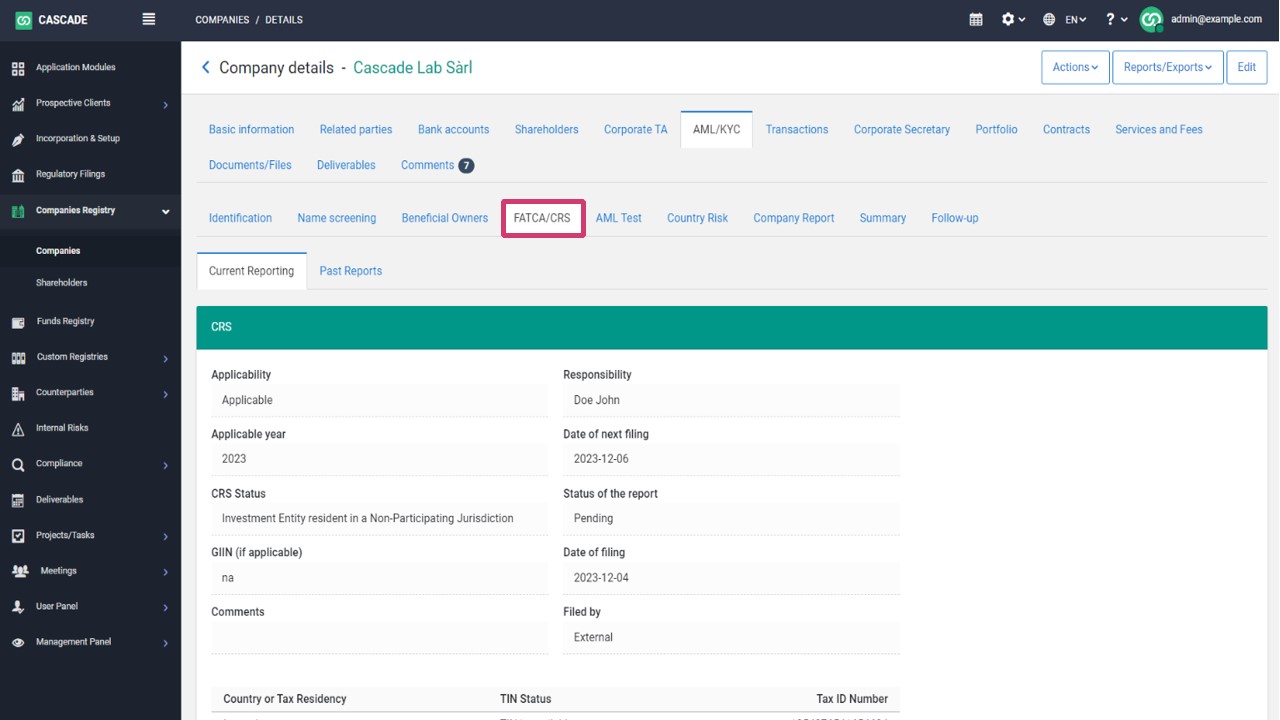
Cascade is an end-to-end AML software (SaaS platform) that centralises client data and supports AML/KYC workflows from onboarding and risk assessment through to ongoing monitoring and reporting. It helps compliance teams standardise processes, manage documents and screening, apply risk-based workflows, and maintain an audit trail of actions and decisions.
Who can benefit from using Cascade?
Cascade supports organisations with AML/KYC obligations, including financial services firms, fintechs, wealth managers, law firms and corporate service providers.
How does Cascade ensure data security and regulatory compliance?
Cascade provides controlled workflows, activity logging and audit trails to support traceable AML/KYC processes. Compliance still depends on your policies, configuration and applicable regulations.
How can I get started with Cascade?
Book a demo with Cascade to discuss your AML/KYC requirements, explore the platform and identify how it can support your workflows.
Explore Cascade’s AML capabilities
AML software buyers often struggle to define UAT acceptance criteria that validate regulatory compliance readiness. Cascade is built to be UAT-validated: centralized client profiles, auditable screening integration, documented risk assessment logic, and complete audit trails. During UAT, Cascade demonstrates systematic, compliance-ready workflows that produce the evidence regulators expect.
To define acceptance criteria for your AML software procurement or to benchmark Cascade’s testing capabilities, explore Cascade’s AML capabilities.
Disclaimer: This article is for general information only and based on publicly available sources and regulatory guidance at the time of writing. We have made our best effort to ensure accuracy and relevance to AML software procurement, but regulatory expectations, software capabilities, and compliance requirements can change. Always verify key details against current regulatory publications from your local regulator (FCA, CSSF, CBI, or equivalent), and consult with a qualified compliance specialist or legal advisor before finalizing UAT acceptance criteria or making software vendor decisions.


 English
 English (Australia)
 English (UK)