How to build an AML vendor security questionnaire that mitigates third-party risk
US wealth management firms rely on third-party vendors for critical AML functions, screening providers, transaction monitoring platforms, beneficial ownership verification services, and compliance software. Yet vendor selection often depends on capabilities and price rather than security posture. When a vendor suffers a data breach or experiences service disruption, wealth firms discover inadequate security controls too late. The Office of the Comptroller of the Currency (OCC) and FinCEN expect financial institutions to conduct documented security assessments of AML vendors before engagement and maintain ongoing oversight of vendor security posture.
A comprehensive vendor security questionnaire ensures that vendors meet minimum security standards before they access customer data or operate critical AML functions. The questionnaire becomes your documented evidence that vendor risk was assessed and mitigated before engagement.
This guide walks you through building a vendor security questionnaire that protects your firm while demonstrating regulatory compliance.
Why vendor security matters for wealth managers
US wealth management firms often operate with lean internal compliance teams, outsourcing substantial AML functions to specialized vendors. Yet regulatory responsibility remains with the wealth firm. If a vendor experiences a data breach exposing customer PII or account information, the wealth firm is liable for notification obligations, regulatory findings, and reputational damage. If a vendor’s system fails and transaction monitoring stops working, the firm may miss suspicious activity detection.
Regulators expect wealth firms to conduct thorough security assessments before selecting vendors and maintain ongoing oversight of vendor security. A documented vendor security questionnaire is your evidence that vendor risk was systematically evaluated.
Yet many firms use generic security questionnaires developed by other industries, questionnaires that miss AML-specific security concerns (segregation of customer data, screening data integrity, audit trail integrity) and focus instead on general IT security. A purpose-built AML vendor security questionnaire addresses risks specific to AML operations.
What is an AML vendor security questionnaire?
An AML vendor security questionnaire is a comprehensive assessment tool that evaluates whether prospective AML vendors meet minimum security standards appropriate to the functions they will perform and the data they will access. The questionnaire covers infrastructure security, data protection, access controls, backup and recovery procedures, incident response capabilities, and regulatory compliance. Vendor responses are evaluated against your firm’s minimum acceptable standards. Vendors that do not meet standards are not engaged.
A complete AML vendor security questionnaire addresses:
- Infrastructure security (data center security, network security, physical security, DDoS protection)
- Data protection (encryption at rest, encryption in transit, data classification, data retention procedures)
- Access controls (multi-factor authentication, role-based access, privileged access management, access logging)
- Segregation of data (segregation of customer data by firm, segregation of test/production data, audit trail integrity)
- Backup and disaster recovery (backup frequency, recovery time objective, recovery point objective, tested recovery procedures)
- Incident response (incident detection, notification procedures, incident investigation, breach notification timelines)
- Compliance (SOC 2 certification, HIPAA compliance if applicable, regulatory audit history, sanctions screening compliance)
- Subcontractor management (how vendors manage their own third-party vendors, security requirements for subcontractors)
Why vendor security assessments matter for wealth firms
Wealth management firms face three regulatory pressures that vendor security questionnaires address:
Third-party risk accountability
Regulators hold financial institutions accountable for vendor risk even when functions are outsourced. If a vendor experiences a data breach or service failure, regulators will examine your firm’s vendor selection and oversight procedures. Documented security assessments demonstrate that vendor risk was systematically evaluated.
Customer data protection
Wealth management firms hold sensitive customer data, account information, transaction history, and beneficial ownership details. If vendors do not adequately protect this data, customer privacy is compromised and regulatory liability follows. Security questionnaires ensure vendors can protect customer data adequately.
AML function integrity
Screening vendors must maintain screening data integrity; transaction monitoring vendors must maintain audit trail integrity; beneficial ownership verification vendors must maintain verification evidence integrity. If vendors cannot guarantee data and audit trail integrity, AML controls become unreliable. Security questionnaires evaluate whether vendors can protect AML data integrity.
OCC and FinCEN vendor oversight expectations
Regulators establish explicit vendor oversight expectations:
The OCC’s Guidance on Third-Party Relationships requires that financial institutions conduct due diligence on vendors before engagement and maintain ongoing oversight.
FinCEN’s AML Program Guidance establishes that financial institutions remain accountable for AML program effectiveness even when functions are outsourced.
Your vendor security questionnaire is the documentary evidence that you assessed vendor security before engagement.
Building your vendor security questionnaire: Five-step framework
Step 1: Define vendor categories and security requirements
Categorize vendors by function and the risk they pose:
- High-risk vendors (access to customer PII, operate critical monitoring functions): Require SOC 2 Type II certification, multi-factor authentication, encryption, and regular security assessments
- Medium-risk vendors (access to aggregated data, non-critical functions): Require SOC 2 Type I certification, basic encryption, access controls
- Low-risk vendors (limited data access, non-critical functions): Require general security standards, basic encryption
For each vendor category, define minimum acceptable security standards. High-risk vendors must meet higher standards than low-risk vendors.
Step 2: Design the questionnaire
Develop questionnaire sections addressing key security areas:
- Data security: encryption standards, data classification, data retention procedures, data destruction procedures
- Access controls: authentication methods, multi-factor authentication, role-based access, privileged access management, access logging
- Infrastructure: data center location and security, network security, DDoS protection, disaster recovery procedures
- Incident response: incident detection capabilities, notification procedures, incident investigation procedures, breach notification timelines
- Compliance: regulatory audit history, compliance certifications (SOC 2, ISO 27001), regulatory findings, sanctions screening procedures
- Subcontractors: how the vendor manages third-party vendors, security requirements for subcontractors, audit rights over subcontractors
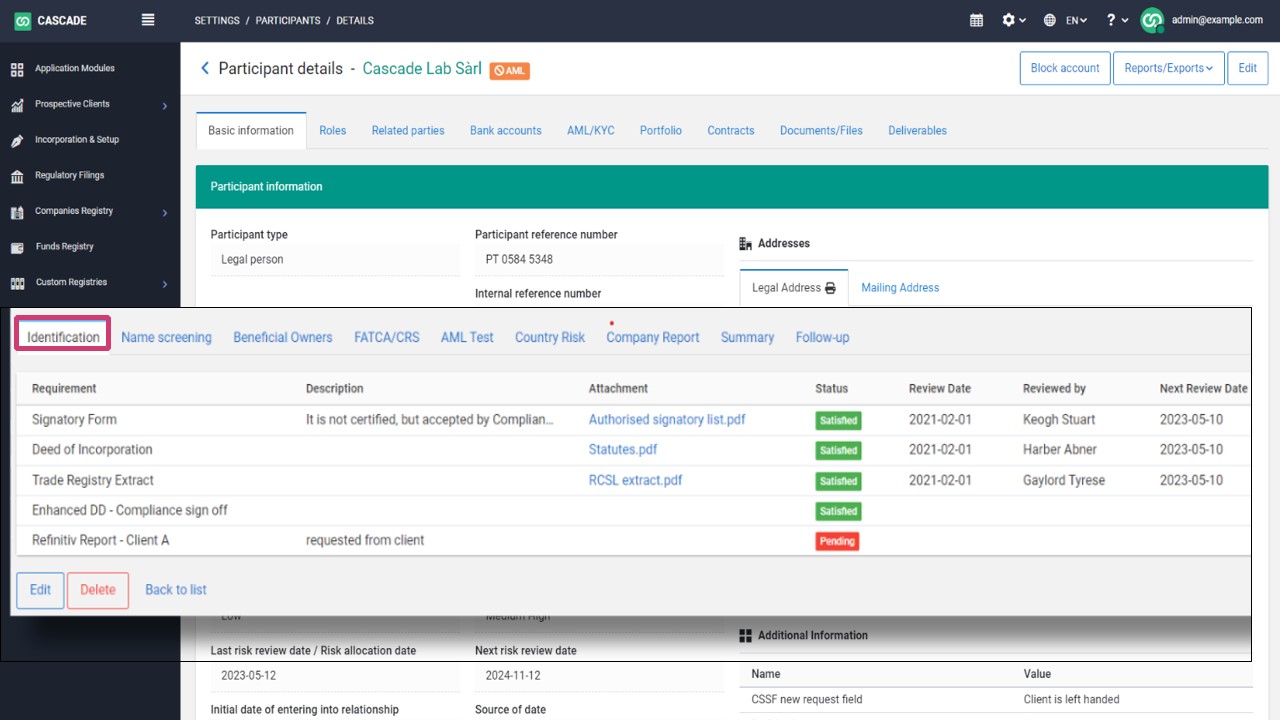
Use open-ended questions and document-request items (request copies of SOC 2 reports, security certifications, insurance policies).
Step 3: Establish evaluation criteria
Define how vendor responses are evaluated and scored:
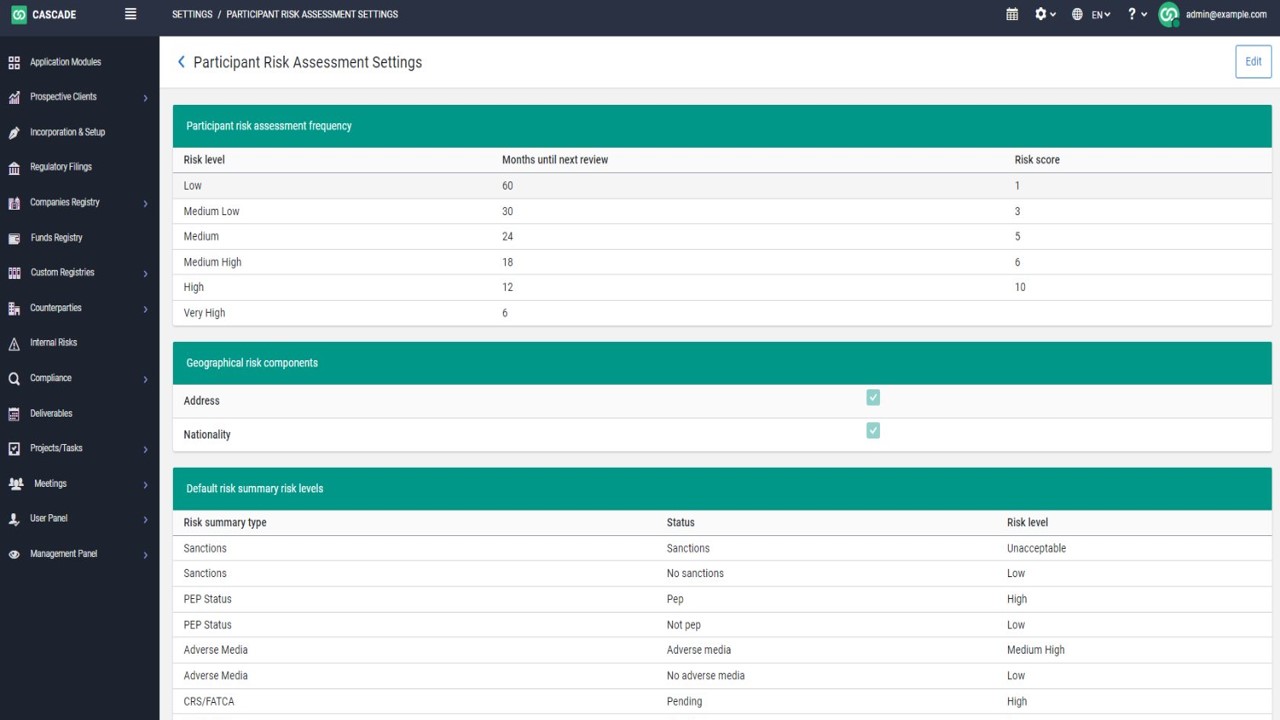
- Evaluation scale: Establish scoring criteria (1=does not meet requirements, 3=partially meets requirements, 5=fully meets requirements)
- Pass/fail thresholds: Define the minimum acceptable score for engagement (e.g., average score of 4+, no single item scoring below 3)
- Escalation procedures: Define how low-scoring vendors are handled (request additional information, reject, negotiate corrective actions)
Document evaluation results and retain them in the vendor file for regulatory inspection.
Step 4: Implement vendor selection procedures
Establish how questionnaires are used in vendor selection:
- Distribution: Provide a questionnaire to all prospective vendors before engagement
- Response review: Compliance and IT staff review vendor responses jointly
- Clarification questions: Request clarification on unclear responses
- Reference checks: Contact vendor references to validate responses
- Site visits: For high-risk vendors, conduct on-site security assessments
Document all steps and retain evidence of vendor evaluation.
Step 5: Establish ongoing vendor oversight
Define how vendor security is monitored after engagement:
- Annual reassessment: Request updated questionnaires annually
- Security incident tracking: Monitor whether vendors experience security incidents or breaches
- Change notification: Require vendors to notify of material changes (change of data center, system upgrades, personnel changes affecting security)
- Audit rights: Retain the right to audit vendor security controls on demand
- Service level agreements: Establish SLAs specifying security requirements, incident response timelines, and breach notification timelines
Vendor security questionnaire: Ad hoc vs. documented assessment
| Vendor Assessment Component | Informal Vendor Selection | Cascade Documented Vendor Assessment |
|---|---|---|
| Pre-engagement Security Assessment | Vendors are selected based on capabilities and pricing; security is not systematically evaluated; no documentation of security assessment. | Comprehensive security questionnaire is completed for all prospective vendors before engagement. Responses are evaluated against defined criteria. Evaluation results are documented and retained. |
| Evaluation Criteria And Documentation | No documented standards for vendor security; evaluation criteria are unclear; different vendors are evaluated against different standards. | Minimum security standards are defined for each vendor category. Questionnaire is standardized across all vendor types. Evaluation scores are documented. |
| Vendor Risk Classification | Vendors are not categorized by risk; all vendors are treated identically regardless of data access or function. | Vendors are categorized by risk (high/medium/low). Security requirements are proportionate to vendor risk classification. |
| Ongoing Vendor Oversight | Vendor security is not monitored after engagement; security incidents are discovered accidentally; no procedures exist for documenting vendor performance. | Annual vendor security reassessments are conducted. Vendor security incidents are tracked. Vendors are required to notify of material changes. Audit rights over vendor controls are retained. |
| Documentation And Audit Trail | Vendor selection decisions are not documented; security concerns are discussed informally; no evidence exists of vendor risk assessment. | Vendor security questionnaire responses are retained in vendor file. Evaluation results are documented. All vendor oversight activities are logged. Complete audit trail demonstrates vendor risk was systematically assessed. |
Operationalizing vendor security through documented assessment
Ad hoc vendor selection creates third-party risk exposure. Vendors are selected based on capabilities and price rather than security posture. When a vendor experiences a data breach or service failure, your firm lacks documented evidence that vendor security was assessed. Regulatory liability follows when the OCC or FinCEN examines your vendor selection procedures and finds inadequate security oversight.
A systematic vendor security framework embeds assessment procedures into vendor selection. Security questionnaires are completed for all prospective vendors before engagement. Responses are evaluated against defined criteria. Vendors that do not meet standards are not engaged or engagement occurs only with compensating controls. Ongoing oversight tracks vendor security incidents and monitors compliance with security requirements. Documentation provides regulatory evidence that vendor risk was systematically evaluated and mitigated.
For US wealth firms managing vendor relationships, documented vendor security assessment demonstrates to regulators that third-party risk is managed appropriately.
Common vendor security assessment challenges
Challenge 1: Generic questionnaire not tailored to AML risk
Firm uses generic IT security questionnaire that does not address AML-specific concerns (screening data integrity, audit trail integrity, segregation of customer data).
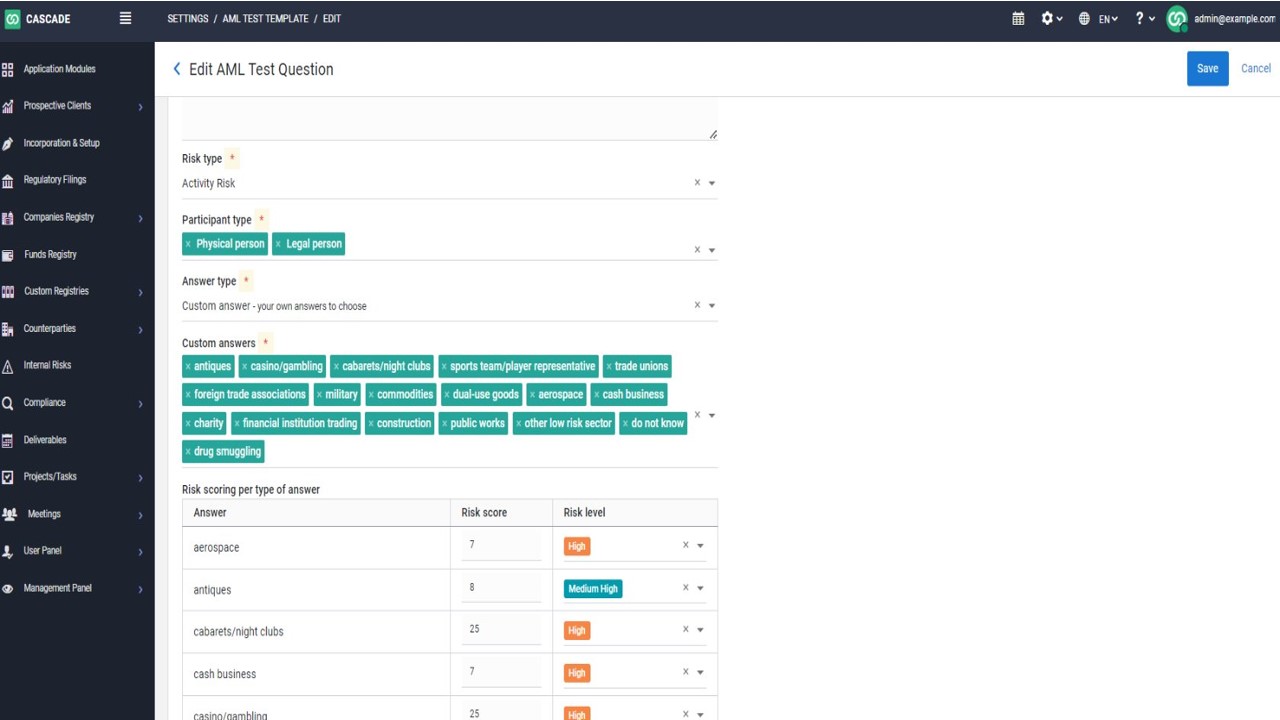
Solution: Develop an AML-specific vendor security questionnaire addressing functions vendors will perform and data they will access. Include questions about screening data integrity, audit trail protection, customer data segregation, and compliance with AML regulations.
Challenge 2: Vendor responses not evaluated against standards
Vendors complete questionnaires; responses are not systematically evaluated. Vendors with inadequate security are engaged without compensating controls.
Solution: Establish evaluation criteria for vendor responses. Define minimum acceptable scores. Require evaluation results to be documented. Do not engage vendors that do not meet minimum standards without senior management approval and documented compensating controls.
Challenge 3: Inadequate ongoing vendor oversight
Vendor security is not monitored after engagement. Security incidents are discovered accidentally. Vendors implement material changes without notifying the firm.
Solution: Conduct annual vendor security reassessments. Track vendor security incidents. Require vendors to notify of material changes. Retain audit rights over vendor controls. Incorporate security requirements into vendor service level agreements.
Challenge 4: Subvendor risk not addressed
Vendor uses subcontractors; firm has no visibility into subvendor security. Subvendors access customer data without firm approval.
Solution: Include subvendor management in vendor questionnaire. Require vendors to conduct security assessments of subcontractors. Retain audit rights over vendor and subvendor controls. Require notification of subvendor changes.
Best practices for vendor security assessment
Tailor questionnaires to vendor risk
High-risk vendors (access to customer data, critical functions) should complete more comprehensive questionnaires than low-risk vendors (limited data access).
Use objective evaluation criteria
Define scoring rubrics so vendors are evaluated consistently. Document evaluation results.
Require supporting documentation
Request copies of SOC 2 reports, security certifications, insurance policies. Do not rely solely on vendor self-assessment.
Conduct reference checks
Contact vendor references to validate security claims. Ask about security incidents, service disruptions, and vendor responsiveness.
Establish ongoing oversight
Vendor security should be monitored continuously, not just at onboarding. Annual reassessments and incident tracking are minimum.
Include security in SLAs
Service level agreements should specify security requirements, incident response timelines, and breach notification procedures.
Frequently asked questions
What security certifications should I require from AML vendors?
SOC 2 Type II certification is the industry standard for high-risk vendors (customer data access, critical functions). ISO 27001 certification is also appropriate. Request copies of current certifications and audit reports. Review audit findings to assess whether identified control gaps affect your firm’s risk exposure.
How should I handle vendor security incidents?
Establish procedures for vendors to notify your firm of security incidents affecting customer data or AML functions. Require vendors to notify within defined timeframe (typically 24 hours). Conduct investigation of incident, data affected, and mitigation steps. Assess whether incident affects your firm’s regulatory obligations. Consider whether the incident triggers breach notification obligations to customers.
What is Cascade and how does it simplify AML/KYC compliance?
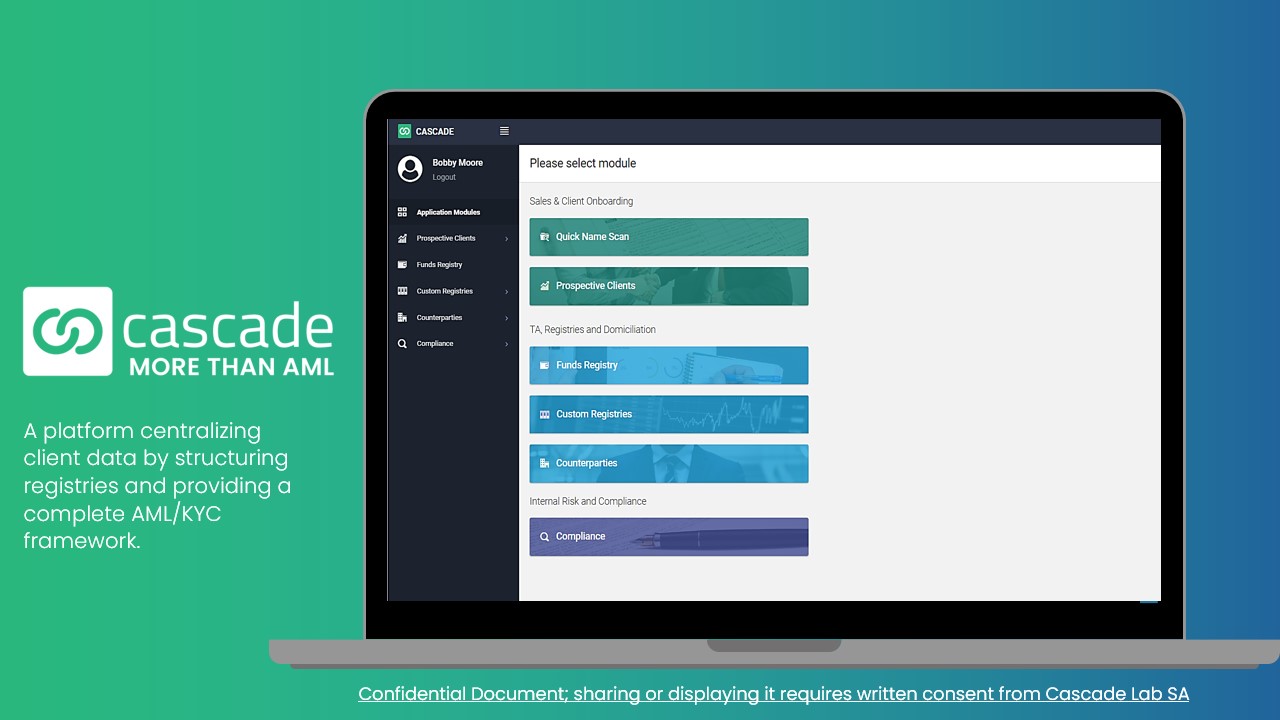
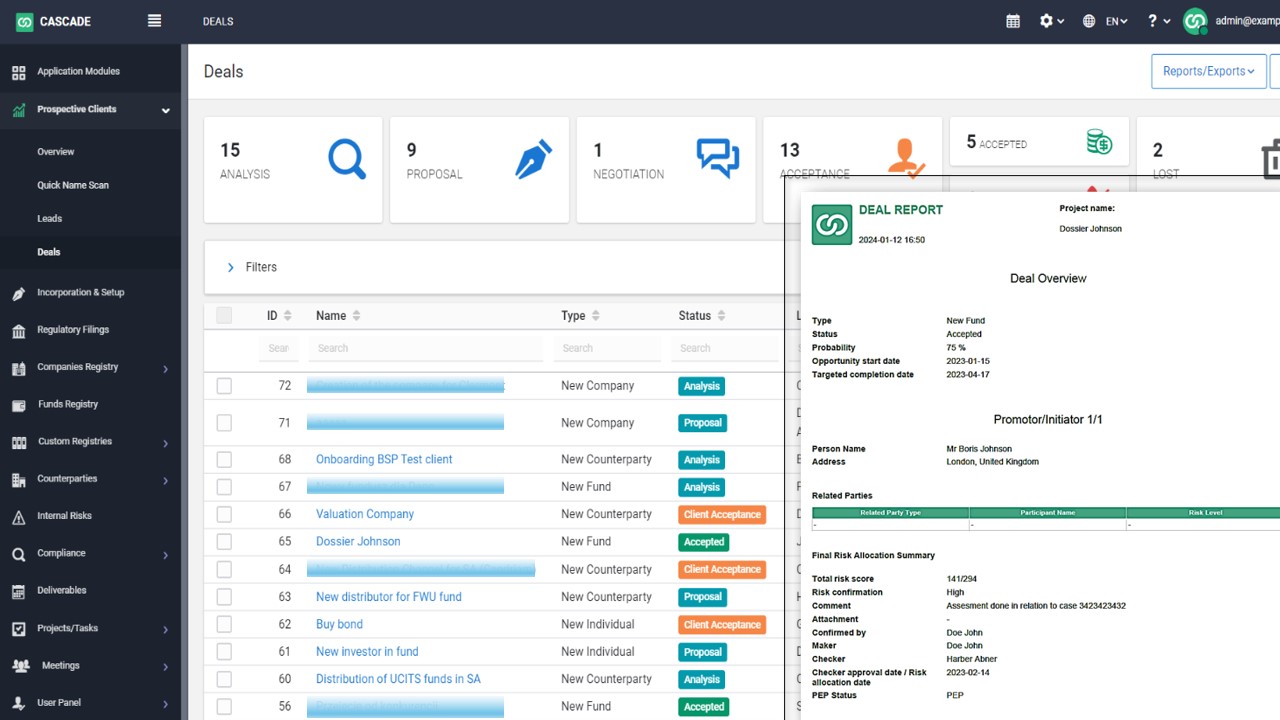
Cascade is an end-to-end AML Software (SaaS Platform) that centralises client data and supports AML/KYC workflows from onboarding and risk assessment through to ongoing monitoring and reporting. It helps compliance teams standardise processes, manage documents and screening, apply risk-based workflows, and maintain an audit trail of actions and decisions.
Who can benefit from using Cascade?
Cascade supports organisations with AML/KYC obligations, including financial services firms, fintechs, wealth managers, law firms and corporate service providers.
Explore Cascade’s vendor security capabilities
US wealth firms struggle to assess AML vendor security systematically when questionnaires are generic and evaluation criteria are undefined. Vendors are selected based on capabilities and price rather than security posture. When vendors experience security incidents, your firm lacks documented evidence of pre-engagement security assessment. OCC examinations discover inadequate vendor oversight and document control deficiencies.
Cascade purpose-built to support documented vendor security assessment procedures. AML-specific questionnaires address risks vendors pose to AML operations. Vendor responses are evaluated against defined criteria. Annual reassessments track ongoing vendor security posture. Documentation demonstrates to regulators that vendor risk was systematically assessed and mitigated before engagement.
To see how Cascade operationalizes your vendor security assessment, explore Cascade’s AML capabilities.
Disclaimer
This article is for general information only and based on publicly available sources at the time of writing. We have made our best effort to ensure accuracy and relevance to US wealth management AML compliance, but OCC and FinCEN regulations and requirements can change. Always verify key details against current regulatory publications and consult with a qualified compliance specialist before making vendor selection decisions.

 English
 English (Australia)
 English (UK)