How to build an annual AML report that satisfies AMF and TRACFIN requirements
French financial institutions must produce comprehensive annual AML compliance reports demonstrating to the Autorité des Marchés Financiers (AMF) and the Financial Intelligence Unit (TRACFIN) that AML programs are functioning effectively and compliance risks are being managed. Yet compliance teams across French firms struggle to assemble annual reports when compliance data is fragmented across multiple systems and reporting procedures are manual.
An annual AML report consolidates compliance metrics, risk assessments, regulatory findings, and remediation status into a coherent narrative demonstrating AML program effectiveness. The report becomes your documented evidence to regulators that AML compliance is systematic, monitored, and continuously improved.
This guide walks you through building an annual AML report that satisfies regulatory expectations while enabling board-level compliance governance.
Annual AML reporting expectations in France
French financial regulators, under AMF and TRACFIN oversight, expect financial institutions to maintain comprehensive annual AML reports documenting AML program performance, compliance metrics, identified risks, regulatory findings, and remediation actions. The annual report is delivered to senior management and the Board, enabling governance-level oversight of AML program effectiveness.
Yet compliance reporting at many French firms is fragmented. Compliance metrics are calculated manually from multiple systems; reporting is inconsistent across years; regulatory requirements are unclear. The Board receives insufficient information about AML compliance performance and identified risks.
An annual AML report template establishes which metrics are reported, how the report is structured, which stakeholders receive it, and what detail enables board-level governance of AML compliance.
What is an annual AML report?
An annual AML report is a comprehensive compliance document consolidating AML program performance metrics, risk assessments, identified control weaknesses, regulatory findings, remediation status, and forward-looking compliance initiatives. The report provides senior management and the Board with visibility into AML program effectiveness and demonstrates to regulators that AML compliance is systematically monitored and governed.
A complete annual AML report includes:
- Executive summary: High-level overview of AML program performance, key metrics, material findings
- Compliance metrics: Customer due diligence completion rates, screening execution, investigation timeliness, regulatory reporting compliance
- Risk assessment: Assessment of current AML/CFT risk profile, identified risk concentrations, emerging risks
- Control effectiveness: Whether AML controls are functioning as designed, any control weaknesses identified
- Regulatory findings: Summary of regulatory findings from prior year, status of remediation actions
- Suspicious activity reporting: Number of SARs filed, filing timeliness, trends in SAR volumes
- Staff training: Training completion rates, competency assessment results, areas requiring additional training
- Compliance initiatives: Forward-looking compliance improvements planned for coming year
- Audit findings: Internal audit findings related to AML compliance, remediation status
- Attestation: Compliance officer sign-off confirming accuracy of report and representation to Board
Why annual AML reports matter for French firms
French financial institutions face three regulatory pressures that annual AML reports address:
Board governance accountability
The Board has governance responsibility for AML program effectiveness. Annual AML reports enable the Board to assess compliance performance and identify areas requiring management attention. Regulators expect Board-level AML reporting to occur at least annually.
Regulatory transparency
AMF and TRACFIN expect financial institutions to maintain comprehensive compliance documentation demonstrating that AML programs are effective. Annual reports are key evidence of systematic AML governance and compliance monitoring.
Trend identification
AML compliance metrics shift over time. Customer due diligence completion rates may improve or decline; investigation timeliness may vary; SAR filing patterns may change. Annual reports enable identification of trends and proactive management response before problems escalate.
AMF and TRACFIN annual reporting expectations
French regulators establish explicit annual reporting expectations:
The AMF’s Compliance Guidelines expect financial institutions to maintain documented AML programs including annual reporting to governance bodies.
TRACFIN’s AML/CFT Supervision Framework establishes that financial institutions must demonstrate ongoing AML program monitoring through systematic reporting.
Your annual AML report is the primary documentary evidence that you maintain adequate AML governance.
Building your annual report: Five-section framework
Section 1: Executive summary and key metrics
Provide high-level overview of AML program performance:
- Customer due diligence: % of customers with current CDD, % of corporate customers with verified beneficial ownership
- Screening: % of customers screened, % of required rescreening completed, number of screening matches, match resolution timeliness
- Investigations: Number of alerts investigated, average investigation duration, % of investigations completed within SLA
- Suspicious activity reporting: Number of SARs filed in period, average SAR filing timeliness, SAR volume trends
- Risk profile: Summary of current AML/CFT risk assessment, material risk concentrations, changes from prior year
- Regulatory findings: Number of regulatory findings in prior year, status of remediation, material findings requiring ongoing attention
Use tables and charts to make metrics easily comparable across years and demonstrate trends.
Section 2: Risk assessment and control effectiveness
Address whether AML controls are functioning effectively:
- Customer risk assessment: Distribution of customers by risk category, % of high-risk customers receiving enhanced monitoring
- Beneficial ownership verification: % of corporate customers with current beneficial ownership verification, re-verification compliance rate
- Screening effectiveness: Screening match rates, match resolution timeliness, any matches that should have been caught but were not
- Transaction monitoring: Number of alerts generated, alert investigation completion rate, % of investigations completed within defined timeframe
- Suspicious activity detection: Whether controls are detecting suspicious activity patterns or whether activity slips through controls
Identify any control weaknesses discovered during the year and whether compensating controls are in place.
Section 3: Regulatory findings and remediation status
Report on regulatory oversight and compliance:
- Regulatory findings from prior year: List findings identified, status of remediation (completed, in-progress, planned)
- New findings in current year: Any findings from internal audit or regulatory examinations conducted during year
- Material remediation actions: Any findings requiring significant remediation effort or senior management attention
- Regulatory examinations: Number and nature of regulatory examinations conducted; key findings
- Regulatory correspondence: Any regulatory inquiries or requests for information and institutional response
Demonstrate that regulatory findings are tracked systematically and remediation is progressing.
Section 4: Compliance initiatives and forward-looking actions
Address planned improvements:
- Training initiatives: Planned training for staff in areas identified as deficient
- Technology initiatives: System upgrades or new AML tools being implemented
- Procedural improvements: Changes to AML procedures planned in response to identified control weaknesses
- Staffing: Planned additions to compliance team or expertise areas
- Regulatory developments: Planned response to new regulatory guidance or regulatory requirements
Demonstrate that AML program is evolving in response to identified risks and regulatory expectations.
Section 5: Attestation and governance sign-off
Provide evidence of compliance officer and Board awareness:
- Compliance officer attestation: MLRO or Chief Compliance Officer certifies that report accurately reflects AML program performance and that AML controls are functioning as designed
- Board acknowledgment: Documentation that Board received and reviewed annual report
- Corrective actions approved: Any corrective actions or remediation initiatives approved by Board or senior management
Retain attestation as evidence that governance bodies were informed of AML program performance and endorsed compliance strategy.
Manual assembly vs. systematic framework
| Report Component | Manual Report Assembly | Cascade Systematic Report Generation |
|---|---|---|
| Compliance Metrics Collection | Data is assembled manually from multiple systems each year. Metrics vary from year to year making comparison difficult. Report production is time-consuming. | Compliance metrics are tracked throughout year in centralized system. Annual report pulls metrics automatically from source systems. Metrics are consistent across years enabling trend analysis. Report generation is automated. |
| Data Accuracy And Validation | Data accuracy is not verified; errors may exist in reported metrics. Board receives potentially inaccurate information. | Data quality checks ensure accuracy before reporting. Automated validation flags inconsistencies. Data is reconciled across systems before inclusion in report. |
| Trend Analysis | Year-over-year comparison is difficult; trends are unclear. Board cannot assess whether AML program performance is improving or declining. | Metrics are displayed with year-over-year comparison and trend visualization. Board can easily assess trends and determine whether corrective action is needed. |
| Risk Assessment And Control Effectiveness | Risk assessment is assembled manually; control effectiveness is assessed informally. Report lacks objective evidence that controls are functioning. | Risk metrics are tracked automatically. Control testing results are documented systematically. Risk assessment and control effectiveness assessment are data-driven. |
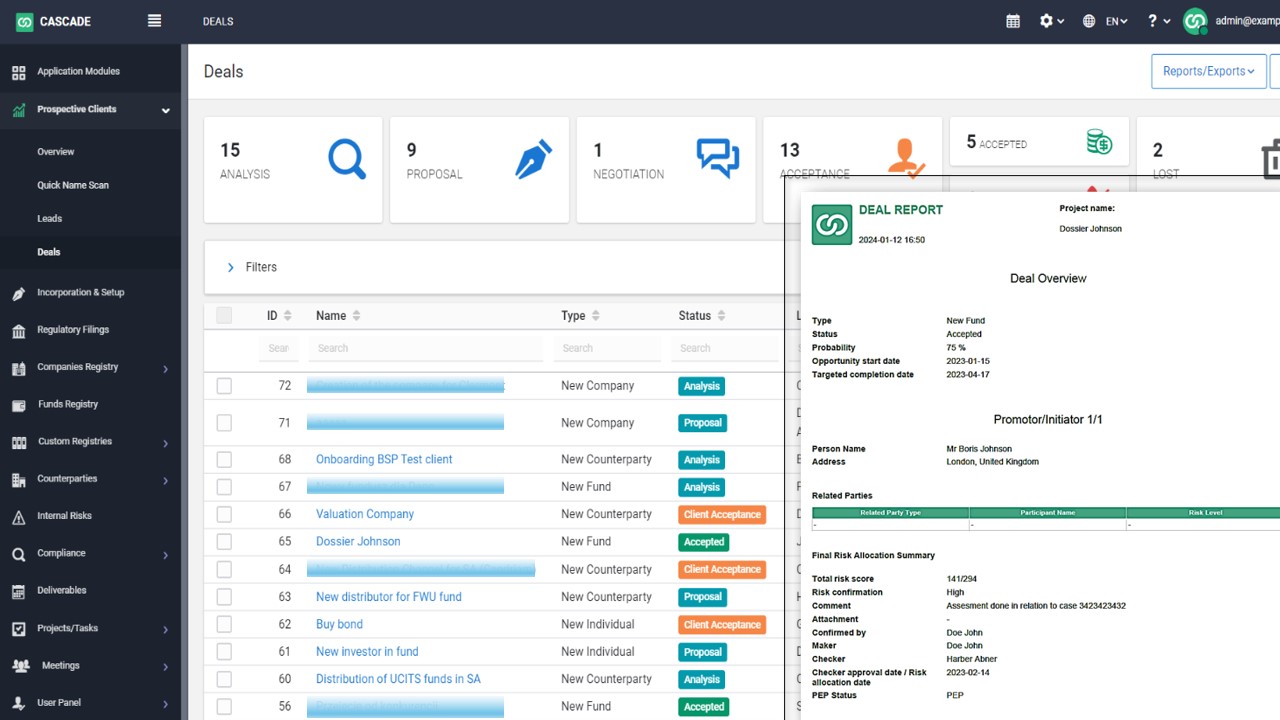
| Regulatory Findings Tracking | Prior year findings are documented informally; remediation status is unclear; findings are not consistently tracked. | Prior year findings are logged in system. Remediation status is tracked. Annual report shows all prior year findings and remediation status. Overdue remediation actions are flagged. |
| Board Communication | Annual report is produced late; distribution is delayed. Board may not receive report until months after reporting period ends. | Annual report is available at end of reporting period. Distribution to Board is scheduled. Board has timely visibility into AML program performance. |
Operationalizing annual reporting through systematic tracking
Manual annual report assembly creates inevitable gaps and delays. Compliance metrics are collected manually from multiple systems; comparison across years is difficult; data accuracy is not verified; the Board receives delayed, potentially inaccurate information. Regulatory findings and remediation status are tracked informally; Board cannot assess whether remediation is progressing appropriately.
A systematic reporting framework embeds compliance metrics tracking throughout the year. Metrics are collected automatically from source systems and validated for accuracy. Annual reports pull metrics automatically and generate year-over-year comparisons and trends. Risk assessments and control effectiveness assessments are data-driven rather than qualitative. Regulatory findings and remediation status are tracked systematically. The Board receives timely, accurate, comprehensive information enabling informed governance of AML compliance.
For French financial institutions subject to AMF and TRACFIN oversight, systematic annual reporting demonstrates that AML program performance is monitored systematically and Board governance is effective.
Common annual reporting challenges
Challenge 1: Inconsistent metrics year-to-year
Different metrics are reported each year; comparison across years is impossible; trends are unclear.
Solution: Define core metrics that are tracked consistently across all years. Use standardized report template so metrics appear in same location each year. Track metrics continuously throughout year so data is available at year-end.
Challenge 2: Late report production
Annual report production begins months after reporting period ends. Board receives report late in following year, reducing timeliness of governance oversight.
Solution: Track metrics continuously throughout year so report can be assembled quickly at year-end. Use standardized report template and automated data extraction so report generation takes days, not weeks.
Challenge 3: Data accuracy not verified
Metrics are reported without verification that data is accurate. Board may make governance decisions based on inaccurate information.
Solution: Implement data validation procedures before metrics are included in report. Reconcile data across systems to verify consistency. Flag anomalies and investigate before finalizing report.
Challenge 4: Risk assessment not data-driven
Risk assessment is qualitative; Board cannot determine whether risk has increased, decreased, or remained stable.
Solution: Develop quantitative risk indicators (number of high-risk customers, SAR volume, investigation metrics, compliance violations). Track indicators systematically so risk assessment can be data-driven.
Challenge 5: Regulatory findings not tracked
Prior year findings are not consistently documented; Board cannot assess remediation progress.
Solution: Maintain a findings log documenting all regulatory findings. For each finding, track remediation status, target completion date, and actual completion date. Annual report should show all outstanding findings and remediation progress.
Best practices for annual AML reporting
Define core metrics
Establish metrics that are tracked consistently across years enabling year-over-year comparison and trend analysis.
Track metrics continuously
Do not wait until year-end to begin collecting metrics. Track throughout year so data is available immediately when report is needed.
Use standardized template
Use consistent report format each year so Board members and regulators know where to find information.
Automate data extraction
Integrate systems so that metrics are extracted automatically rather than manually. Reduces errors and production time.
Validate data quality
Before finalizing report, verify that metrics are accurate and consistent with underlying source data.
Provide trend analysis
Display metrics with year-over-year comparison and trends. Enable Board to assess whether AML program performance is improving or declining.
Include governance sign-off
Obtain Chief Compliance Officer and Board attestation confirming report accuracy and endorsing compliance strategy.
Related readings:
Frequently asked questions
What metrics should be included in an annual AML report?
Customer due diligence completion rate, beneficial ownership verification rate, screening completion rate, average investigation duration, SAR filing timeliness, investigation accuracy rate, staff training completion rate, regulatory findings and remediation status. Include metrics for at least 3 prior years to enable trend analysis.
How often should the Board receive AML compliance reports?
At minimum annually through the annual AML report. Quarterly or semi-annual reports to the Board or compliance committee are also appropriate if AML program is large or risk-significant. Escalation reports should be produced immediately when material compliance issues are identified, regardless of reporting schedule.
What is Cascade and how does it simplify AML/KYC compliance?
Cascade is an end-to-end AML Software (SaaS Platform) that centralises client data and supports AML/KYC workflows from onboarding and risk assessment through to ongoing monitoring and reporting. It helps compliance teams standardise processes, manage documents and screening, apply risk-based workflows, and maintain an audit trail of actions and decisions.
Who can benefit from using Cascade?
Cascade supports organisations with AML/KYC obligations, including financial services firms, fintechs, wealth managers, law firms and corporate service providers.
Explore Cascade’s annual reporting capabilities
French financial institutions produce annual AML reports through manual data assembly from multiple systems when compliance metrics are fragmented. Report production is time-consuming; metrics vary year-to-year; data accuracy is uncertain. Board receives delayed reports with insufficient trend analysis. Regulators cannot see evidence of systematic AML governance.
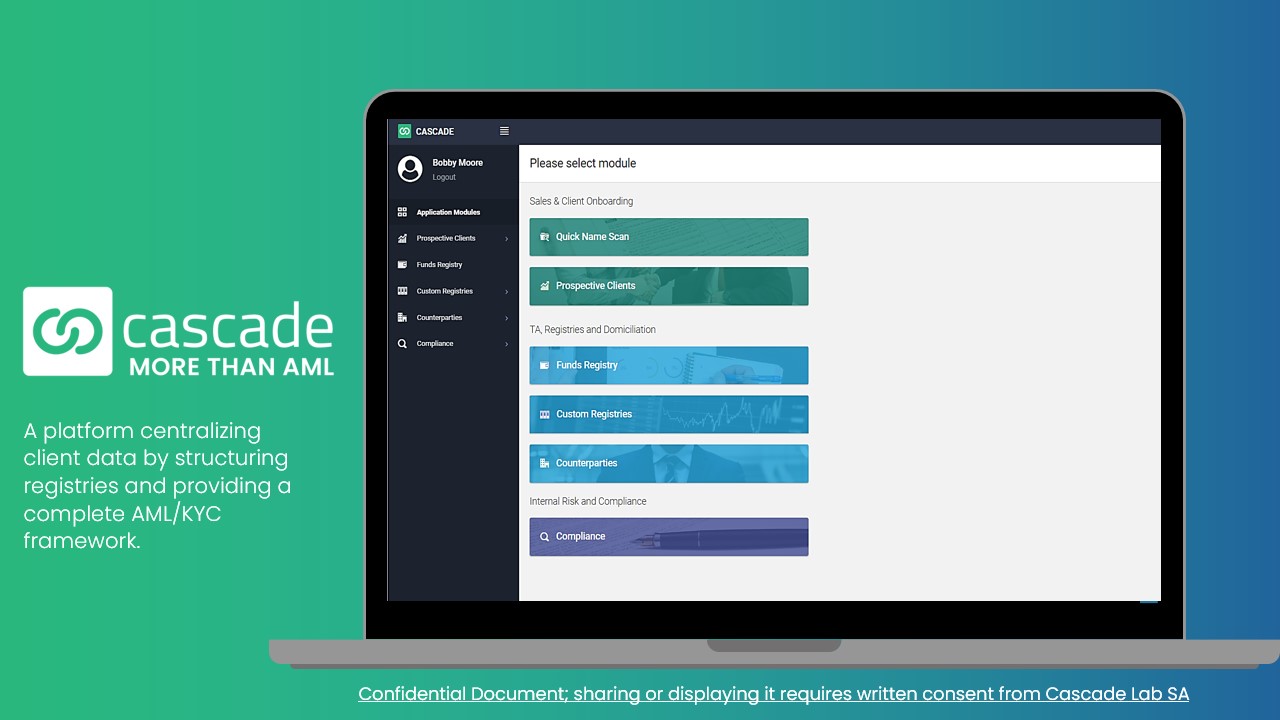
Cascade purpose-built to automate annual AML report generation by tracking compliance metrics throughout the year and extracting them automatically at year-end. Year-over-year comparisons and trends are generated automatically. Data quality is validated before reporting. Risk assessments and control effectiveness assessments are data-driven. Regulatory findings and remediation status are tracked systematically. Annual reports demonstrate to AMF and TRACFIN that AML programs are systematically monitored and governed.
To see how Cascade operationalizes your annual AML reporting, explore Cascade’s AML capabilities.
Disclaimer
This article is for general information only and based on publicly available sources at the time of writing. We have made our best effort to ensure accuracy and relevance to French financial services AML compliance, but AMF and TRACFIN regulations and requirements can change. Always verify key details against current regulatory publications and consult with a qualified compliance specialist before finalizing annual AML reports.


 English
 English (Australia)
 English (UK)