How an AML platform for complex fund structures streamlines multi-entity compliance
Managing anti-money laundering compliance across complex fund structures, multi-tiered feeder arrangements, cross-border master funds, special purpose vehicles, and layered beneficial ownership creates fragmented workflows, incomplete beneficial ownership chains, and audit trail gaps. Fund compliance teams scatter fund entity data, investor records, and screening results across spreadsheets and disconnected systems, losing visibility into consolidated risk and struggling to demonstrate coherent, entity-wide AML governance during regulatory inspection. A purpose-built AML platform for complex fund structures centralizes investor and fund entity data, automates beneficial ownership verification across all tiers, and embeds consistent risk assessment across your entire fund infrastructure.
What is an AML platform for complex fund structures?
An AML platform for complex fund structures is an enterprise-grade compliance system designed to operationalize anti-money laundering workflows across multi-entity fund hierarchies. Unlike generic AML software built for single-entity compliance, a specialized AML platform for complex fund structures supports feeder-master arrangements, parallel investment vehicles, and multi-jurisdictional entity structures by centralizing fund entity relationships, automating beneficial ownership discovery across ownership tiers, integrating screening across all entities and investors, and maintaining unified audit trails across your fund complex.
The platform embeds entity resolution capabilities to map legal entities to ultimate beneficial owners across layers, risk-based segmentation to assign differentiated compliance intensity to each investor and fund entity, and ongoing monitoring workflows that adjust monitoring cadence based on entity risk and jurisdictional factors.
Why it matters for fund managers and compliance teams
Fund compliance teams managing complex structures face three acute operational pressures.
Beneficial ownership complexity
Fund-of-funds, co-investments, and multi-tranche structures obscure ultimate beneficial ownership. Manual beneficial ownership verification requires tracing ownership chains across multiple legal entities, often across jurisdictions. A single investor may be known by different entity names in different fund tiers, and beneficial ownership changes at one tier may affect risk assessment across the entire structure. Without systematic tracking, beneficial ownership becomes opaque, and audit trails fragment.
Regulatory fragmentation
Complex fund structures operate across multiple jurisdictions, each with distinct AML requirements. A Luxembourg master fund may have French sub-funds accepting UK and Cayman Islands investors. Each jurisdiction expects fund managers to demonstrate risk-appropriate due diligence. Without a unified AML platform for complex fund structures, compliance teams maintain separate workflows and screening protocols for each entity or jurisdiction, creating inconsistency and missed risk signals.
Operational inefficiency
Spreadsheet-based compliance across fund tiers requires manual data consolidation. Investor onboarding for a feeder fund involves submitting data to the master fund; investors existing in multiple fund tiers need separate due diligence files; screening results are managed separately for each entity. Re-assessment triggers are missed because changes to beneficial ownership or investor status in one tier don’t automatically flag dependencies in other tiers.
An AML platform for complex fund structures addresses each pressure by automating entity relationship mapping, consolidating multi-tier investor data, and embedding risk-based compliance workflows that span the entire fund infrastructure.
Regulatory framework for complex fund structures
Fund regulators expect managers to operationalize AML controls proportionate to fund complexity and investor risk. The CSSF (Luxembourg), FCA (UK), and CBI (Ireland) each expect documented client risk assessment at investor level and fund entity level, with due diligence intensity reflecting assessed money laundering and terrorist financing risk.
Key regulatory expectations for an AML platform for complex fund structures include:
Entity-level risk assessment on each legal entity within the fund structure, with documented rationale and periodic reassessment. Client-level risk assessment on each investor, with beneficial ownership verification extended across all fund tiers the investor participates in. Consolidated screening across entities and investors at onboarding and periodically thereafter, with audit evidence that screening was performed. Beneficial ownership verification that traces ultimate beneficial owners across ownership tiers and confirms transparency or flags opacity. Ongoing monitoring workflows that adjust monitoring frequency based on entity risk and investor transaction patterns, with documented monitoring decisions retained.
How to implement an AML platform for complex fund structures
Step 1: Map entity relationships and structure
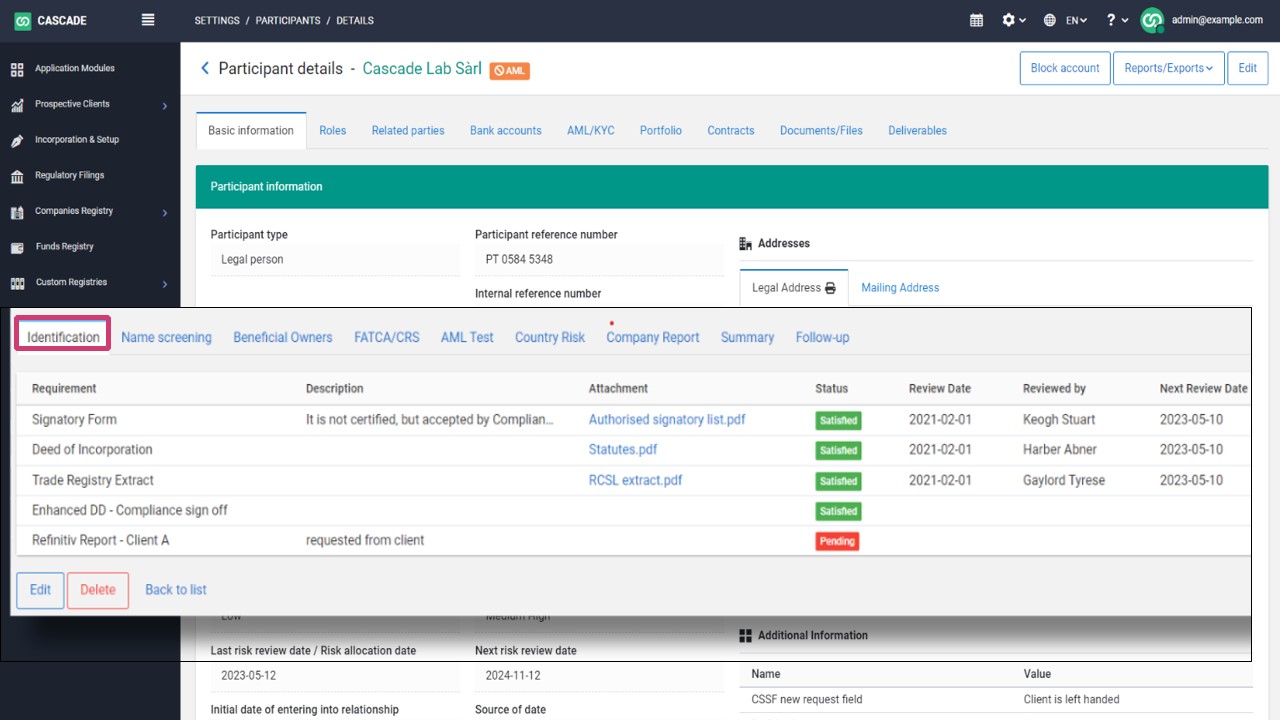
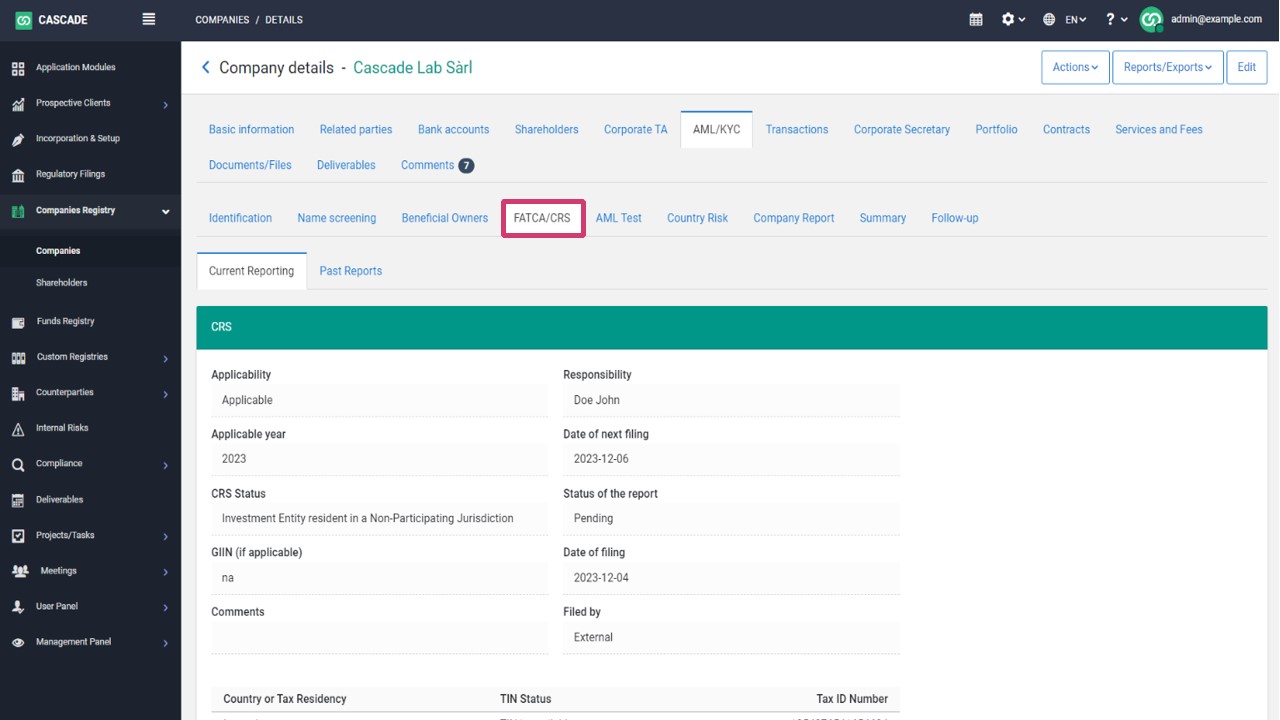
Document your fund architecture within the AML platform for complex fund structures. Identify all legal entities (master fund, feeder funds, side pockets, SPVs), their relationship hierarchy, and the regulatory jurisdictions governing each entity. Link investor subscriptions to specific fund tiers so the platform can track which investors are exposed to which entities and risk profiles.
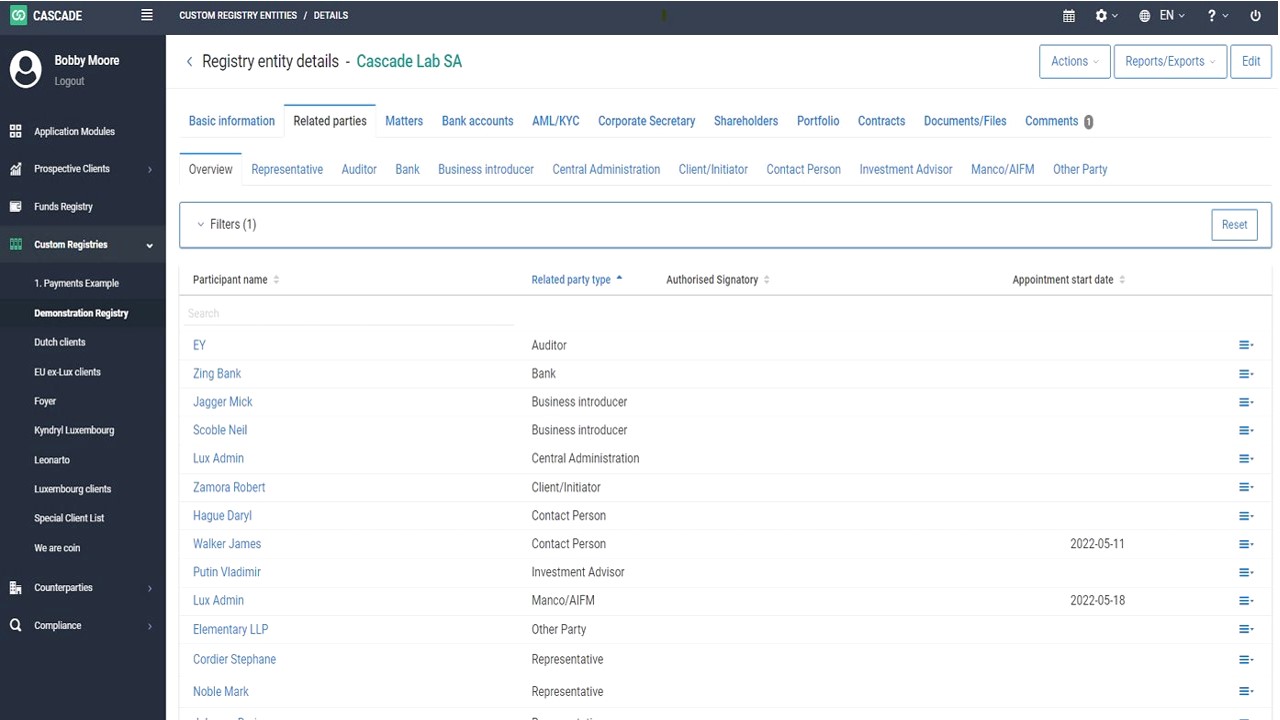
The platform’s entity resolution capabilities automatically identify when the same beneficial owner appears across multiple entities (under different legal names, jurisdictions, or holding structures) and flag these relationships for consolidated due diligence and monitoring.
Step 2: Establish differentiated risk models by entity and tier
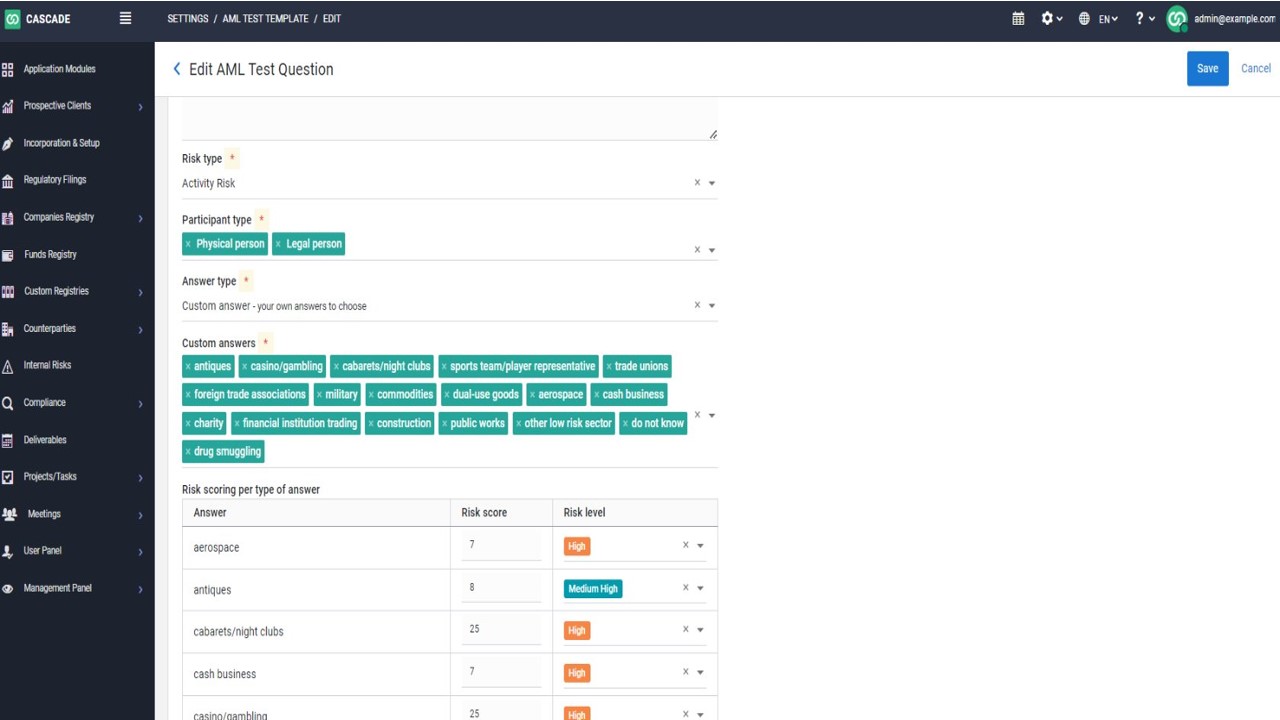
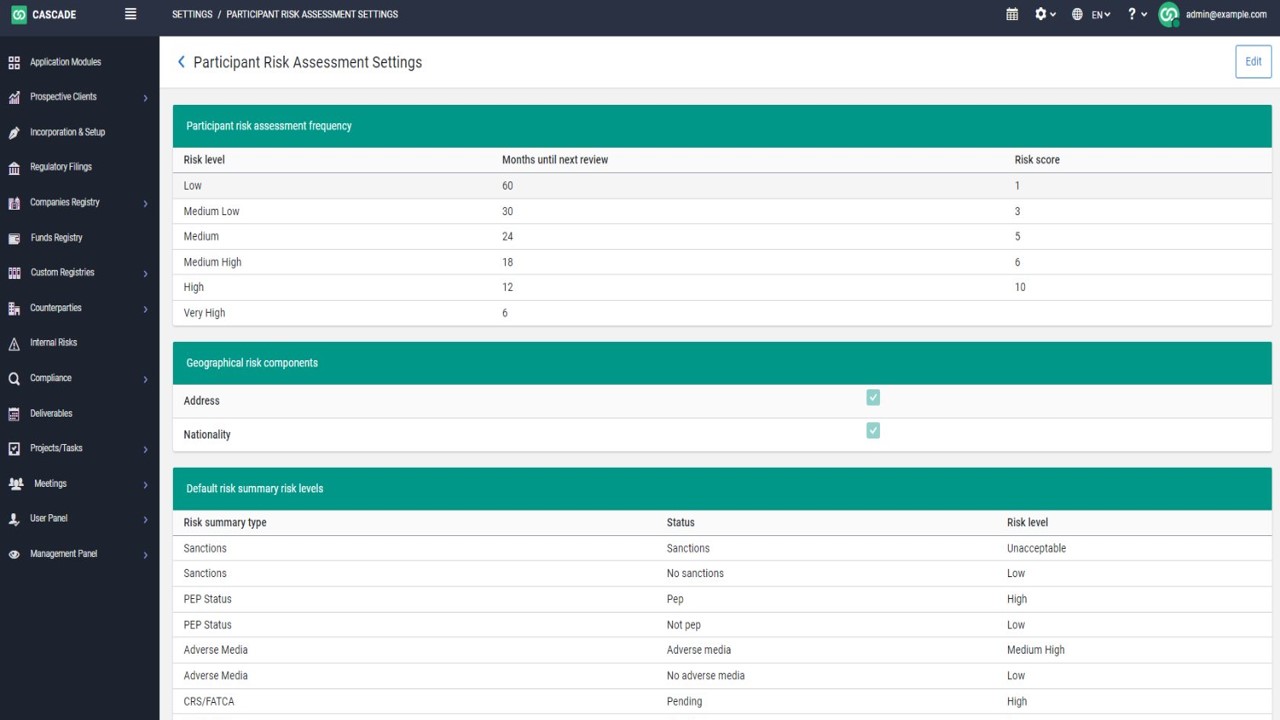
Define risk assessment matrices specific to each fund entity based on investment strategy, investor base, and jurisdictional exposure. A master fund accepting institutional investors may follow streamlined assessment; a feeder fund accepting retail investors may require enhanced verification. Configure the AML platform for complex fund structures to apply entity-specific risk criteria at onboarding and re-assess risk based on investor-reported changes or screening alerts.
Link risk ratings to differentiated due diligence workflows so that high-risk investors and high-risk fund tiers automatically trigger enhanced documentation and ongoing monitoring.
Step 3: Automate multi-tier beneficial ownership verification
Configure beneficial ownership verification workflows that trace ownership across all tiers. When an investor onboards to a feeder fund, the platform automatically checks whether that investor (or beneficial owners underlying that investor) exist in the master fund or other fund tiers. If beneficial ownership has already been verified at the master fund level, the platform flags this relationship rather than requiring duplicate verification.
For complex ownership structures (corporate vehicles, trusts, SPVs), the platform maintains documented beneficial ownership charts and automates re-verification triggers when beneficial ownership changes.
Step 4: Integrate screening and ongoing monitoring across entities
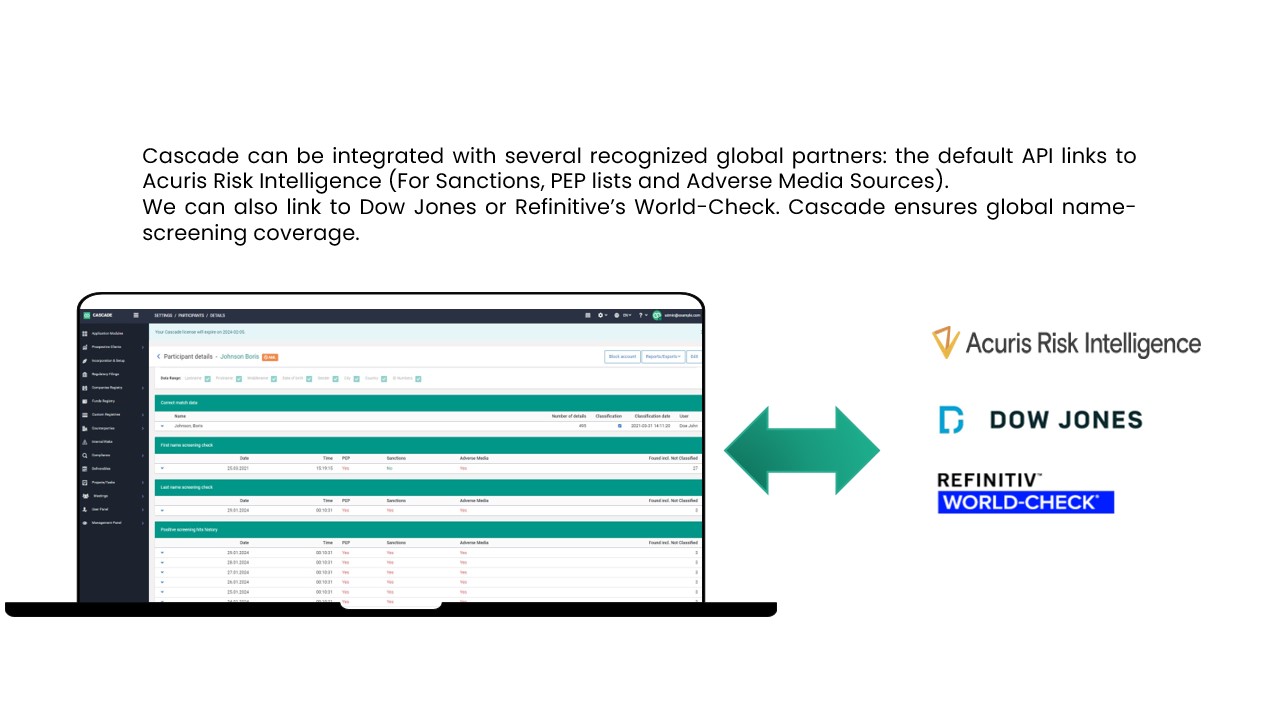
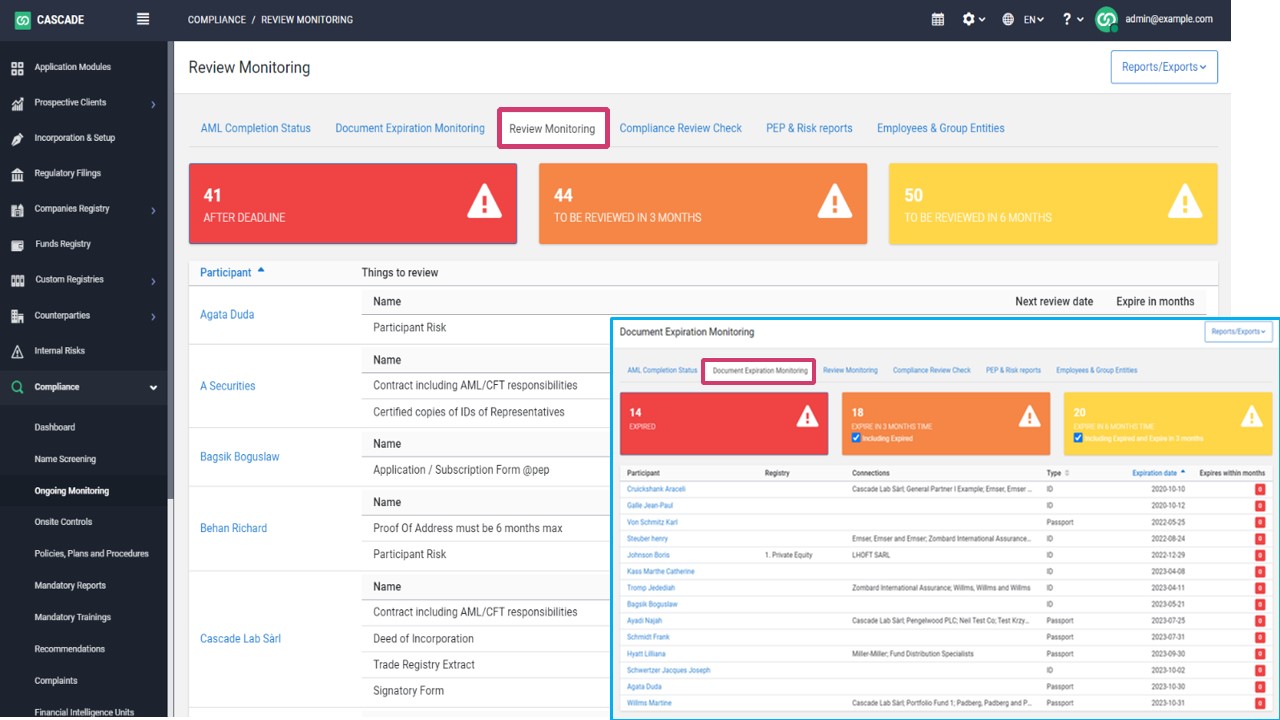
Configure a unified screening workflow across all fund entities and investors using screening API integration. The AML platform for complex fund structures screens all new investors and fund entities against sanctions, adverse media, and regulatory databases at onboarding. Configure ongoing monitoring thresholds differentiated by entity risk and investor transaction patterns, with automated alerts sent to compliance teams and investigation workflows that maintain audit trails of alert triage decisions.
Operationalizing these four steps requires a purpose-built AML platform for complex fund structures.
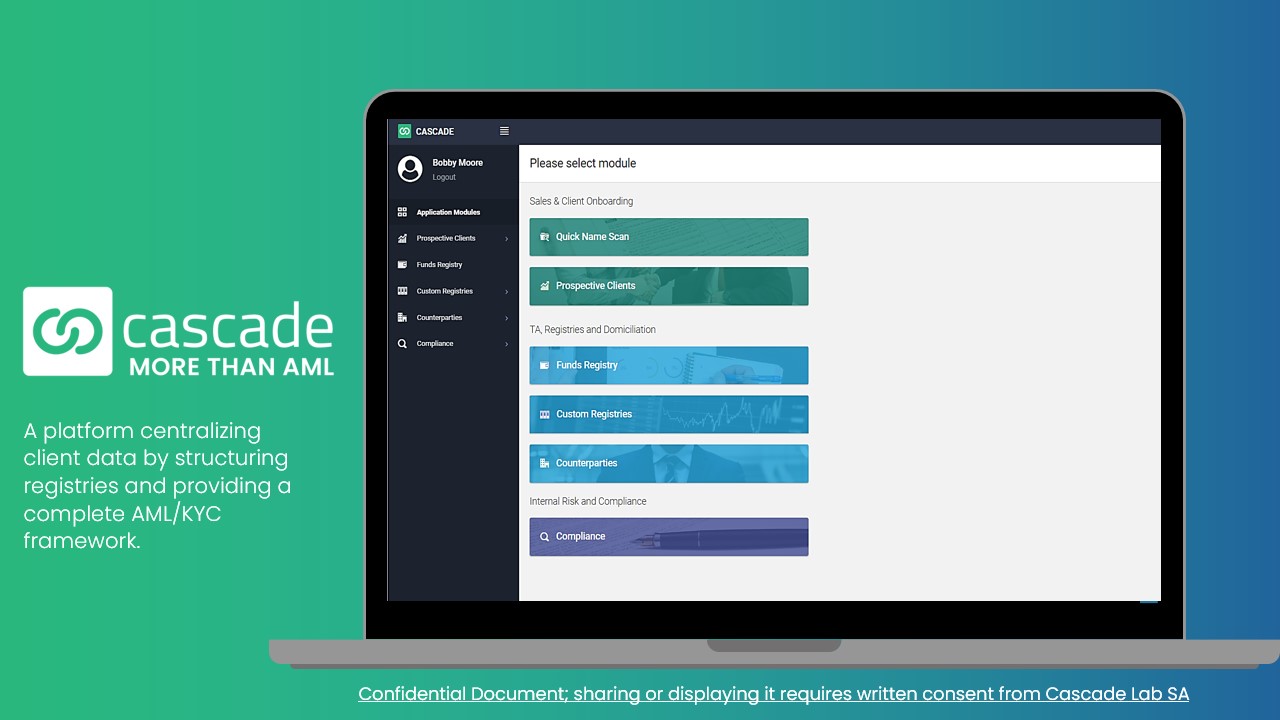
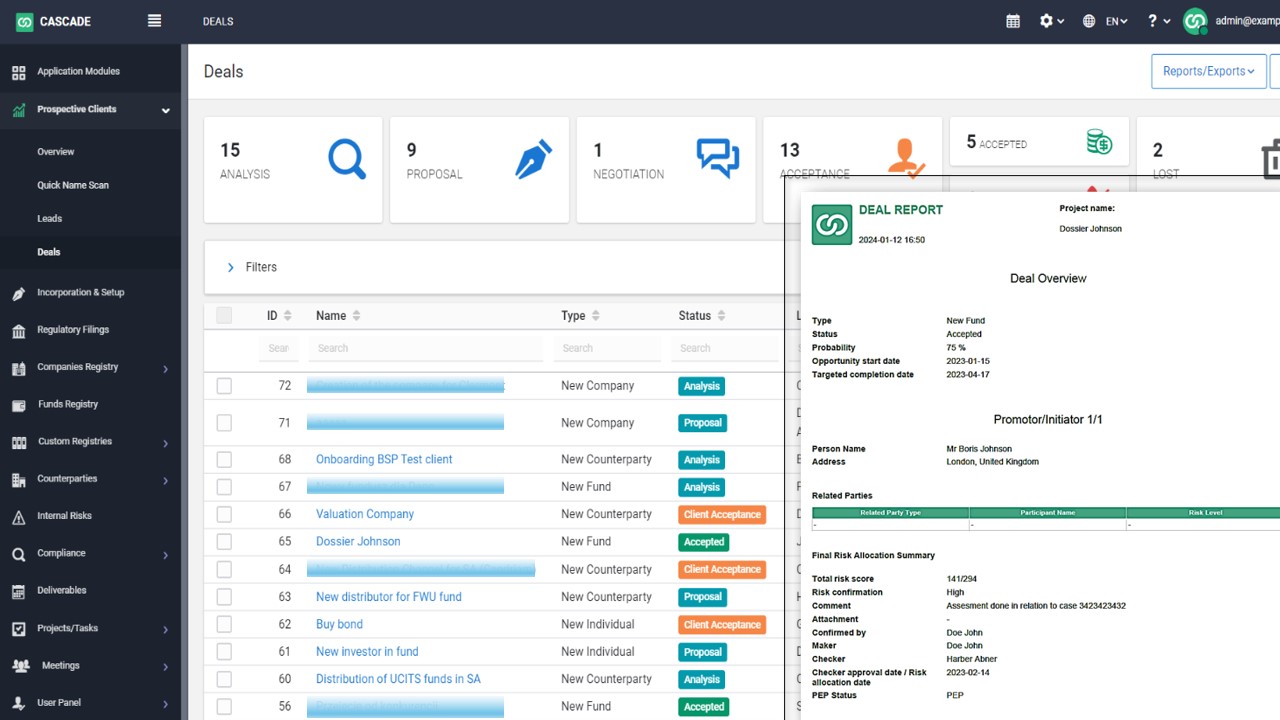
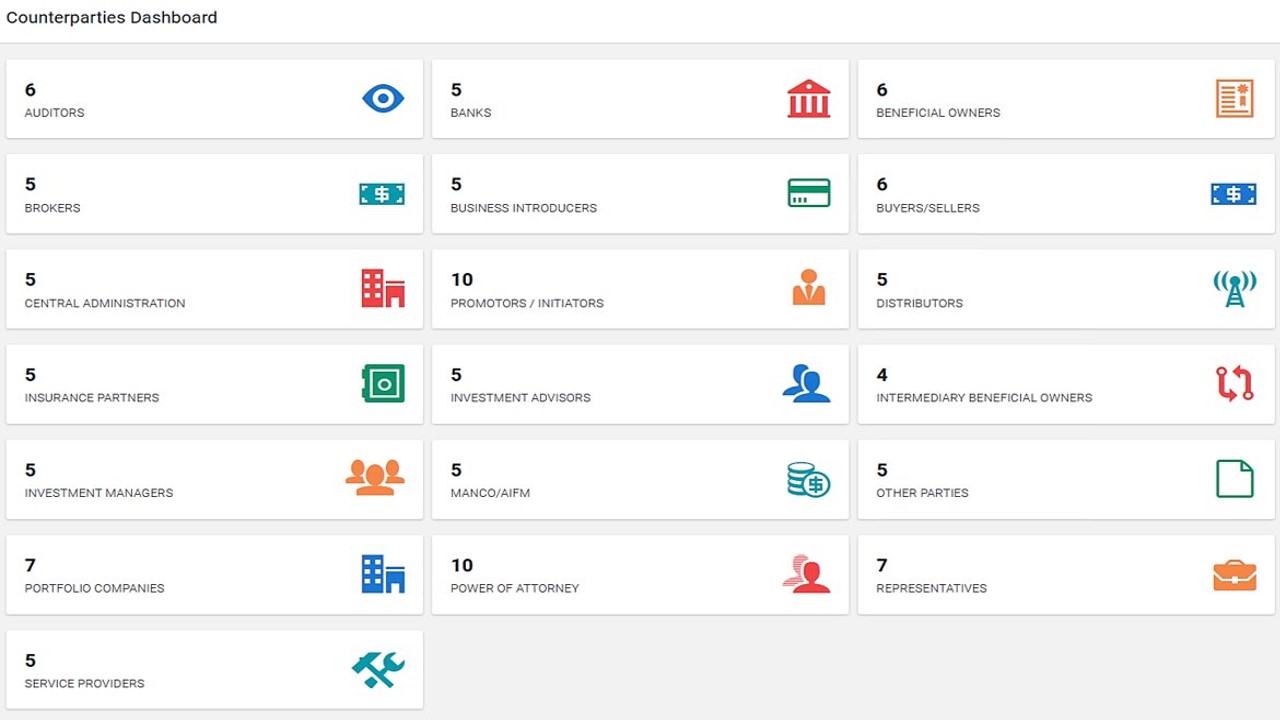
Cascade embeds entity relationship mapping, beneficial ownership automation, and consolidated risk assessment into unified workflows so that multi-tier fund compliance operates as a single system rather than fragmented entity-by-entity processes.
With Cascade, entity structure changes automatically trigger risk re-assessment and monitoring adjustments across all linked fund tiers; beneficial owners traced in one fund tier are instantly visible across all entities; screening results deduplicate across entities so you’re not screening the same beneficial owner multiple times; and regulatory inspection-ready audit trails document every compliance decision across your entire fund infrastructure.
Comparison: manual spreadsheet-based compliance vs. AML platform for complex fund structures
| Operational Metric | Manual Spreadsheet Process | Cascade AML Platform for Complex Fund Structures |
|---|---|---|
| Beneficial ownership verification | Separate Excel files maintained for each fund tier; manual cross-checking for duplicate beneficial owners; beneficial ownership changes in one tier manually reconciled to others; no centralized verification chain. Multiple versions proliferate; audit trail fragmented. | Unified entity resolution across all tiers; platform automatically identifies same beneficial owner across entities; beneficial ownership updated once, visible across all linked fund tiers; audit-ready ownership verification chains retained. |
| Risk assessment and monitoring | Separate risk matrices for each fund entity, often inconsistently applied; no automated re-assessment triggers for investor changes or regulatory updates; monitoring thresholds manually configured per entity; monitoring intensity not linked to risk ratings. | Centralized risk matrix engine applies consistent criteria across all fund entities; automatic re-assessment triggered by beneficial ownership changes, screening matches, or regulatory updates; monitoring workflows automatically adjust thresholds based on entity risk and investor profiles. |
| Screening and alert management | Screening conducted separately for each entity; same investor screened multiple times across fund tiers; screening results scattered across email and system exports; investigation decisions undocumented or manually recorded; audit trail incomplete. | Single screening workflow across all fund entities; intelligent deduplication prevents redundant screening of same beneficial owner across tiers; screening API integration captures results automatically; investigations documented in platform with escalation audit trails; consolidated screening record available per investor. |
| Audit trail and regulatory inspection readiness | Scattered documentation across multiple systems; risk assessment rationales informal or absent; onboarding workflows lack timestamps; beneficial ownership verification undocumented; regulatory inspection requires manual file reconstruction. Weeks of collection effort; gaps emerge during inspection. | Comprehensive audit trail linking entity relationships, risk assessments, beneficial ownership verification, screening results, and monitoring decisions. All actions timestamped and linked to supporting evidence. Regulatory inspection-ready reports generated on demand. Full compliance documentation available within hours. |
Common challenges with complex fund structure compliance
Challenge 1: Beneficial ownership fragmentation across tiers
Same beneficial owner appears in master fund and feeder fund under different legal names, different entity structures, or different holding arrangements. Due diligence conducted separately for each appearance, creating duplicate effort and missed relationships. Risk assessment inconsistent across tiers because beneficial ownership opacity isn’t detected when beneficial owner information isn’t consolidated.
Solution: Implement a centralized AML platform for complex fund structures with entity resolution capabilities that automatically match beneficial owners across tiers even when names, jurisdictions, or structure differ. Configure the platform to consolidate due diligence findings and flag when the same beneficial owner has different risk ratings in different fund tiers.
Challenge 2: Screening duplication and gaps
Investors appearing in multiple fund tiers are screened separately for each subscription, wasting screening budget and creating inconsistent results if screening databases update between screening events. New fund entities are onboarded without systematic screening, creating audit gaps.
Solution: Configure automated screening deduplication in the AML platform for complex fund structures so that beneficial owners identified through entity resolution are screened once and results applied across all fund tiers. Mandate screening workflows for all new fund entities at structure inception.
Challenge 3: Inconsistent risk assessment across entities
Different fund entities apply different risk criteria even when managing similar investor populations. A corporate investor rated medium-risk in one fund may be rated low-risk in another. Monitoring intensity varies inconsistently by entity rather than by investor risk profile.
Solution: Establish fund-entity-specific risk matrices within the AML platform for complex fund structures but require documented rationale when risk ratings differ for the same investor across funds. Configure the platform to flag inconsistencies and require approval for divergent ratings.
Challenge 4: Monitoring blind spots at parent-subsidiary level
Beneficial ownership or transaction anomalies affecting a feeder fund investor aren’t automatically flagged at the master fund level. A master fund investor’s risk changes due to screening alert or regulatory finding but isn’t automatically reflected in monitoring intensity for that investor’s subscriptions to feeder funds.
Solution: Configure ongoing monitoring workflows to operate across the entire fund structure hierarchy. Transaction alerts, beneficial ownership updates, and screening matches should trigger automatic re-assessment across all fund tiers the affected investor participates in.
Challenge 5: Audit trail fragmentation during inspection
When regulators request documentation of beneficial ownership verification or risk assessment for a specific investor across multiple fund tiers, compliance teams must manually assemble evidence from multiple systems. Documentation is incomplete or inconsistent because different fund entities maintain different record-keeping standards.
Solution: Implement consolidated audit logging in the AML platform for complex fund structures that captures all actions (screening, beneficial ownership verification, risk assessment, monitoring decisions) with timestamps and linking to source documents. Generate audit-ready reports on demand for regulatory inspection.
Best practices for AML platform implementation in complex fund structures
Establish fund structure governance.
Define clear ownership of AML compliance for each fund entity and tier. The fund MLRO oversees consolidated compliance; individual fund managers own entity-level workflows; compliance officers execute onboarding and monitoring. Clarify escalation paths for entity-level risk issues that affect the entire fund complex.
Configure entity-aware workflows.
When implementing the AML platform for complex fund structures, ensure all workflows recognize entity relationships. Investor data collection should distinguish between data owned by master fund vs. feeder fund; beneficial ownership verification should trace across entities; monitoring thresholds should reflect entity-level risk.
Use entity resolution systematically.
Make entity resolution a foundational component of the AML platform for complex fund structures. Configure matching logic to identify beneficial owners across entities even when names differ. Maintain entity resolution audit logs so compliance teams can understand why the platform linked two seemingly different beneficial owners.
Define monitoring by entity tier.
Not all fund tiers require identical monitoring intensity. Master funds accepting sophisticated institutional investors may require less frequent monitoring than feeder funds. Configure the AML platform for complex fund structures to adjust monitoring workflows by fund tier while maintaining consistent application across investors within each tier.
Document rationale for cross-entity decisions.
When the AML platform for complex fund structures identifies issues (beneficial ownership opacity, regulatory matches, monitoring escalations) affecting multiple fund entities, document the decision and rationale. This evidence is critical during regulatory inspection to demonstrate that fund management considered cross-entity risk implications.
Test workflows on a sample.
Before deploying the AML platform for complex fund structures firm-wide, test entity mapping, beneficial ownership verification, and screening workflows on a representative sample of complex investor relationships. Identify workflow gaps before full rollout.
Frequently asked questions
How does an AML platform for complex fund structures handle feeder-master fund arrangements?
The platform maps feeder-master relationships and automatically consolidates beneficial ownership verification across tiers. When an investor appears in both master and feeder funds, the platform identifies this relationship, applies consistent risk assessment, and ensures screening results and due diligence findings are consolidated rather than duplicated.
Can the AML platform for complex fund structures track beneficial ownership changes across multiple fund entities automatically?
Yes. Configure automated beneficial ownership update workflows so that when beneficial ownership changes for an investor in one fund entity, the platform flags all other fund entities where that investor participates for risk re-assessment and monitoring review.
What screening integrations does an AML platform for complex fund structures support?
Purpose-built platforms support screening API integration with major sanctions and adverse media providers (OFAC, EU sanctions lists, adverse media databases), with automated deduplication so the same beneficial owner is screened once and results applied across all fund tiers.
How does an AML platform for complex fund structures support ongoing monitoring across tiers?
The platform maintains consolidated transaction monitoring workflows that apply risk-based thresholds to all fund entities and investors. Monitoring alerts can be triggered by transactions in any fund tier and escalated for investigation with consolidated audit trails.
What is Cascade and how does it simplify AML/KYC compliance?
Cascade is an end-to-end AML Software (SaaS Platform) that centralises client data and supports AML/KYC workflows from onboarding and risk assessment through to ongoing monitoring and reporting. It helps compliance teams standardise processes, manage documents and screening, apply risk-based workflows, and maintain an audit trail of actions and decisions.
Who can benefit from using Cascade?
Cascade platform supports organisations with AML/KYC obligations, including financial services firms, fintechs, wealth managers, law firms and corporate service providers.
How does Cascade ensure data security and regulatory compliance?
Cascade provides controlled workflows, activity logging and audit trails to support traceable AML/KYC processes. Compliance still depends on your policies, configuration and applicable regulations.
How can I get started with Cascade?
Book a demo with Cascade to discuss your AML/KYC requirements, explore the platform and identify how it can support your workflows.
Explore Cascade’s AML capabilities
Fund managers operating complex structures across multiple jurisdictions face significant compliance friction when managing beneficial ownership verification, entity relationship mapping, and monitoring across decentralized systems. An AML platform for complex fund structures should consolidate entity and investor data, automate beneficial ownership tracing across tiers, and embed consistent risk assessment across your entire fund infrastructure.
Cascade is purpose-built to operationalize AML compliance for complex fund structures by automating entity relationship mapping, centralizing beneficial ownership verification across fund tiers, and maintaining unified audit trails of screening, risk assessment, and monitoring decisions. To see how Cascade can streamline your complex fund compliance framework, explore Cascade’s AML capabilities.
Disclaimer
This article is for general information only and based on publicly available sources and regulatory guidance at the time of writing. We’ve made our best effort to ensure accuracy and relevance to complex fund management compliance, but AML regulations, fund structures, and business requirements can change. Always verify key details against current regulator publications and consult with a qualified compliance specialist or legal advisor before making compliance or vendor decisions.


 English
 English (Australia)
 English (UK)