How to meet JFSC AML requirements
Introduction
Selling into, or operating from, Jersey means your KYC workflows must align with the island’s robust AML framework. This guide explains what “best KYC SaaS” should deliver for Jersey regulated firms, why alignment with the Jersey Financial Services Commission Handbook matters, and how to operationalise a risk-based approach that satisfies auditors and boards. It is written for compliance leads, MLROs, CTOs, and operations teams across banking, funds, trust and corporate services, insurance, and fintech.
We use publicly available sources and reference the current AML/CFT/CPF Handbook, the Money Laundering Order, and the Proceeds of Crime Law to keep the guidance accurate. Where a capability depends on vendor configuration, we present it as a potential feature, not a confirmed fact. For legal advice, consult a qualified Jersey specialist.
Regulatory framework in Jersey
Primary sources to design against
- JFSC AML/CFT/CPF Handbook, applicable to supervised persons described as “relevant persons” under the Money Laundering Order.
- Money Laundering, Jersey Order 2008, official consolidated version, including definitions, customer due diligence, and ongoing monitoring.
- Proceeds of Crime, Jersey Law 1999, official consolidated version.
- Sanctions regime and practical guidance provided by the regulator and the Government of Jersey.
- The FIU’s operational independence and the requirement to submit Suspicious Activity Reports to the FIU, not the JFSC.
Key takeaways for product requirements
- Your KYC platform must enable policies and controls that mirror the JFSC Handbook’s principles, including risk assessment, CDD, EDD, monitoring, record-keeping, and reporting.
- SAR workflows should route to the Jersey Financial Intelligence Unit with auditable consent handling for account freezes or continuations where applicable.
- Sanctions screening must reflect Jersey’s implementation of UK measures, with local licensing considerations tracked from the Government of Jersey guidance.
Obligations by industry
Although the underlying laws are consistent, practical emphasis differs by sector.
Banks and deposit takers
Higher SAR volumes and complex correspondent flows mean automated adverse media, relationship-level risk scoring, and frequent periodic reviews are table stakes. FIU statistics show banks as the largest reporting sector in recent snapshots, signalling heightened scrutiny.
Trust and corporate service providers
Expect robust beneficial ownership, control verification, and purpose-and-nature assessments for complex vehicles. Your SaaS should capture multi-layered UBO graphs and trigger EDD on opaque structures in line with the Handbook.
Fund services and investment businesses
Investor onboarding at scale requires list management for PEPs and sanctions, flexible SDD for low-risk products, and strong travel rule alignment where applicable to virtual asset exposure.
Insurance and e-money/fintech
Non-face-to-face onboarding must include robust biometric verification and liveness checks. Risk models should penalize high-risk channels and geographies while enabling proportional SDD where justified by product risk.
Risk-based approach, made actionable
A “best KYC SaaS” for Jersey should let you encode the island’s expectations into configurable, testable rules.
What good looks like
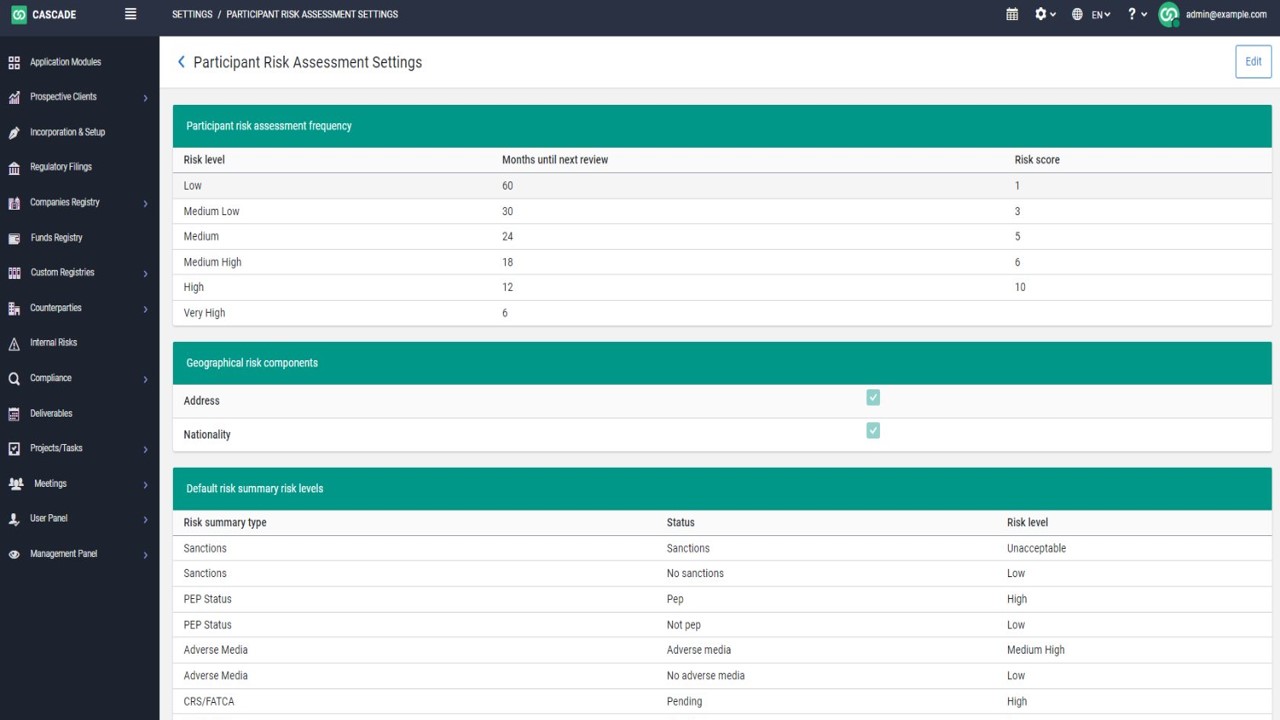
- Risk assessment builder: Define business-wide and customer-level risk factors aligned to the Handbook, then weight by product, geography, delivery channel, and customer type.
- CDD orchestration: Tiered CDD with triggers for EDD, including source-of-wealth narrative capture, document references, corroboration checks, and enhanced approval paths for PEPs.
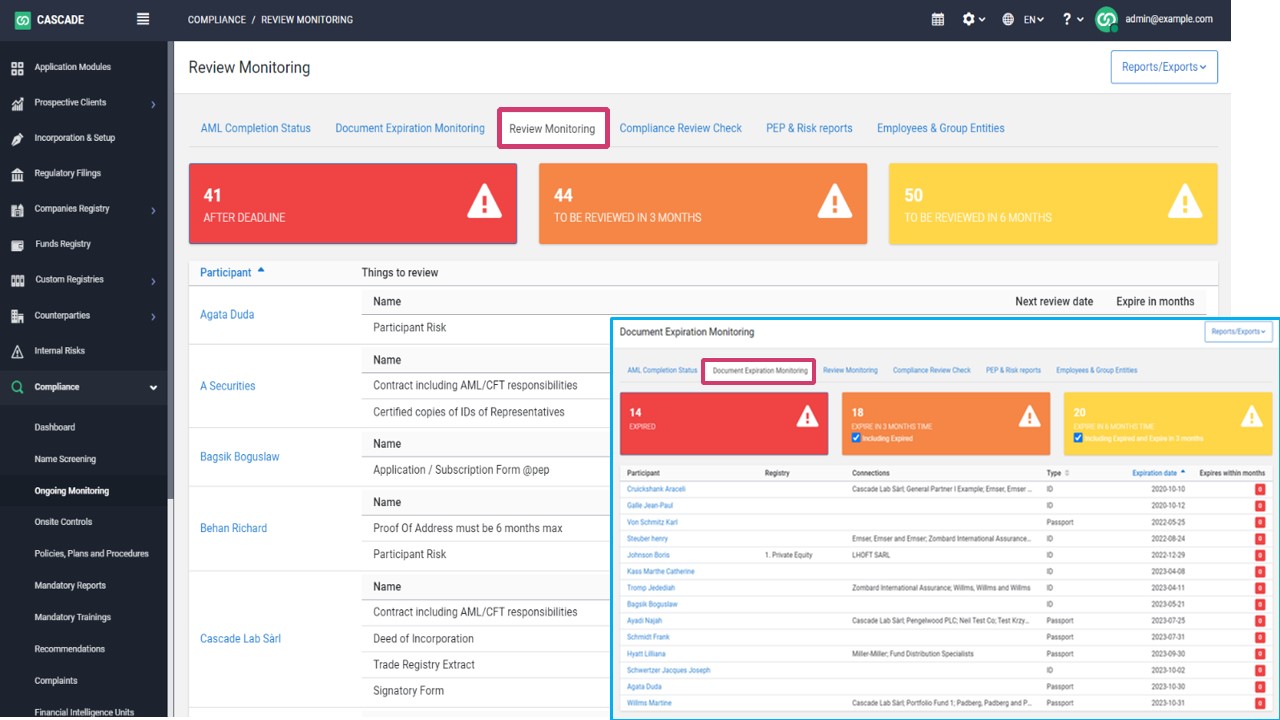
- Ongoing monitoring: Event-driven and periodic reviews, sanctions re-checks on data changes, adverse media refresh cycles, and anomaly detection tuned to Jersey risk indicators.
- SAR decisioning and audit: Guided forms reflecting local legal thresholds, routing to the FIU, consent tracking, and immutable evidence logs.
- Record-keeping: Retention controls that reflect local statutory minima and allow legal hold, with searchable timelines for competent authority requests.
- Sanctions governance: Screening against lists applicable in Jersey and clear handling of general or specific license conditions.
Data protection in Jersey, implications for KYC SaaS
KYC processing involves personal and special-category data. The Data Protection, Jersey Law 2018, equivalent to EU GDPR in effect, sets principles for lawful, fair, and secure processing, overseen by the Jersey Office of the Information Commissioner. A KYC tool must support lawful basis mapping, data subject rights, and secure transfer controls.
Practical data requirements
- Lawful basis: Map CDD processing to legal obligation or public interest where appropriate, with per-field registries and DPIA templates.
- Security: Encryption at rest and in transit, least-privilege access, and event logging sufficient for JOIC investigations.
- Data retention: Configurable schedules aligned to AML retention duties and DPJL minimisation principles, with defensible deletion workflows.
What the “best KYC SaaS in Jersey” should include
Below is a capability checklist you can use during vendor selection and proof-of-concept. These map back to the sources cited above.
✅ Jersey policy pack: Out-of-the-box policy templates aligned to the JFSC Handbook sections, editable to your risk profile.
✅ Dynamic risk scoring: Business-wide, relationship, and UBO-graph scores, with explainability for model outputs.
✅ Document and identity orchestration: Jersey-ready IDV, PEP screening, beneficial ownership capture, and EDD evidence management.
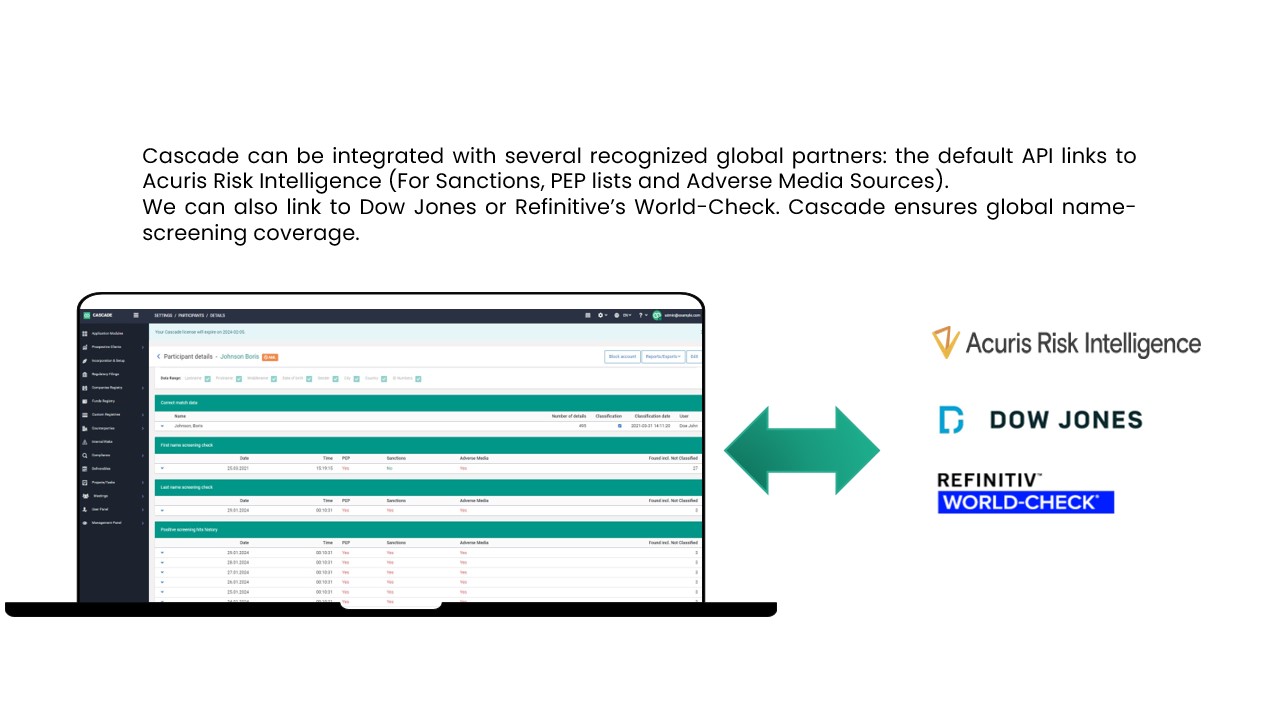
✅ Sanctions management: Screening tailored to Jersey’s implementation of UK measures plus license workflows.
✅ SAR center: Guided reporting to the FIU with consent management and audit trails.
✅ Ongoing monitoring: Adverse media refresh, periodic review scheduling, and change-event triggers.
✅ Retention and evidence: Configurable retention with immutable timelines for supervisory or FIU inquiries.
✅ Data protection controls: Support for DPJL principles, subject rights intake, and breach response.
Practical steps to implement, fast
- Gap-fit against the Handbook: Use a control-by-control matrix that maps your current policies to Handbook requirements, highlighting what the SaaS will automate versus what remains procedural.
- Design your risk taxonomy: Define customer, product, channel, and geography factors, then encode thresholds for SDD, CDD, and EDD. Validate with sample files and MLRO sign-off.
- Pilot with high-risk cohorts: Start with PEPs, complex ownerships, and non-face-to-face onboarding to prove EDD and monitoring. Measure review cycle time and false positives.
- Wire SAR workflows to the FIU: Configure routing, decision prompts, and consent tracking. Rehearse scenarios and evidence capture.
- Test sanctions edge cases: Validate list refresh frequency, fuzzy matching, and licence handling against Jersey guidance.
- Close the DPJL loop: Complete a DPIA, implement role-based access, and finalise retention schedules that satisfy both AML duties and data minimisation.
FAQs
Who regulates AML and KYC in Jersey?
The Jersey Financial Services Commission supervises compliance with AML/CFT/CPF requirements through its Handbook and sectoral rules.
Where do we file SARs?
File Suspicious Activity Reports with the Jersey Financial Intelligence Unit. Do not send SARs to the JFSC.
Does Jersey follow UK sanctions lists?
Jersey implements UK sanctions through its own legislation and guidance, so you must screen accordingly and consider any licensing issued locally.
What about data protection during KYC?
The Data Protection, Jersey Law 2018 applies, overseen by the Jersey Office of the Information Commissioner. Your KYC SaaS should support lawful basis mapping, DPIAs, access controls, and retention.
Should our policy include EDD triggers specific to Jersey?
Yes, align EDD triggers with the JFSC Handbook’s expectations, including for PEPs, complex structures and higher-risk geographies or delivery channels.
See also
- JFSC AML/CFT/CPF Handbook overview and consolidated sections.
- Money Laundering, Jersey Order 2008, official consolidated version.
- Proceeds of Crime, Jersey Law 1999, consolidated.
- FIU operational independence announcement and SAR statistics notes.
Get started with AML tools
If you are evaluating KYC SaaS for Jersey, we can help you scope controls that match the JFSC Handbook, wire SAR workflows to the FIU, and validate sanctions screening for local requirements.
Explore Cascade’s KYA Capabilities and Get Started with AML Tools to see how your policies translate into configurable controls for Jersey.
Disclaimer: This article is for general information only and based on publicly available sources at the time of writing. We’ve done our best to make it accurate and useful, but AML rules and business needs can change. Always double-check key details and speak with a qualified expert before making compliance or vendor decisions.



 English
 English (Australia)
 English (UK)