How to build a CDD evidence pack that meets AUSTRAC requirements
Australian financial institutions and reporting entities operate under one of the world’s most prescriptive customer due diligence frameworks. The Australian Transaction Reports and Analysis Centre (AUSTRAC) expects reporting entities to collect, verify, and maintain comprehensive customer due diligence (CDD) evidence packs documenting customer identity, beneficial ownership, source of wealth, and ongoing compliance status.
Yet compliance teams across Australian firms manage CDD evidence scattered across email, document repositories, and disconnected systems. When AUSTRAC requests CDD evidence during compliance examination, firms cannot produce complete evidence packs and face enforcement findings for inadequate documentation. A CDD evidence pack is not optional compliance administration; it is the regulatory foundation that demonstrates your institution meets its AML/CTF Act obligations.
This guide walks you through building CDD evidence packs that withstand AUSTRAC scrutiny while enabling consistent, auditable customer onboarding across your organization.
The AUSTRAC CDD evidence imperative
AUSTRAC’s AML/CTF Compliance Supervision framework establishes explicit requirements that reporting entities maintain comprehensive customer due diligence evidence. The AML/CTF Act 2006 requires reporting entities to identify customers, verify identity, and identify beneficial owners before establishing customer relationships. AUSTRAC examinations specifically focus on CDD evidence completeness and verification adequacy.
Yet compliance teams struggle to assemble complete CDD evidence packs when due diligence is conducted across multiple systems. Identity verification documents are stored in one system, beneficial ownership information is maintained in another, and source of wealth documentation is managed elsewhere. When AUSTRAC requests evidence, compliance officers must manually search multiple repositories to construct evidence packs, a process that is time-consuming and error-prone.
A systematic CDD evidence pack structure eliminates this operational friction. All evidence supporting a customer’s due diligence is linked in one location, organized consistently, and readily producible to AUSTRAC. Your institution demonstrates that customer due diligence was actually performed, not merely documented as policy.
What is a CDD evidence pack?
A CDD evidence pack is a comprehensive collection of documents and records that evidence customer due diligence performed in compliance with the AML/CTF Act. The pack documents customer identity, beneficial ownership identification and verification, source of wealth, and ongoing compliance monitoring. The pack is organized consistently across all customers and retained for the AML/CTF Act’s 7-year record retention requirement.
A complete CDD evidence pack includes:
- Customer identification documents: Copies of government-issued identification documents used to verify customer identity (passport, driver’s license, and other identity documents acceptable under AML/CTF Rules)
- Identity verification evidence: Records of verification method (in-person inspection, document scanning, third-party verification service, electronic verification) and verification date
- Customer classification: Documented assessment of whether the customer is an individual, corporate entity, government entity, or other entity type
- Beneficial ownership identification: For corporate entities, documented identification of beneficial owners with >25% control
- Beneficial ownership verification: Documentary evidence verifying beneficial ownership (corporate filings, board resolutions, shareholder registers, trust documents, third-party beneficial ownership verification)
- Source of wealth assessment: Documented assessment of source of funds for high-value customers or customers with risk indicators
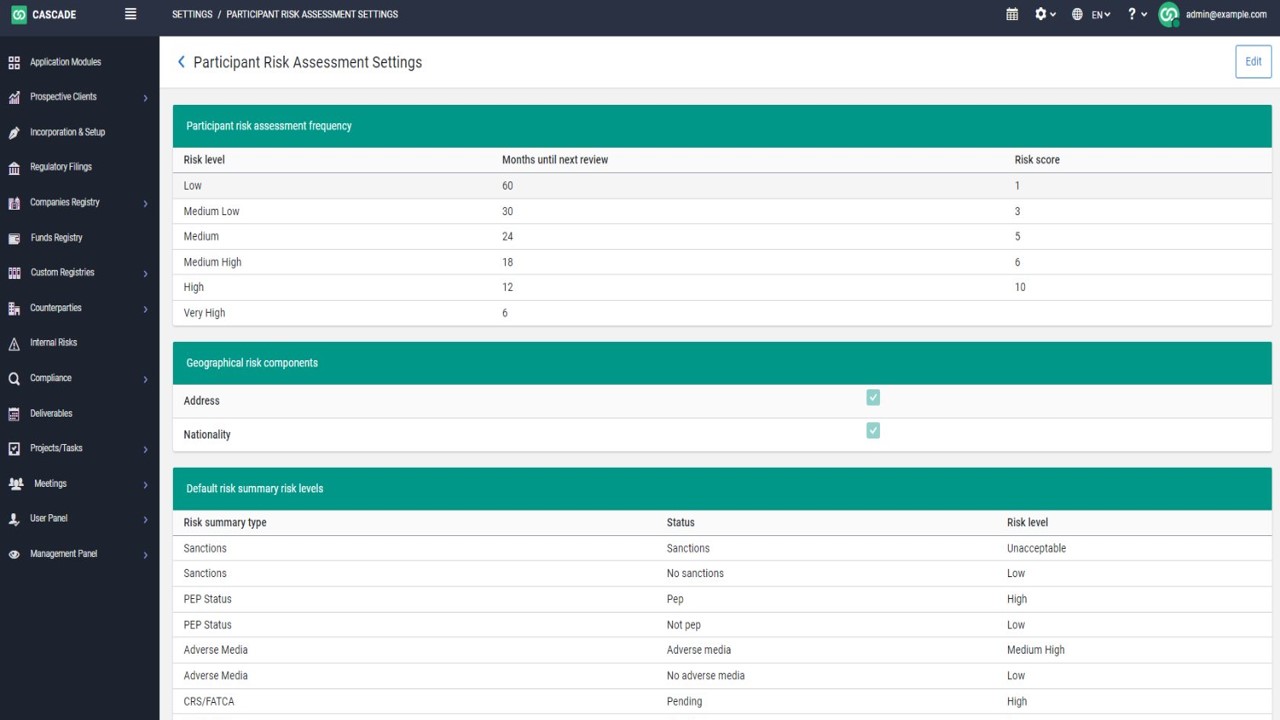
- Risk assessment: Documented customer risk categorization (low/medium/high) with assessment rationale
- Screening evidence: Screening results against the ASIC Regulatory Banned Persons List, DFAT sanctions lists, and adverse media sources
- Ongoing monitoring evidence: Records of transaction monitoring, beneficial ownership updates, and periodic customer review
- Enhanced due diligence evidence (if applicable): For high-risk customers, documentation of enhanced due diligence procedures (additional verification, transaction monitoring, source of funds verification)
The evidence pack must be organized consistently so that any compliance officer can locate required evidence quickly and assess whether due diligence met AUSTRAC standards.
Why CDD evidence pack completeness matters for Australian entities
Australian reporting entities face three regulatory pressures that a complete CDD evidence pack addresses:
AUSTRAC examination exposure
AUSTRAC conducts systematic compliance examinations of reporting entities. Examinations specifically focus on CDD evidence completeness. If your CDD evidence packs are incomplete, disorganized, or difficult to produce, AUSTRAC will document control deficiencies. Incomplete CDD evidence can result in enforcement findings and civil penalty liability.
Beneficial ownership verification requirements
The AML/CTF Rules require beneficial ownership identification for all corporate entity customers. AUSTRAC examinations specifically verify that beneficial owners have been identified and verification evidence obtained. If beneficial ownership documentation is missing or incomplete, AUSTRAC will document non-compliance.
Audit trail fragmentation risk
When CDD evidence is scattered across multiple systems or email chains, your institution cannot confidently demonstrate that due diligence was performed. Regulators will question whether verification actually occurred or merely was claimed in written policies.
A systematic CDD evidence pack structure addresses each pressure by centralizing evidence, demonstrating that due diligence was actually performed, and creating audit trails that withstand regulatory scrutiny.
AUSTRAC and AML/CTF Act requirements
AUSTRAC’s AML/CTF compliance framework establishes explicit CDD evidence requirements:
The AML/CTF Act 2006 Section 36 requires reporting entities to identify customers and verify identity. The identity verification requirement includes obtaining reliable, independent documentary evidence of identity and retaining copies of that evidence.
The AML/CTF Act 2006 Section 36(1)(g) requires reporting entities to identify beneficial owners of corporate entity customers. The beneficial ownership requirement includes identifying individuals with >25% control or the entire beneficial ownership chain if control is held through entities.
AUSTRAC’s Customer Due Diligence Guidance establishes that CDD evidence must be documented, organized, and retained. Evidence must be producible on request to AUSTRAC.
The AML/CTF Rules establish the 7-year record retention requirement. All CDD evidence must be retained for 7 years from the date of the transaction or the establishment of the customer relationship.
Your CDD evidence pack is the primary documentary evidence that you comply with these requirements.
Building your CDD evidence pack: five-step framework
Step 1: Define CDD evidence requirements by customer type
Establish evidence standards specific to customer type. Different customers require different due diligence:
Individual customers: Government-issued identification document (passport, driver’s license, or birth certificate with additional identification); proof of address (utility bill, bank statement, or government notification from within the past 12 months); and verification method and date documented.
Corporate entity customers: Certificate of incorporation or registration; corporate identification documents; director identification (government-issued identification for each director); beneficial owner identification and verification; source of funds documentation if high-value customer; registered address verification.
Trust customers: Trust deed or declaration of trust; trustee identification and verification (if corporate trustee, apply corporate customer standards; if individual trustee, apply individual standards); beneficiary beneficial ownership identification; settlor documentation if relevant.
Government entities: Official government documentation; registered office or principal place of business verification; authorization documentation if relevant.
Non-profit organizations: Registration documentation with the Australian Charities and Not-for-Profits Commission (if applicable); constitutional documents; officer identification; beneficial owner identification if applicable.
Document specific evidence requirements for each customer type in written procedures so that different staff collect consistent evidence.
Step 2: Implement CDD document collection and verification standards
Define how identity and beneficial ownership are verified:
- Document copy requirements: Specify whether certified copies, original documents, or certified electronic copies are acceptable
- Identity verification method: Define acceptable verification methods (in-person inspection with sight of original document, document scanning with verification, and third-party electronic verification service)
- Verification date documentation: Require that verification method and date be recorded for all identity documents
- Beneficial ownership verification: For corporate entities, specify acceptable evidence of beneficial ownership (ASIC search showing director/shareholder information, signed beneficial ownership declaration, board resolution, company shareholder register, trust document)
- Source of funds documentation: For high-value customers or customers with risk indicators, define source of funds verification procedures (documentation of employment, business documentation, asset statements, and property valuations)
Step 3: Structure the CDD evidence pack consistently
Create a standardized evidence pack structure so that all customers’ CDD evidence is organized identically:
- Customer identification section
- Customer identification cover sheet (name, customer ID, date of verification)
- Primary government-issued identification document (copy)
- Secondary identification if applicable (copy)
- Proof of address document (copy)
- Verification method and date record
- Beneficial ownership section (corporate customers only)
- Beneficial ownership identification worksheet (listing beneficial owners with >25% control)
- Corporate filings showing ownership structure (ASIC search, similar registry search for foreign entities)
- Beneficial ownership declaration signed by authorized officer (if applicable)
- Board resolution authorizing beneficial ownership declaration (if applicable)
- Shareholder register or equivalent ownership documentation
- Risk assessment section
- Customer risk assessment worksheet (documented risk categorization with assessment rationale)
- Source of funds assessment (if applicable for high-value customers)
- Enhanced due diligence documentation (if customer categorized as high-risk)
- Screening results section
- ASIC Regulatory Banned Persons List screening result (date, result)
- DFAT sanctions screening result (date, result)
- Adverse media screening result (date, result)
- Documentation of any matches identified and investigative steps taken
- Ongoing monitoring section
- Beneficial ownership re-verification record (annual or triggered by change)
- Transaction monitoring notes (if customer flagged for monitoring)
- Periodic customer review documentation (annual review date, any findings)
Step 4: Implement CDD evidence verification checklist
Create a checklist that confirms all required CDD elements are present before customer activation:
- Customer identification documents obtained and verified
- Beneficial ownership documentation obtained (if applicable for customer type)
- Source of funds verified (if applicable for customer value or risk profile)
- Screening results obtained and documented
- Risk assessment completed with documented rationale
- CDD evidence pack organized according to standard structure
- All documents dated and signed by verifying officer
- Retention period recorded (for 7-year tracking)
- Customer can be activated only after all checklist items are confirmed
Step 5: Implement evidence pack tracking and retention
Establish procedures to track CDD evidence packs throughout the customer relationship:
- Centralized evidence repository: Store all CDD evidence in a centralized location (whether physical files or electronic system) where all compliance staff can locate evidence quickly
- Evidence index: Maintain an index of all customer evidence packs showing customer name, customer ID, evidence pack location, date of verification, and retention expiry date
- Retention date tracking: Calculate retention expiry dates based on customer relationship end date plus 7 years (AML/CTF Act requirement)
- Retrieval capability: Ensure CDD evidence packs can be retrieved within 48 hours of AUSTRAC request
- Periodic completeness audits: Sample customer evidence packs monthly to verify all required elements are present
CDD evidence pack execution: manual assembly vs. centralized architecture
| CDD evidence pack component | Manual document assembly | Cascade systematic CDD architecture |
|---|---|---|
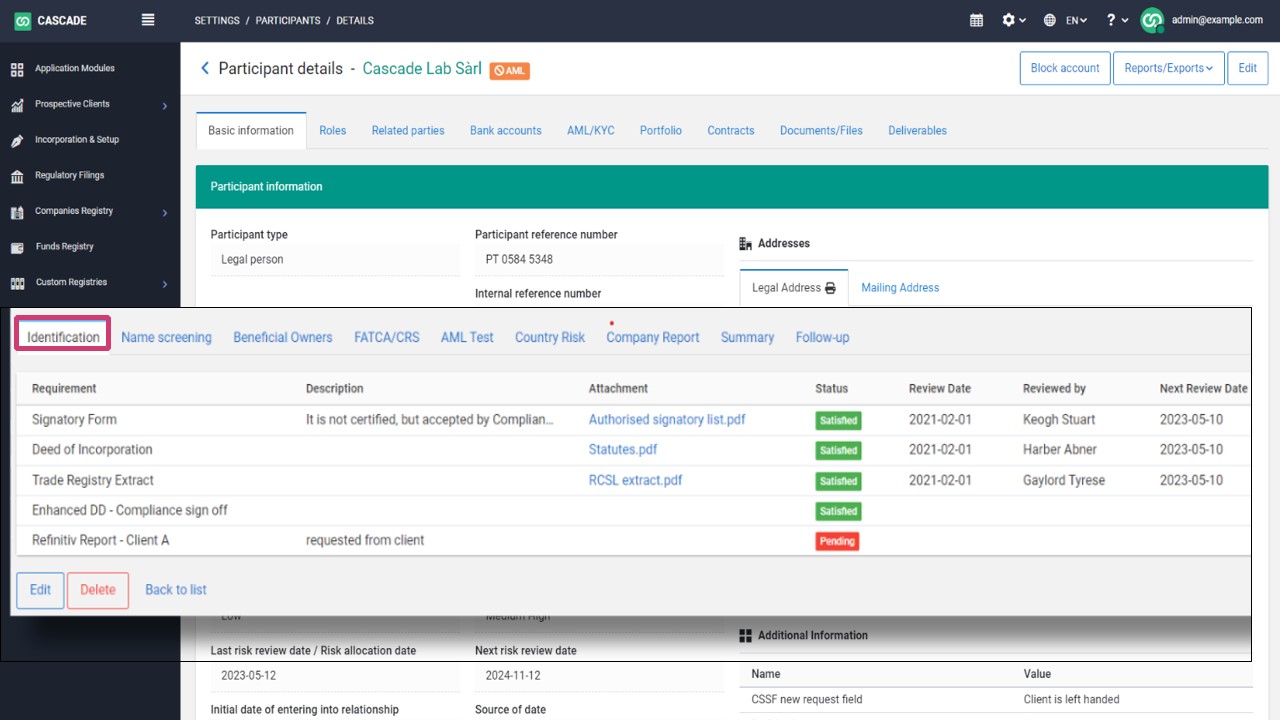
| Identity verification documentation | Identity documents collected via email or in-person; copies stored in separate file shares or email folders; verification dates recorded in spreadsheet; no centralized index of which customers have been verified. | Identity documents uploaded to customer CDD evidence section; verification method and date captured in verification record; identity verification status visible in customer profile; document storage linked to verification record with retention date calculated automatically. |
| Beneficial ownership documentation | Beneficial ownership documentation requested manually; responses arrive via email; documents stored in separate file folders; beneficial ownership status unclear for some customers; re-verification dates missed. | Beneficial ownership questionnaire embedded in customer onboarding; beneficial ownership documentation uploaded directly to customer profile; beneficial ownership verification linked to customer record with date, method, and verifying officer; re-verification triggered automatically on annual schedule (or triggered by material change). |
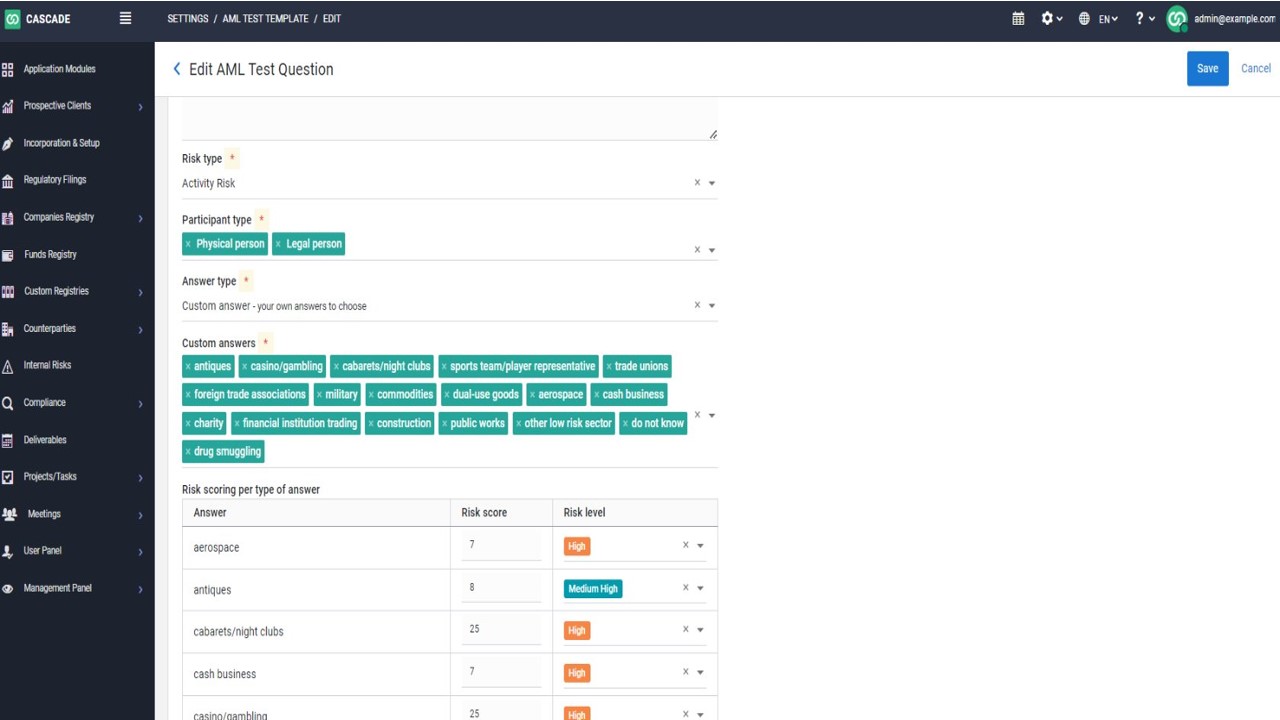
| Source of funds verification | Source of funds assessed verbally or documented in email for high-value customers; documentation scattered across different folders; source of funds assessment not systematically recorded. | Source of funds questionnaire embedded in customer onboarding workflow for customers above defined value threshold; source of funds documentation linked to customer record; source of funds assessment documented with date and verifying officer; assessment visible in customer profile. |
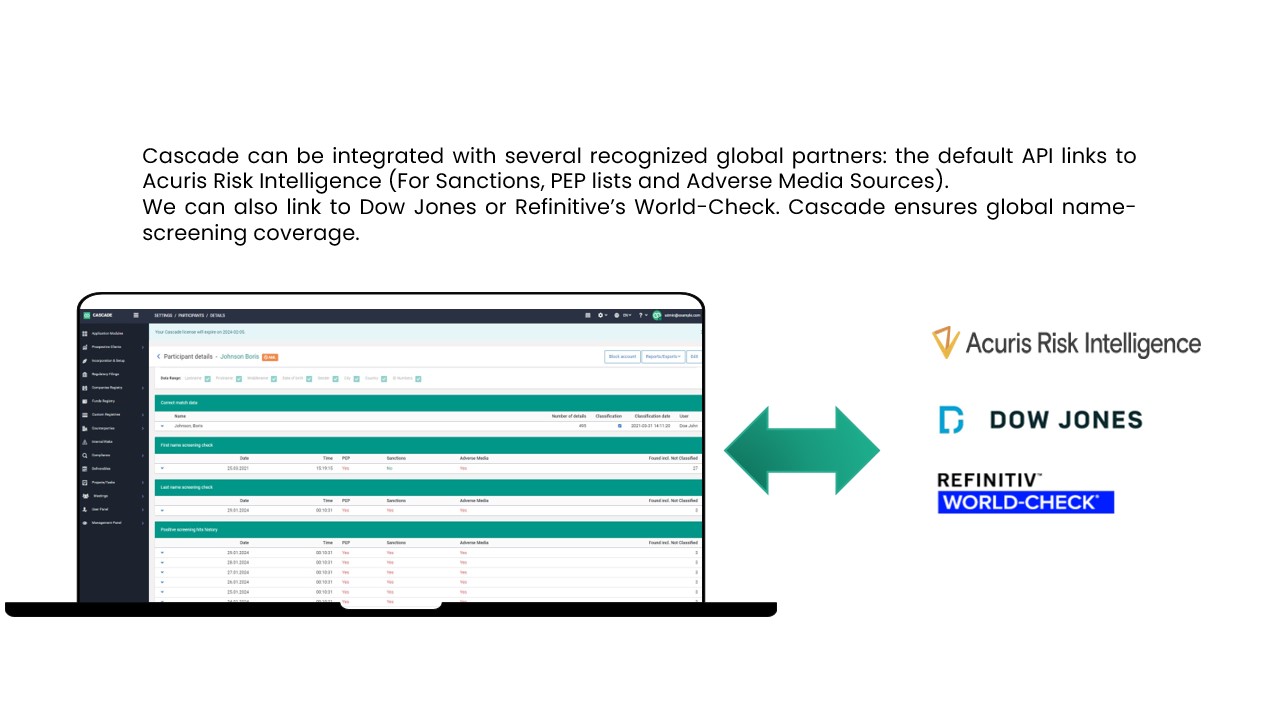
| Screening results integration | Screening conducted through vendor portals; results exported and stored in separate screening file folders; unclear whether all customers have been screened; screening results disconnected from customer records. | Screening integrated with customer CDD workflow; screening results imported automatically from vendor integration; screening results linked to customer record with date, source, and result; screening evidence stored in customer CDD section; screening completion status visible in customer profile. |
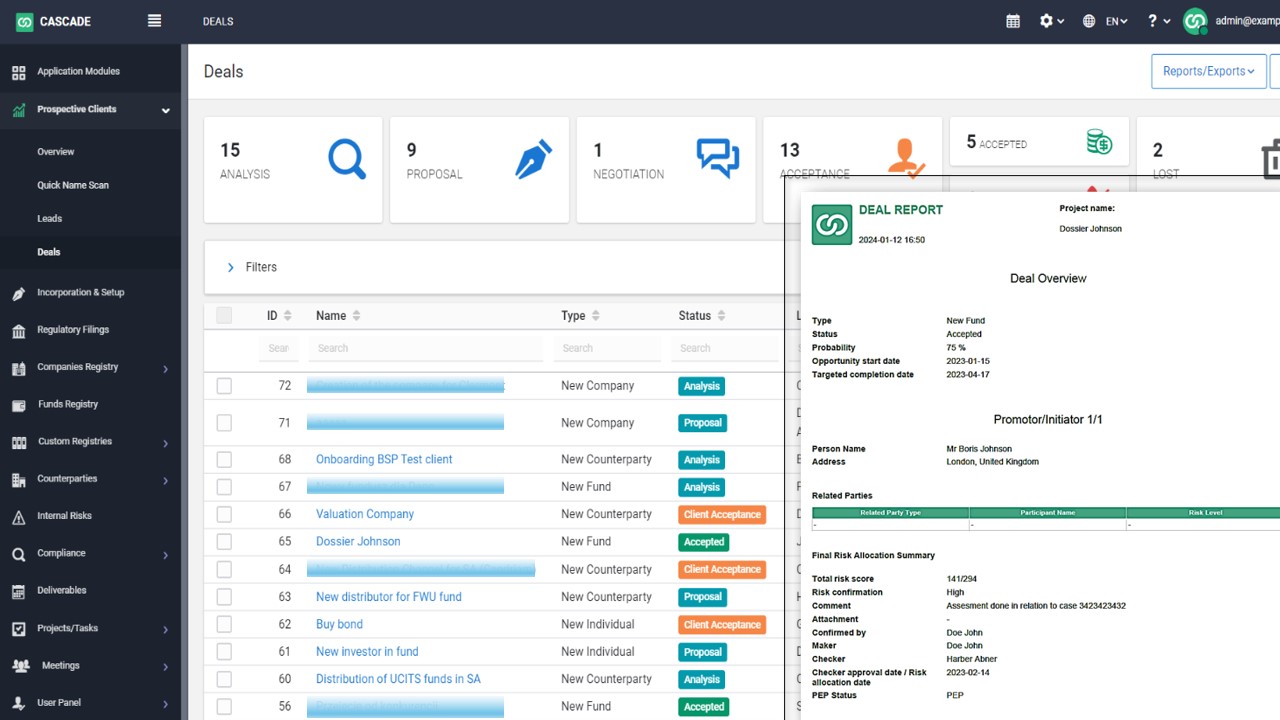
| CDD evidence pack assembly | When AUSTRAC requests CDD evidence, compliance officer must manually search multiple file folders, email archives, and spreadsheets to assemble evidence pack for a single customer. Process takes hours per customer; evidence completeness uncertain; risk of missing documents. | CDD evidence pack generated automatically for each customer showing all identity documents, beneficial ownership verification, source of funds documentation, screening results, and risk assessment—all linked to customer record. Evidence pack producible within minutes for entire customer base. |
| Retention tracking | Retention dates calculated manually in spreadsheet; staff uncertain when 7-year retention periods expire; documents retained beyond retention date or deleted prematurely create audit risk. | Retention dates calculated automatically from customer relationship end date plus 7 years; retention status tracked in system; document deletion schedule managed systematically; audit trail shows document retention compliance. |
Operationalizing CDD evidence packs through centralization
Manual CDD evidence assembly creates inevitable compliance gaps. Identity documents are stored separately from beneficial ownership verification; source of funds documentation is not systematically collected; screening results are disconnected from customer records. When AUSTRAC requests CDD evidence during examination, compliance officers must manually search multiple systems to assemble evidence packs—a process that takes days and often results in incomplete packs.
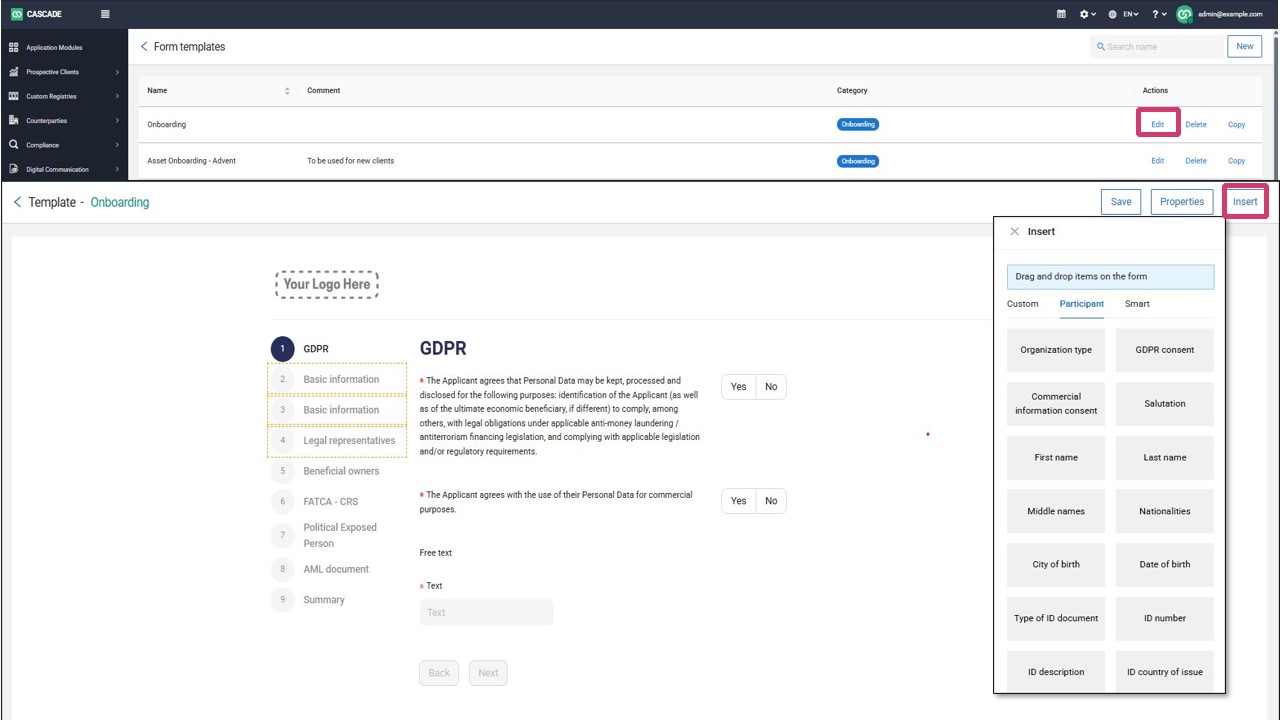
A centralized CDD architecture embeds evidence collection into customer onboarding workflows so that all required CDD elements are collected, verified, and linked before customer activation. Identity documents are uploaded with verification date and method recorded; beneficial ownership questionnaires capture ownership structure with documentary evidence; source of funds is systematically verified for applicable customers; screening results are imported and linked to customer records. When AUSTRAC requests evidence, a complete CDD evidence pack for any customer is generated within minutes, demonstrating that all due diligence was actually performed.
The compliance benefit is substantial. Your AUSTRAC examination demonstrates that CDD evidence is complete and organized consistently across all customers. Beneficial ownership verification rates are high. Evidence retention is systematic and auditable. AUSTRAC requests are answered within hours with confidence that evidence is complete and meets regulatory standards.
For Australian reporting entities subject to AUSTRAC examination, this shift from manual evidence assembly to embedded CDD workflows provides the documentary evidence that customer due diligence was actually performed and retained according to regulatory requirements.
Common CDD evidence pack implementation challenges and solutions
Challenge 1: Incomplete beneficial ownership documentation
Corporate customer beneficial ownership is assessed informally; documentation is incomplete or missing. For some customers, you cannot identify who the beneficial owners actually are. Beneficial ownership re-verification deadlines are missed.
Solution: Implement a beneficial ownership questionnaire that must be completed for all corporate customers before account activation. Require documentary evidence (ASIC search, shareholder register, board resolution, or trust deed) supporting beneficial ownership identification. Schedule automatic beneficial ownership re-verification annually. Escalate overdue re-verifications to supervisory staff.
Challenge 2: Source of funds verification inconsistent
Source of funds assessment is conducted informally for some high-value customers; other customers receive no source of funds assessment despite high transaction values. Source of funds documentation is not systematically retained.
Solution: Establish a customer value threshold (e.g., >$500,000 annual transaction volume) that triggers source of funds verification requirements. Create a source of funds verification worksheet requiring documented assessment and supporting evidence. Store all source of funds documentation in customer CDD evidence pack.
Challenge 3: Identity verification documentation disorganized
Identity documents are collected but stored in multiple locations (email, file shares, document repositories). Verification dates are unclear. You cannot easily demonstrate that identity was actually verified.
Solution: Implement a centralized identity verification section in each customer’s CDD evidence pack. Require that verification method (in-person, document scan, third-party service) and verification date be documented for each identity document. Create an identity verification checklist confirming all required documents are present before customer activation.
Challenge 4: Screening results disconnected from customer records
Screening is conducted through vendor portals; results are exported and stored separately from customer records. Customer profile does not show screening status. Screening result completeness is unclear.
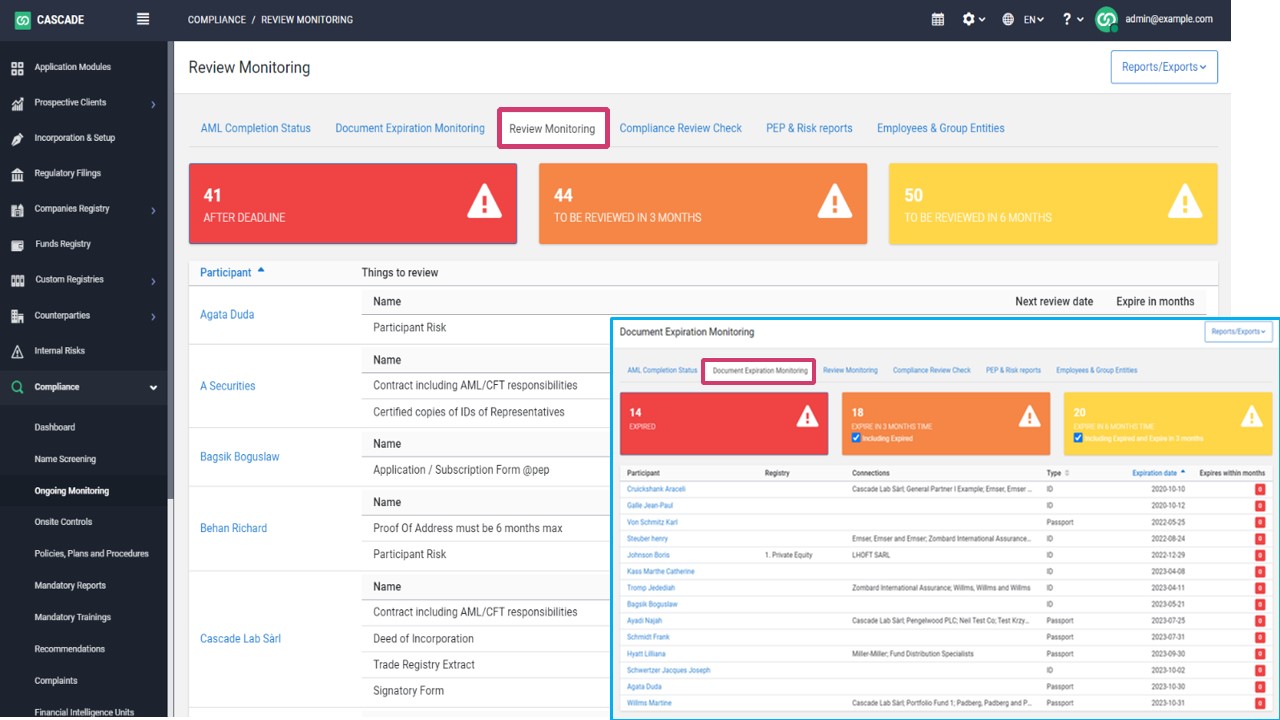
Solution: Integrate screening with your customer management system so that screening results are linked to customer records. Implement a screening status indicator visible in customer profile (screened / not screened / match under investigation). Track screening completion rates and escalate customers who have not been screened.
Challenge 5: CDD evidence pack production delays
AUSTRAC requests CDD evidence; compliance staff spend days assembling evidence packs manually from multiple locations. Evidence packs are incomplete or missing required elements. Regulatory response is delayed.
Solution: Implement a systematic CDD evidence pack structure stored in a centralized location. Organize evidence consistently for all customers so that any staff member can locate required evidence quickly. Test your ability to produce evidence packs for sample customers monthly. Implement an automated evidence pack report showing all required elements for a customer.
Best practices for CDD evidence pack implementation
Establish evidence standards in writing
Document what constitutes adequate identity verification, acceptable beneficial ownership documentation, and required source of funds evidence for each customer type. Standards must be specific enough that different staff collect consistent evidence.
Implement evidence collection checklists
Use checklists to confirm all required CDD elements are present before customer activation. Checklists prevent incomplete evidence packs from entering the system.
Centralize evidence storage
Store all CDD evidence in a single location (physical files or electronic system) accessible to all compliance staff. Avoid decentralized document storage where evidence is scattered across multiple systems.
Organize evidence packs consistently
Use a standardized evidence pack structure so that evidence is organized identically for all customers. Consistent organization enables quick location of evidence during AUSTRAC examination.
Implement retention date tracking
Calculate retention expiry dates automatically from customer relationship end date plus 7 years. Track retention dates and manage document disposal schedule to ensure compliance with AML/CTF Act retention requirements.
Test evidence pack production regularly
Sample customers monthly and verify that evidence packs are complete and organized. Generate evidence pack reports to test your ability to produce evidence on demand.
Conduct annual CDD evidence audits
At minimum annually, sample customer evidence packs and verify whether due diligence met AUSTRAC standards. Document findings and remediate any deficiencies identified.
Frequently asked questions
What identity documents are acceptable for AML/CTF Act identity verification?
The AML/CTF Rules specify acceptable identity documents by customer type. For Australian individuals: passport, driver’s license, or other government-issued identification document. For foreign individuals: passport or equivalent government-issued identification document. Acceptable secondary identification includes utility bills, bank statements, or government notifications. Certified copies are generally acceptable; originals must be sighted by verifying officer.
What constitutes adequate beneficial ownership verification for corporate customers?
Beneficial ownership must be verified through reliable, independent documentary evidence. Acceptable evidence includes ASIC registry searches showing directors and shareholders, certified company shareholder registers, beneficial ownership declarations signed by authorized officers, or board resolutions authorizing beneficial ownership disclosure. For foreign corporate customers, equivalent company registry searches from the jurisdiction of incorporation are acceptable. Complex structures may require third-party beneficial ownership verification services.
How frequently should beneficial ownership be re-verified?
AUSTRAC expects beneficial ownership to be re-verified at minimum annually. More frequent re-verification (semi-annual or quarterly) is appropriate for high-risk customers. Re-verification should be triggered immediately if the firm becomes aware of material changes to beneficial ownership structure.
What should I retain in a CDD evidence pack for 7 years?
The AML/CTF Act requires retention of CDD evidence for 7 years from the date of the transaction (for transaction-related evidence) or from the establishment of the customer relationship (for customer identification evidence). Retain all identity documents, beneficial ownership documentation, source of funds verification, screening results, risk assessments, and any enhanced due diligence evidence.
What is Cascade and how does it simplify AML/KYC compliance?
Cascade is an end-to-end AML Software (SaaS Platform) that centralises client data and supports AML/KYC workflows from onboarding and risk assessment through to ongoing monitoring and reporting. It helps compliance teams standardise processes, manage documents and screening, apply risk-based workflows, and maintain an audit trail of actions and decisions.
Who can benefit from using Cascade?
Cascade supports organisations with AML/KYC obligations, including financial services firms, fintechs, wealth managers, law firms and corporate service providers.
How does Cascade ensure data security and regulatory compliance?
Cascade provides controlled workflows, activity logging and audit trails to support traceable AML/KYC processes. Compliance still depends on your policies, configuration and applicable regulations.
How can I get started with Cascade?
Book a demo with Cascade to discuss your AML/KYC requirements, explore the platform and identify how it can support your workflows.
Explore Cascade’s CDD evidence pack capabilities
Australian reporting entities managing CDD evidence across scattered file shares, email archives, and disconnected systems struggle to assemble complete evidence packs when AUSTRAC examines compliance. Your identity documents are in one location; beneficial ownership verification is in another; screening results exist in vendor portals. AUSTRAC examination becomes a stressful search for fragmented evidence rather than a confident demonstration of systematic customer due diligence.
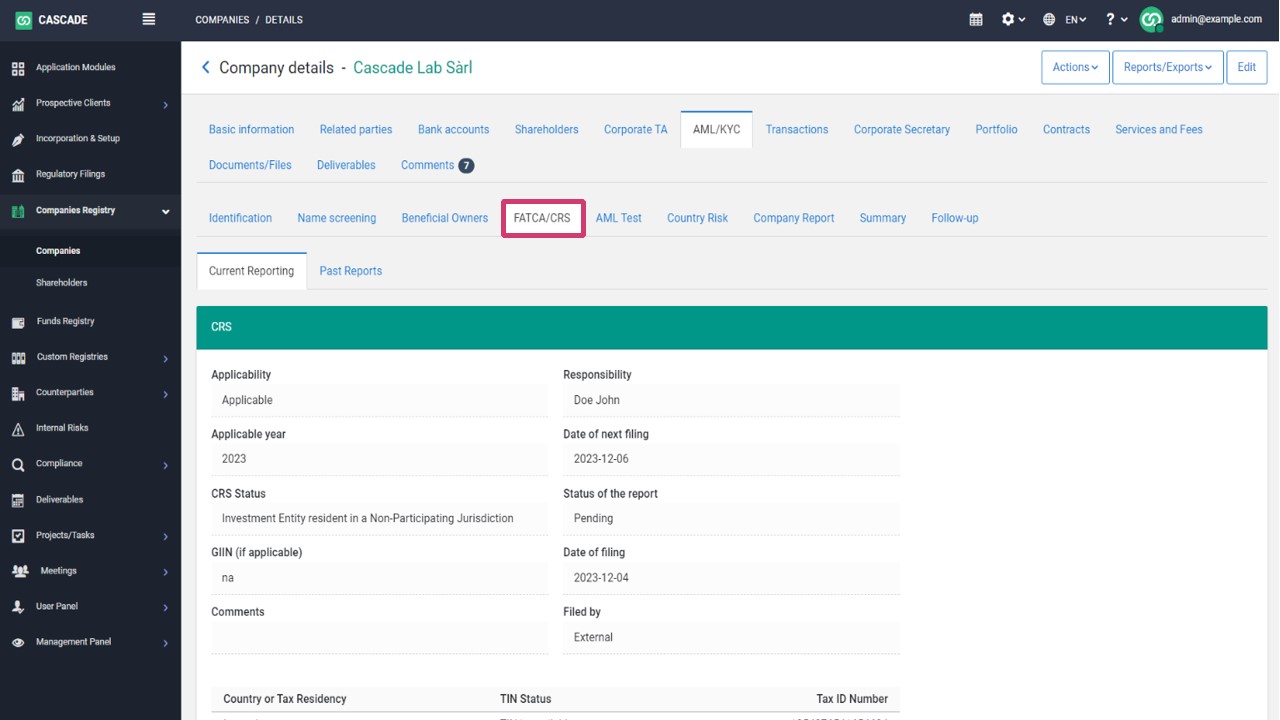
Cascade purpose-built to centralize your CDD evidence packs, embed customer onboarding workflows, and maintain complete, auditable documentation of all customer due diligence. Identity documents are uploaded with verification dates recorded; beneficial ownership questionnaires capture ownership structure with documentary evidence; source of funds is systematically verified; screening results are linked to customer records; CDD evidence packs are generated on demand showing all required elements.
AUSTRAC examination demonstrates that customer due diligence was actually performed and evidence is organized according to regulatory requirements.
To see how Cascade operationalizes your CDD evidence pack management and enables AUSTRAC-ready compliance, explore Cascade’s AML capabilities.
Disclaimer
This article is for general information only and based on publicly available sources and regulatory guidance at the time of writing. We have made our best effort to ensure accuracy and relevance to Australian AML/CTF compliance, but AUSTRAC regulations, guidance, and business requirements can change. Always verify key details against current AUSTRAC publications and consult with a qualified compliance specialist or legal advisor before making compliance or vendor decisions.


 English
 English (Australia)
 English (UK)