This guide explains how Irish fund managers implement a delegation oversight report template, operationalize oversight workflows, and consolidate delegation evidence into board-ready reports using Cascade’s B2B compliance software platform.
What is a delegation oversight report?
A delegation oversight report is a documented periodic assessment confirming that delegates meet contractual and regulatory standards, remain compliant with law, and that the fund management company retains effective authority over delegated functions. A delegation oversight report template standardizes this assessment across the organization, ensuring consistent evaluation and systematic documentation.
The Central Bank expects reports covering portfolio management, risk management, administration, custodial arrangements, and any other material delegated function. Reports should be prepared annually minimum and reviewed by the fund board, providing evidence of both framework design and operational effectiveness.
Why delegation oversight matters for Irish funds
CBI supervisory intensity
The Central Bank of Ireland’s 2025 delegation review examined whether fund managers maintain effective oversight and control frameworks. Fund managers unable to produce documented oversight evidence during inspection face regulatory findings and enforcement action.
Operational risk from distant delegates
Many Irish fund managers delegate to non-EU service providers across time zones. Informal oversight creates blind spots; documented, systematic processes reduce delegate failure risk.
Board accountability
Fund boards require documented assurance that oversight is occurring and that delegation has not undermined the fund management company’s ability to manage the fund effectively.
Central Bank of Ireland expectations
The Central Bank’s Fund Management Company Guidance (CP86) and AIFMD Regulations establish explicit expectations for delegation oversight. Additionally, the Cross-Industry Guidance on Outsourcing (published December 2021) applies outsourcing and delegation standards proportionately across all fund service providers.
Fund management companies must maintain effective oversight and control frameworks for delegated functions; due diligence must confirm delegates meet relevant EU and Irish legislative requirements; boards must ensure delegation has not extended to the point where the fund management company cannot effectively manage the fund or exercise sufficient authority over decision-making.
The CBI’s 2025 Delegation Review Report confirmed that delegation remains central to Ireland’s funds model and identified governance, oversight, and data capabilities as supervisory priorities.
Key takeaways
- Fund management companies must document and update delegate due diligence annually at minimum, confirming compliance with regulatory requirements and operational standards.
- Delegation oversight reports should consolidate due diligence findings, ongoing monitoring results, delegate performance metrics, and board-level attestation into a single, board-reviewed document.
Delegation oversight report framework
Step 1: Establish delegate inventory and risk assessment
Maintain a documented register of all delegated functions, identifying the delegate, the function delegated, the date delegation commenced, and the assessed risk level of that delegate and function. Conduct initial due diligence on each delegate covering regulatory authorization, ownership structure, compliance history, and operational resilience.
Classify delegates by risk level based on jurisdiction, regulatory status, function materiality, and historical compliance performance. High-risk delegates (non-EU jurisdictions, complex ownership, limited compliance history) require more intensive oversight; low-risk delegates (EU regulated entities, transparent structure, strong compliance record) may receive proportionate, streamlined oversight.
Step 2: Design oversight procedures and monitoring protocols
Define specific oversight procedures for each delegate or delegate category. For portfolio managers, oversight should address investment compliance, transaction reporting, performance monitoring, and adherence to fund documentation. For custodians, oversight should cover asset safeguarding, settlement procedures, and reconciliation accuracy. For risk managers, oversight should address compliance with risk limits, breach investigation, and reporting timeliness.
Document monitoring frequency proportionate to risk. Annual monitoring is standard for low-risk delegates; quarterly or semi-annual monitoring for medium or high-risk delegates. Document what data will be collected from delegates, what metrics will be analyzed, and what triggers will prompt heightened scrutiny.
Step 3: Execute monitoring and collect delegate certifications
Implement the monitoring procedures on schedule. Collect performance data, conduct document reviews, and request delegate certifications confirming compliance with contractual obligations and applicable law. Document all monitoring results, dates of completion, and any concerns identified.
Request formal written certifications from delegates covering regulatory compliance, adherence to fund documentation, and key operational metrics. Retain all certifications and supporting documentation linked to the delegate record.
Step 4: Consolidate findings into a delegation oversight report and board attestation
Prepare annual or periodic delegation oversight reports summarizing due diligence findings, ongoing monitoring results, delegate certifications received, any compliance gaps identified, and remediation actions taken. The report should address each material delegate and function.
Present the delegation oversight report to the fund board for review and attestation. Board members should confirm that delegation frameworks remain appropriate and that no material concerns have emerged. Document board review and any actions taken in response to oversight findings.
Step 5: Systematize review cycles and update procedures
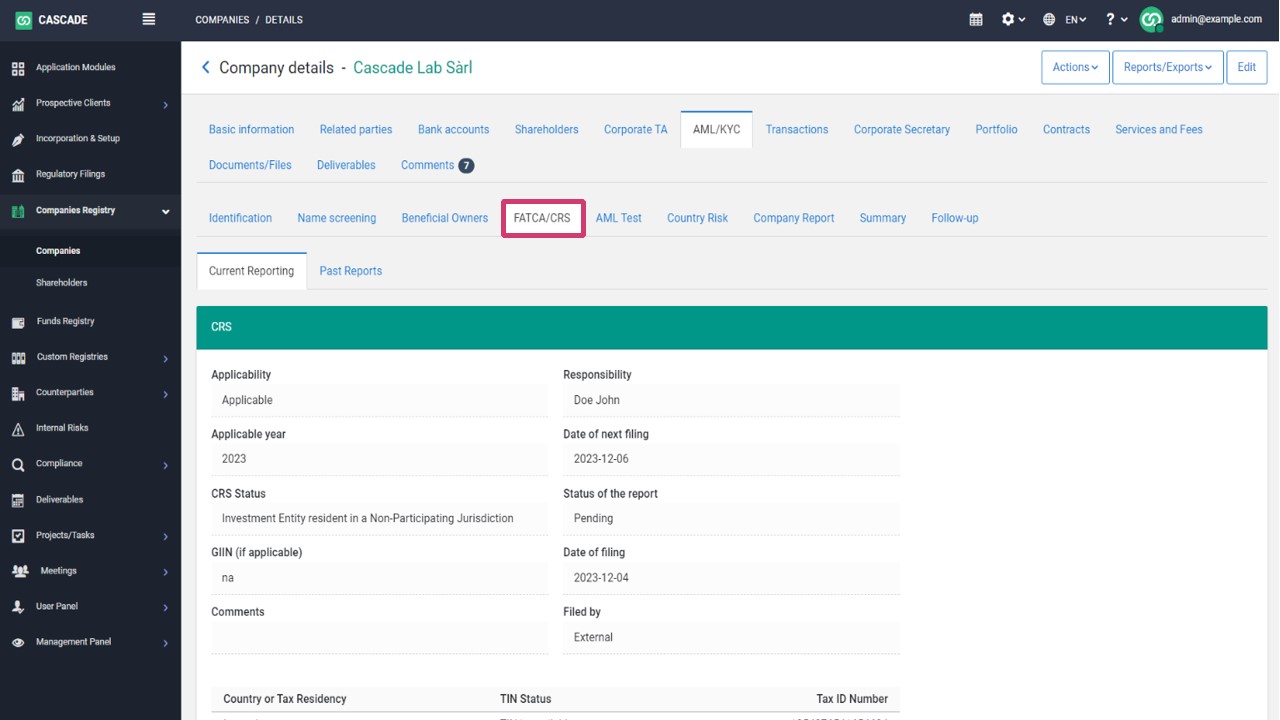
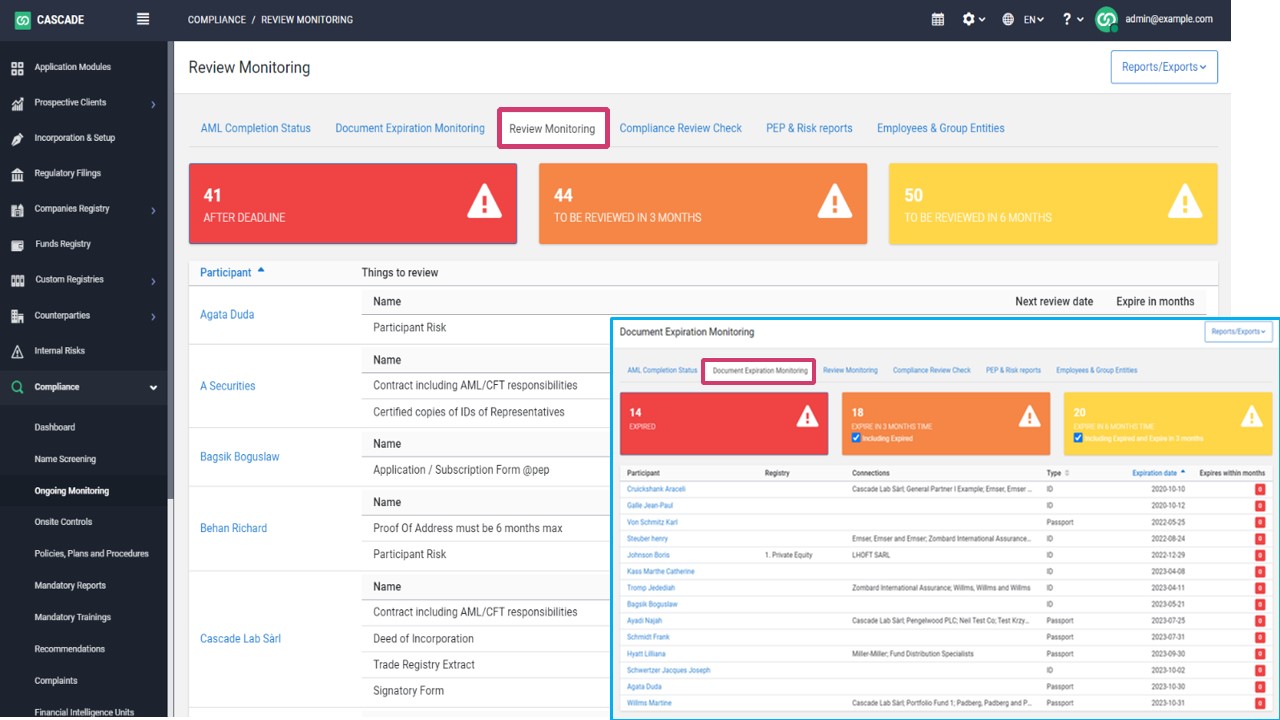
Configure automated monitoring schedules so that due diligence reassessment and performance monitoring occur on schedule. Set calendar-driven due dates for delegate certifications. Flag overdue monitoring so gaps are caught before board review or regulatory inspection.
Update the delegation oversight report template and procedures when regulatory guidance changes, when compliance gaps are discovered, or when business relationships shift.
Delegation oversight report template and assessment matrix
| Oversight Element | Initial Due Diligence (Onboarding) | Ongoing Monitoring (Annual Minimum) | Trigger for Enhanced Review | Documentation Standard |
|---|---|---|---|---|
| Delegate regulatory status | Confirm delegate’s regulatory authorization; verify license currency and scope; obtain compliance certifications | Request annual compliance attestation; verify authorization remains current; check regulatory action databases | Regulatory action, license suspension, or adverse finding | License certificate; regulatory attestation letter; regulatory action search results |
| Ownership and beneficial ownership | Identify beneficial owners; verify ownership structure; confirm political exposure risk | Request annual beneficial ownership update; reassess political exposure; identify any structural changes | Beneficial ownership change, PEP association, sanctions match | Ownership certification; beneficial ownership chart; PEP search results |
| Operational resilience and business continuity | Review business continuity plan; assess backup systems and redundancy; verify insurance coverage | Request annual business continuity attestation; test backup procedures; review incident logs | Critical system failure, data breach, or operational disruption | BC plan documentation; attestation letter; incident reports; insurance certificates |
| Compliance with fund documentation and investment restrictions | Review delegate’s understanding of fund investment mandate and restrictions; test investment decisions | Conduct quarterly transaction sampling; verify restriction compliance; review any breach incidents | Investment restriction breach, unauthorized transaction, reporting error | Investment review memo; transaction logs; restriction compliance attestation; breach investigation memo |
| Performance metrics (portfolio managers, administrators) | Establish baseline performance expectations; document service level agreements | Monitor quarterly: investment performance, fund valuation accuracy, NAV reporting timeliness | Underperformance vs. benchmark, valuation error, late reporting | SLA documentation; performance reports; reconciliation records; NAV audit logs |
| Cybersecurity and data protection | Review cybersecurity controls; assess data handling procedures; verify GDPR compliance | Request annual cybersecurity attestation; assess control changes; verify breach protocols | Data breach, cybersecurity incident, compliance gap | Cybersecurity risk assessment; attestation letter; incident response procedures |
| Suspicious activity or compliance concerns | Conduct initial background screening; adverse media search; sanctions check | Conduct annual adverse media review; sanctions screening refresh; compliance issue monitoring | Adverse media match, sanctions match, regulatory finding, fund-related incident | Screening results; adverse media search; sanctions screening; investigation findings |
Common challenges in delegation oversight
Challenge 1: Fragmented delegate data and missing documentation
Delegate contracts, certifications, and monitoring results exist across email, spreadsheets, and file shares. Oversight data is incomplete; due diligence documentation cannot be readily produced for board review or CBI inspection.
Solution: Centralize delegate records in a single compliance system. Link delegate contracts, regulatory certifications, due diligence documentation, monitoring results, and board attestations to each delegate’s profile. Ensure all oversight evidence is time-stamped and retained systematically.
Challenge 2: Inconsistent oversight procedures and missed monitoring schedules
Oversight procedures are informal. Monitoring deadlines pass untracked. Some delegates receive annual certifications; others receive oversight sporadically or ad hoc.
Solution: Document oversight procedures for each delegate category. Configure automated monitoring schedules in your compliance system. Set calendar-driven due dates for delegate certifications and monitoring completion. Generate compliance reports showing which delegates are current on monitoring vs. which are overdue.
Challenge 3: Insufficient board visibility into delegate performance
Fund boards receive informal updates or summary discussions about delegates. Board minutes do not document evidence of oversight or board approval of delegation arrangements.
Solution: Prepare formal delegation oversight reports annually. Present reports to the board with supporting documentation. Request board sign-off confirming that delegation frameworks remain appropriate and that no material concerns have been identified. Document board review and decisions in board minutes.
Challenge 4: Inadequate due diligence on non-EU delegates
Due diligence on non-EU delegates is superficial. The fund management company collects basic regulatory documentation but does not verify delegate compliance with equivalent standards or assess supervisory equivalence.
Solution: Conduct comprehensive due diligence on non-EU delegates covering regulatory framework, capital requirements, audit standards, and compliance history. Request third-party audit reports or supervisory inspection reports if available. Document equivalence assessment explicitly.
Best practices for delegation oversight reporting
Establish clear delegation governance
Assign responsibility: the MLRO oversees delegation compliance framework design; the compliance officer executes monitoring and collects certifications; a senior manager reviews oversight reports before board presentation.
Document procedures in writing
Create a delegation policy detailing the oversight process, monitoring frequency by delegate risk level, required certifications, and escalation procedures for compliance gaps.
Maintain centralized delegate records
Use a compliance platform to consolidate delegate data, contracts, certifications, monitoring results, and board attestations so oversight evidence is auditable and complete.
Automate monitoring schedules and reminders
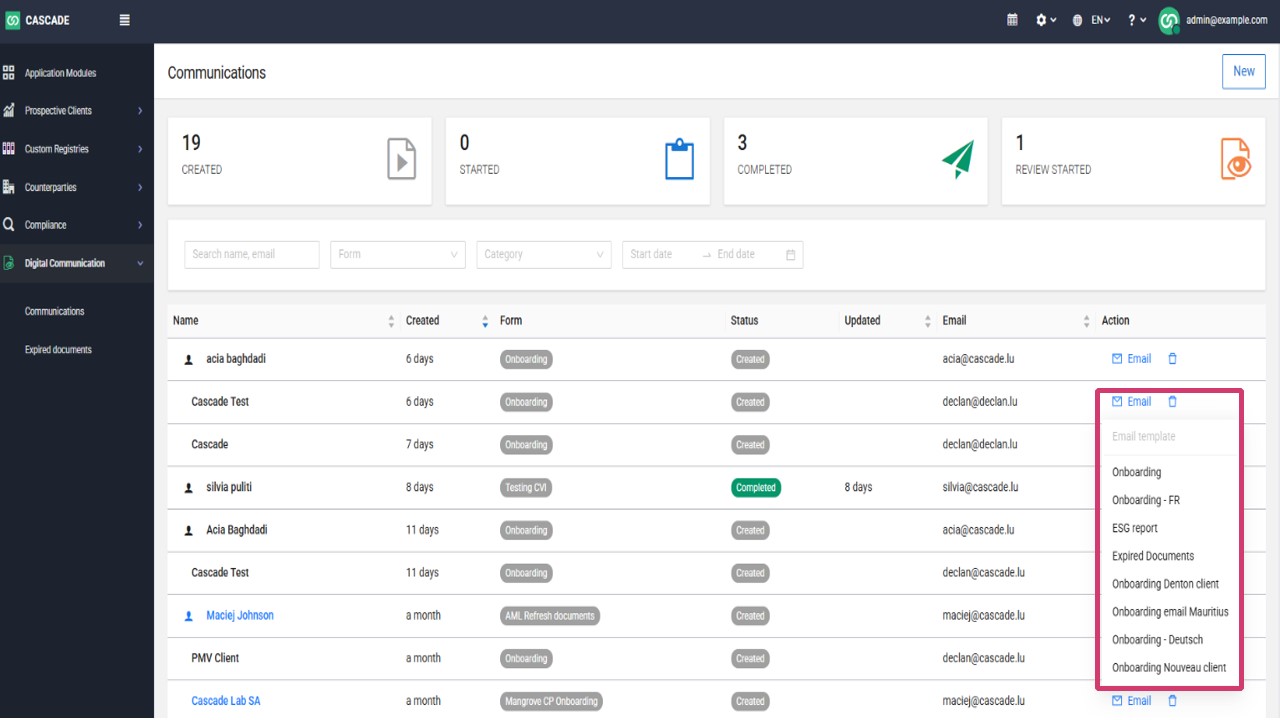
Configure calendar-driven monitoring schedules. Send certification requests to delegates automatically. Flag overdue monitoring so gaps are caught before board review or regulatory inspection.
Require board-level attestation
Ensure the delegation oversight report is formally reviewed by the fund board and documented in board minutes. Board approval provides governance evidence and executive accountability.
Frequently asked questions
How frequently should delegation oversight be performed?
Annual delegation oversight reporting is the Central Bank’s minimum standard; consider semi-annual or quarterly monitoring for high-risk delegates. Update immediately if material changes occur: delegate regulatory action, ownership change, or compliance concern.
What should a delegation oversight report include?
A comprehensive report summarizes each material delegate’s regulatory status, beneficial ownership, operational performance, compliance certifications, and any monitoring findings. It should confirm that the fund management company retains effective authority. The report should be signed by the fund board or senior compliance officer.
How do we verify that non-EU delegates meet equivalent regulatory standards?
Conduct thorough due diligence on the jurisdiction’s regulatory framework, capital requirements, and audit standards. Request the delegate’s latest supervisory audit report or regulatory inspection findings. Compare requirements against EU equivalents. Document the equivalence assessment in writing.
Can delegation oversight be performed on a sampled basis rather than reviewing all delegates?
No; the Central Bank expects comprehensive oversight. All material delegates must be subject to documented oversight procedures. Sampling may apply to transaction types but not to individual delegate oversight obligations.
What is Cascade and how does it simplify AML/KYC compliance?
Cascade is an end-to-end AML Software (SaaS Platform) that centralises client data and supports AML/KYC workflows from onboarding and risk assessment through to ongoing monitoring and reporting. It helps compliance teams standardise processes, manage documents and screening, apply risk-based workflows, and maintain an audit trail of actions and decisions.
Who can benefit from using Cascade?
Cascade supports organisations with AML/KYC obligations, including financial services firms, fintechs, wealth managers, law firms and corporate service providers.
How does Cascade ensure data security and regulatory compliance?
Cascade provides controlled workflows, activity logging and audit trails to support traceable AML/KYC processes. Compliance still depends on your policies, configuration and applicable regulations.
How can I get started with Cascade?
Book a demo with Cascade to discuss your AML/KYC requirements, explore the platform and identify how it can support your workflows.
Explore Cascade’s delegation oversight capabilities
Irish fund managers managing delegation oversight through spreadsheets and fragmented file systems struggle to produce centralized evidence during CBI inspection. Oversight data is scattered; certifications are incomplete; board visibility into delegate compliance is limited. Cascade’s B2B compliance software platform consolidates delegate records, automates monitoring schedules, and generates board-ready delegation oversight reports—transforming delegation oversight from a manual, ad hoc exercise into a documented, auditable process aligned with CBI expectations.
To see how Cascade can systematize your delegation oversight framework and streamline board reporting, explore Cascade’s delegation oversight capabilities.
Disclaimer
This article is for general information only and based on publicly available sources at the time of writing. We have made our best effort to ensure accuracy and relevance to Irish fund management compliance, but Central Bank of Ireland regulations, guidance, and business requirements can change. Cascade does not provide legal or compliance advice, and use of the Cascade platform does not guarantee regulatory compliance. Always verify key details against current CBI publications and consult with a qualified compliance specialist or legal advisor before making compliance or vendor decisions.


 English
 English (Australia)
 English (UK)