AML teams at UK law firms conduct desk-based reviews to verify client identity and beneficial ownership remotely, meeting SRA expectations without requiring in-person verification. When manual spreadsheet tracking fragments due diligence evidence across email and file shares, compliance gaps emerge and audit readiness suffers. A systematic desk-based review workflow, embedded in compliance infrastructure, ensures consistent documentation and regulatory defensibility.
Desk-based review procedures for SRA-regulated law firms
The SRA expects law firms to conduct appropriate customer due diligence proportionate to client risk, documented and retained for inspection. Desk-based reviews are the operational mechanism by which law firms verify identity, assess beneficial ownership, and screen clients against sanctions and adverse media without requiring face-to-face meetings. Without structured desk-based review procedures, compliance teams cannot reliably demonstrate that CDD was completed to standard.
Desk-based reviews are particularly common in corporate, transactional, and advisory practices where clients are established institutional entities or repeat business relationships. However, the SRA requires that the evidence supporting each review is preserved and can be produced on demand.
What is a desk-based review?
A desk-based review is remote customer due diligence conducted using publicly available sources, regulated databases, and documentary evidence without requiring in-person verification. The reviewer collects and validates client identity documents, assesses beneficial ownership structures, searches sanctions and PEP registers, and conducts adverse media screening using available sources.
Desk-based reviews must be proportionate to client risk. For low-risk institutional clients, simplified documentation may suffice. For complex beneficial ownership structures or high-risk jurisdictions, enhanced desk-based procedures are required to verify ultimate ownership and assess sanctions risk.
Documentation of the desk-based review process is the core deliverable: the reviewer must record which sources were consulted, what was verified, and what conclusions were reached. This evidence forms the audit trail for SRA inspection.
Why desk-based reviews matter for law firms
Law firms face three regulatory pressures regarding desk-based reviews:
Regulatory evidence demand.
The SRA’s Handbook rules on AML/KYC require documented evidence that due diligence was performed. Desk-based reviews scattered across email attachments and individual file folders cannot be easily retrieved during inspection.
Beneficial ownership opacity.
Complex corporate and trust structures require systematic research to identify beneficial owners. Manual spreadsheet-based reviews lack systematic research protocols, creating inconsistency in depth and rigor.
Audit trail fragmentation.
When desk-based reviews are conducted informally (telephone calls, brief memos), minimal evidence remains. Regulators expect documented evidence showing which checks were performed, by whom, and on what date.
Systematic desk-based review procedures embedded in compliance workflows address each pressure by standardizing research protocols, automating source documentation, and creating audit-ready records of each review.
Regulatory framework: SRA desk-based review expectations
The SRA Handbook, Chapter 7: Management of money and assets and SRA Guidance on AML/KYC, informed by FATF recommendations, establish expectations for customer due diligence. Key requirements include:
Customer identification.
Law firms must verify client identity using reliable, independent sources. Documentary evidence of identification must be obtained and retained.
Beneficial ownership identification.
For corporate clients, law firms must identify beneficial owners. Complex structures (holding companies, trusts, partnerships) require specific research to establish ultimate ownership.
Sanctions screening.
Law firms must screen clients against relevant sanctions lists. The Office of Financial Sanctions Implementation (OFSI) maintains consolidated UK and UN sanctions lists.
Documented assessment. All due diligence must be documented with findings recorded. The SRA expects evidence that reviews were conducted to standard and conclusions were reasonable.
Key takeaways
- Desk-based reviews must be consistently documented using the same research protocol and evidence standards across all clients, regardless of business unit or fee earner.
- Compliance systems that link due diligence documentation (ID copies, beneficial ownership charts, screening results, risk assessments) to client records create audit-ready evidence for SRA inspection.
Desk-based review procedure matrix
| Review Component | Manual Spreadsheet Process | Cascade Automated Compliance Workflow |
|---|---|---|
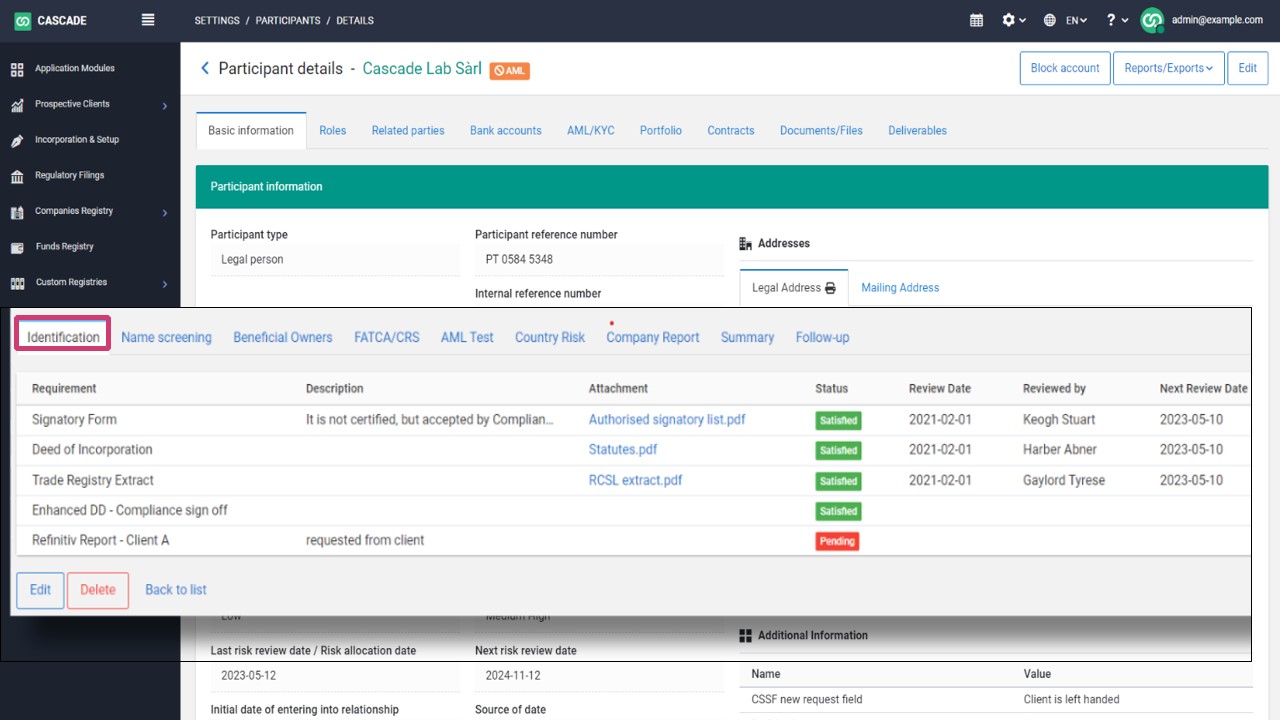
| Identity verification source tracking | Multiple email attachments; unclear which sources were consulted; reviewer names inconsistent | Centralized client record links ID documents, verification date, document type, reviewer name, and source reference; timestamped and searchable |
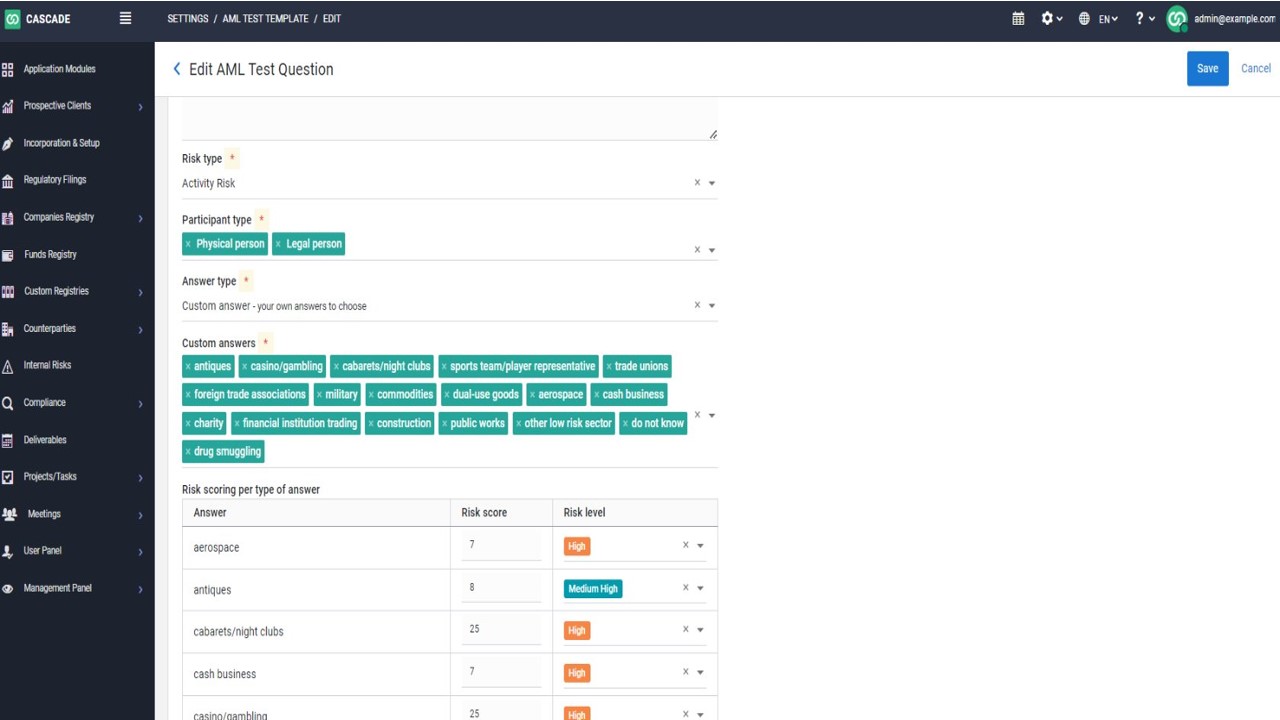
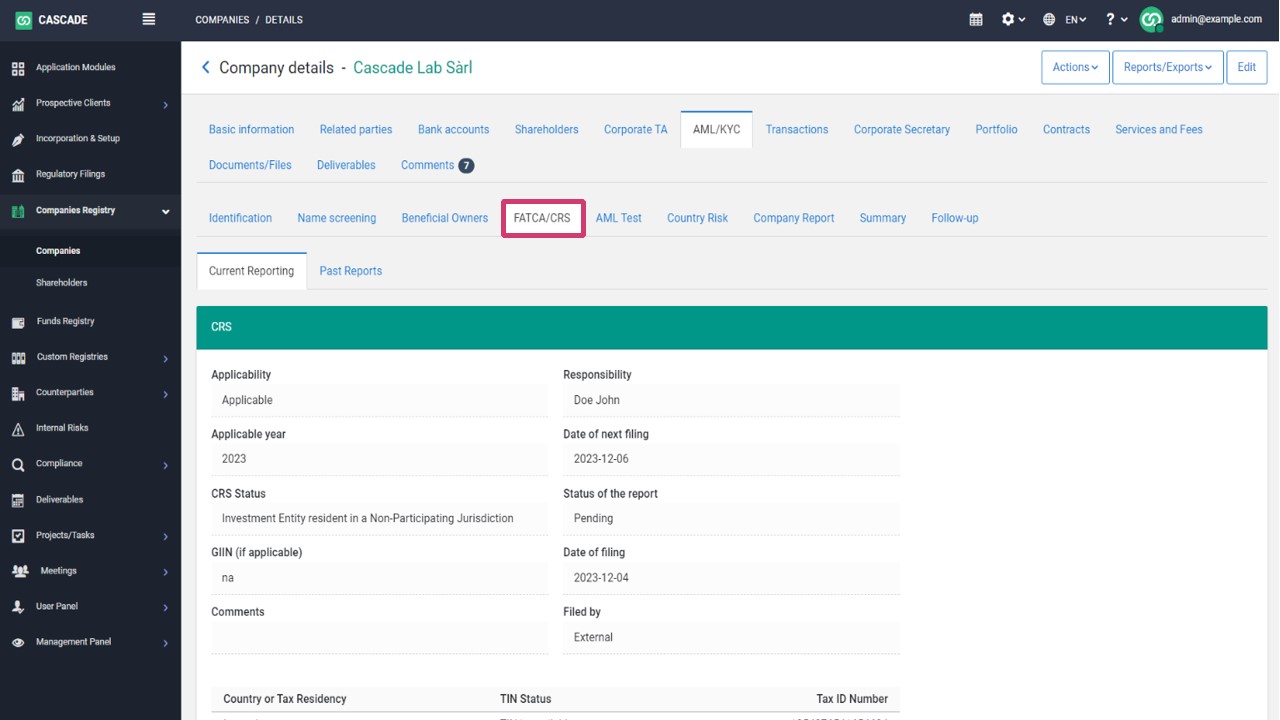
| Beneficial ownership documentation | Ownership charts stored in separate folders; research notes ad-hoc; levels of ownership verification inconsistent across clients | Structured beneficial ownership chart embedded in client profile; verification status, research sources, and confidence level documented per owner; re-verification triggers tracked |
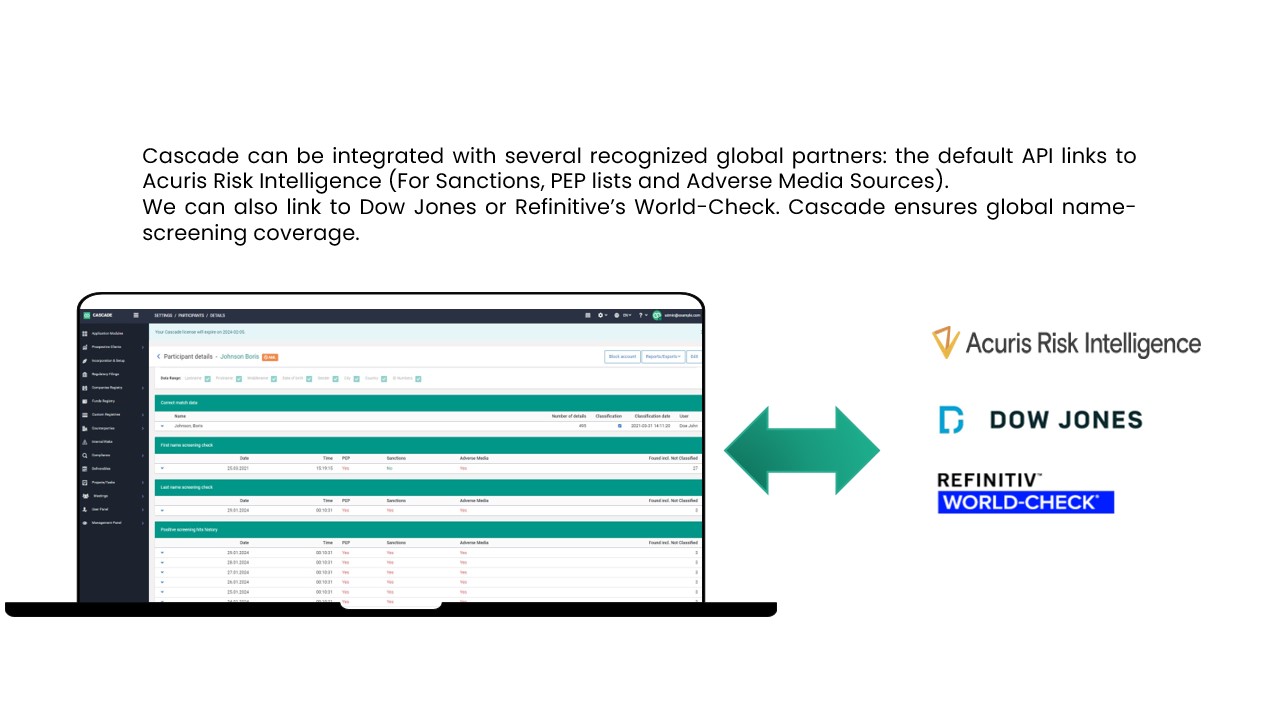
| Sanctions screening integration | Screening certificates printed and filed separately from client records; unclear screening date or sources used; historical results not linked to client file | Screening results imported directly from screening provider; linked to client record with date, sources searched, and any matches investigated and resolved; automated quarterly re-screening configured |
| Review evidence packaging | When SRA requests evidence, compliance must manually search email and file shares; duplicate records, version confusion | Complete audit trail of all due diligence steps generated on demand as searchable, dated, sequenced record; ready for regulatory delivery |
Implementing desk-based review procedures
Step 1: Define research protocol and evidence standards
Document the specific sources consulted for each review: Companies House records, UK beneficial ownership registry, sanctions lists (OFSI, UN), adverse media searches, and any regulated database subscriptions. Specify the sequence of checks (identity first, then beneficial ownership, then screening) so that different team members follow the same path.
Step 2: Establish beneficial ownership verification hierarchy
Create a tiered verification standard: transparent sole proprietors require minimal verification; corporate entities require Companies House extract and director verification; trusts and complex structures require deed and trustee verification. Document the evidence standard for each structure type.
Step 3: Integrate screening results with client records
Configure your AML software to import screening results directly from providers and link them to client profiles. Automated alerts should flag any new sanctions matches or PEP associations, triggering immediate re-assessment.
Step 4: Create standardized review documentation template
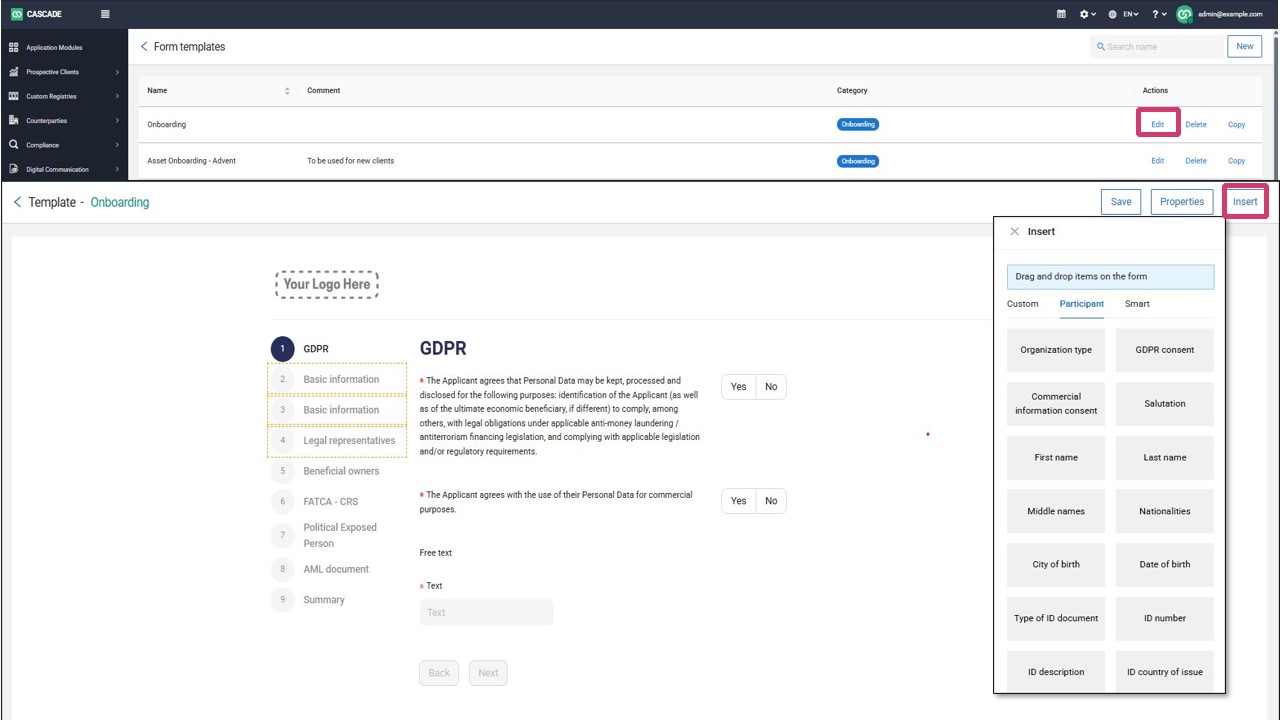
Design a desk-based review form that captures: client name, review date, reviewer name, source list, findings, beneficial ownership assessment, risk rating, and sign-off. Ensure the same template is used for all clients so that evidence is consistently formatted and comparable across your client base.
Step 5: Establish review completion deadlines and escalation
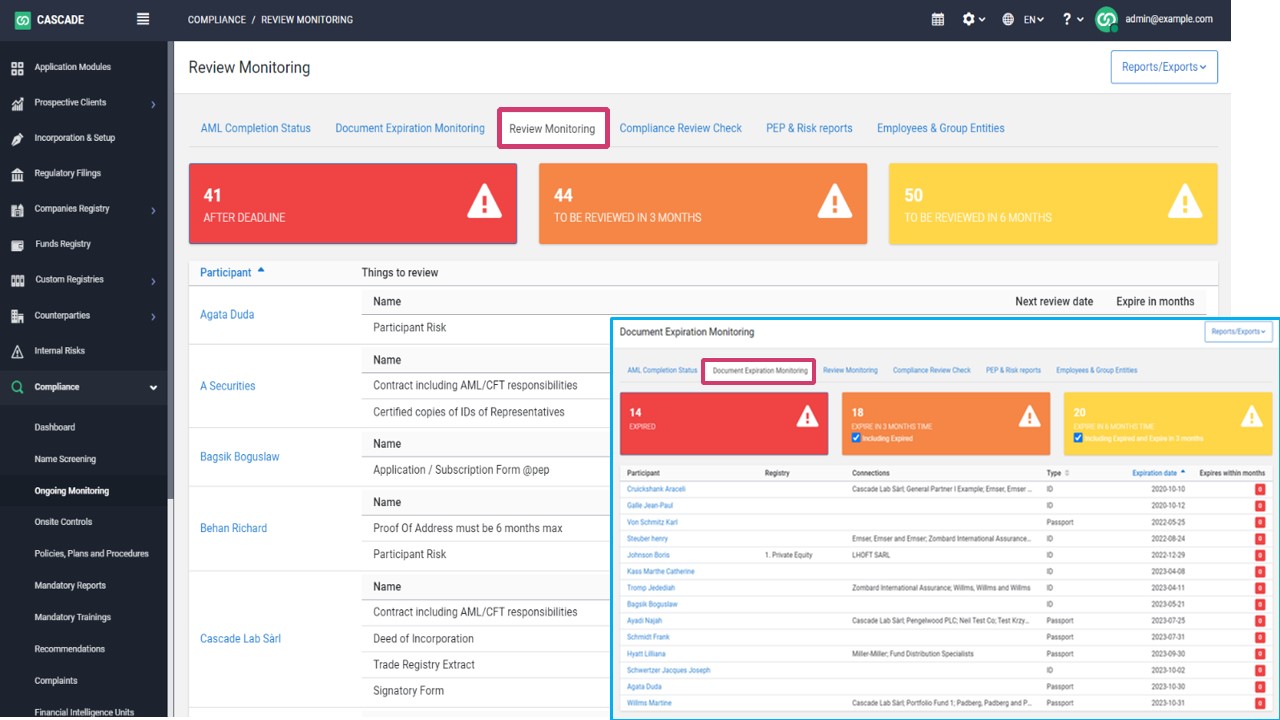
Set completion deadlines for desk-based reviews based on client risk category (high-risk within 3 days; standard clients within 5 days). Implement escalation workflows that flag overdue reviews to compliance managers daily.
Common desk-based review gaps and solutions
Gap 1: Beneficial ownership research is superficial.
Fee earners accept client assertions about ownership without verification. Complex structures are not adequately explored.
Solution: Require documentary evidence for all beneficial owners. For corporate clients, mandate Companies House verification. For trusts, require deed excerpts. Create a beneficial ownership verification checklist that specifies evidence requirements by structure type.
Gap 2: Screening results are not systematically retained.
Screening certificates are printed and filed; digital records are lost. Screening dates and sources are unclear.
Solution: Configure automated screening imports so that results are captured directly in the client record with metadata (screening date, provider, sources). Establish automated re-screening (quarterly minimum) so that outdated screening is refreshed systematically.
Gap 3: Review evidence cannot be quickly assembled for SRA inspection.
When regulators request desk-based review evidence, compliance teams must manually search email and file shares.
Solution: Maintain a centralized client registry linking all due diligence evidence to client records. Ensure all review documents are stored in a single location with consistent naming and dating. Generate audit-ready review packs on demand.
Gap 4: Inconsistent review depth across fee earners.
One team conducts thorough beneficial ownership research; another relies on minimal documentation. Risk ratings are inconsistent.
Solution: Establish a documented review protocol with mandatory checklist. Implement secondary review: a compliance manager validates that all new client reviews meet standard before the client is activated. Test review quality monthly through file sampling.
Best practices for desk-based reviews
Establish clear ownership.
Assign a compliance manager to oversee desk-based review procedures and validate consistency across fee earners. Ensure all team members understand the protocol and evidence standards.
Use entity resolution tools.
Integrate corporate databases and beneficial ownership registries with your compliance workflow so that verification steps are automated and evidence is captured systematically.
Create review documentation templates.
Design a standardized form for all desk-based reviews so that evidence is consistently formatted and findings are comparable across clients.
Implement secondary review.
A compliance manager should review all new client desk-based reviews before activation. Focus on beneficial ownership depth and risk assessment reasonableness.
Monitor review timeliness.
Track completion rates and flag reviews exceeding your deadline. Escalate delays to fee earner managers.
Retain complete evidence.
Ensure all due diligence documentation, screening results, and review forms are retained in the client record for the duration of the relationship plus 6 years.
Frequently asked questions
How detailed must a desk-based beneficial ownership review be?
Depth should be proportionate to client risk and structure complexity. For a low-risk EU corporate with transparent ownership, a Companies House extract and director verification may suffice. For a complex trust or opaque holding company, you should obtain trust deed excerpts, beneficial owner identification documents, and verification of each ultimate beneficial owner. The SRA expects your review to be reasonable and documented.
Can desk-based review satisfy the SRA requirement for customer due diligence?
Yes. The SRA permits desk-based review for appropriate clients. However, the review must be documented and evidence-based. For high-risk clients, complex structures, or where sources cannot verify identity or beneficial ownership, in-person or enhanced verification may be required. The key is that your risk assessment and evidence collection are proportionate to client risk.
How often should desk-based reviews be updated?
Initial desk-based review must be completed before client engagement begins. Periodic review of client information should occur annually at minimum. Re-assessment should be triggered immediately if the firm becomes aware of changes to beneficial ownership, jurisdiction, or regulatory status. Sanctions screening should be refreshed quarterly.
What sanctions and adverse media sources should be consulted?
At minimum, consult the OFSI consolidated UK sanctions list and the UN Consolidated Sanctions List. Professional adverse media searches (through media databases or screening providers) are also appropriate for higher-risk clients.
What is Cascade and how does it simplify AML/KYC compliance?
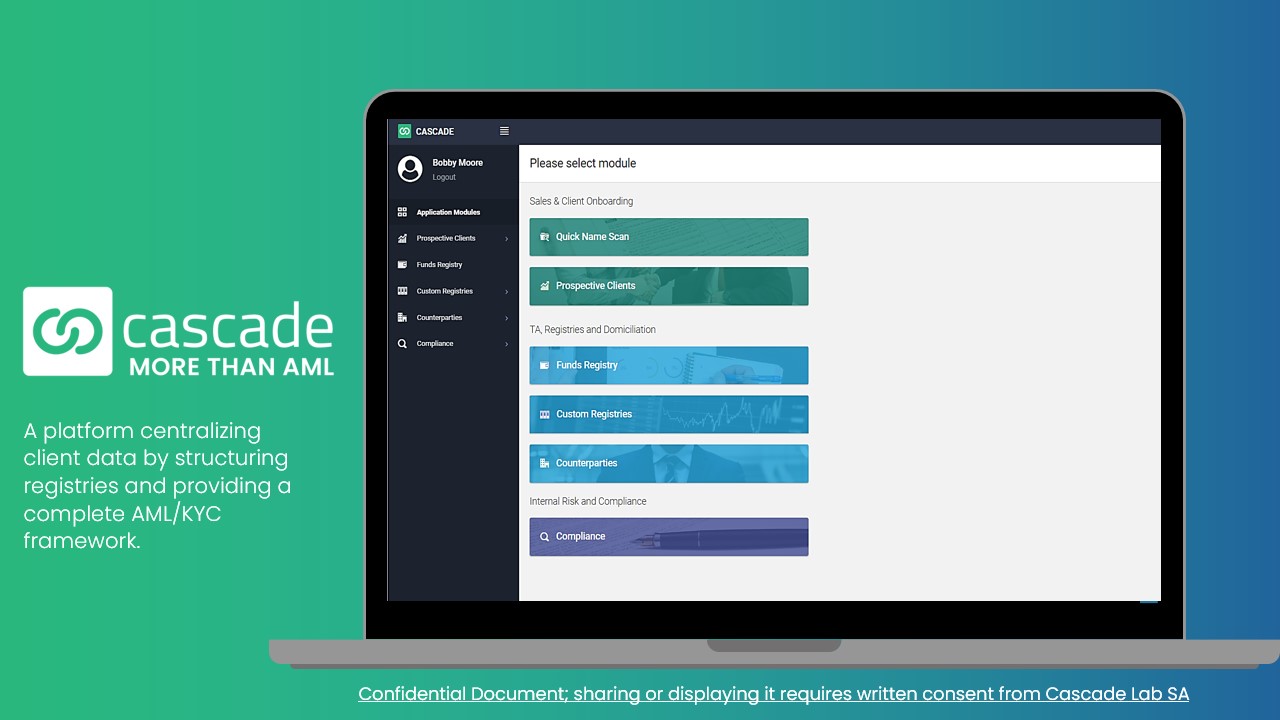
Cascade is an end-to-end AML Software (SaaS Platform) that centralises client data and supports AML/KYC workflows from onboarding and risk assessment through to ongoing monitoring and reporting. It helps compliance teams standardise processes, manage documents and screening, apply risk-based workflows, and maintain an audit trail of actions and decisions.
Who can benefit from using Cascade?
Cascade supports organisations with AML/KYC obligations, including financial services firms, fintechs, wealth managers, law firms and corporate service providers.
How does Cascade ensure data security and regulatory compliance?
Cascade provides controlled workflows, activity logging and audit trails to support traceable AML/KYC processes. Compliance still depends on your policies, configuration and applicable regulations.
How can I get started with Cascade?
Book a demo with Cascade to discuss your AML/KYC requirements, explore the platform and identify how it can support your workflows.
Explore Cascade’s AML capabilities
Law firms managing desk-based reviews through fragmented email, file shares, and informal procedures expose themselves to SRA inspection risk. Desk-based review evidence should be systematically documented, centrally organized, and audit-ready for immediate retrieval when the SRA requests demonstration of due diligence compliance.
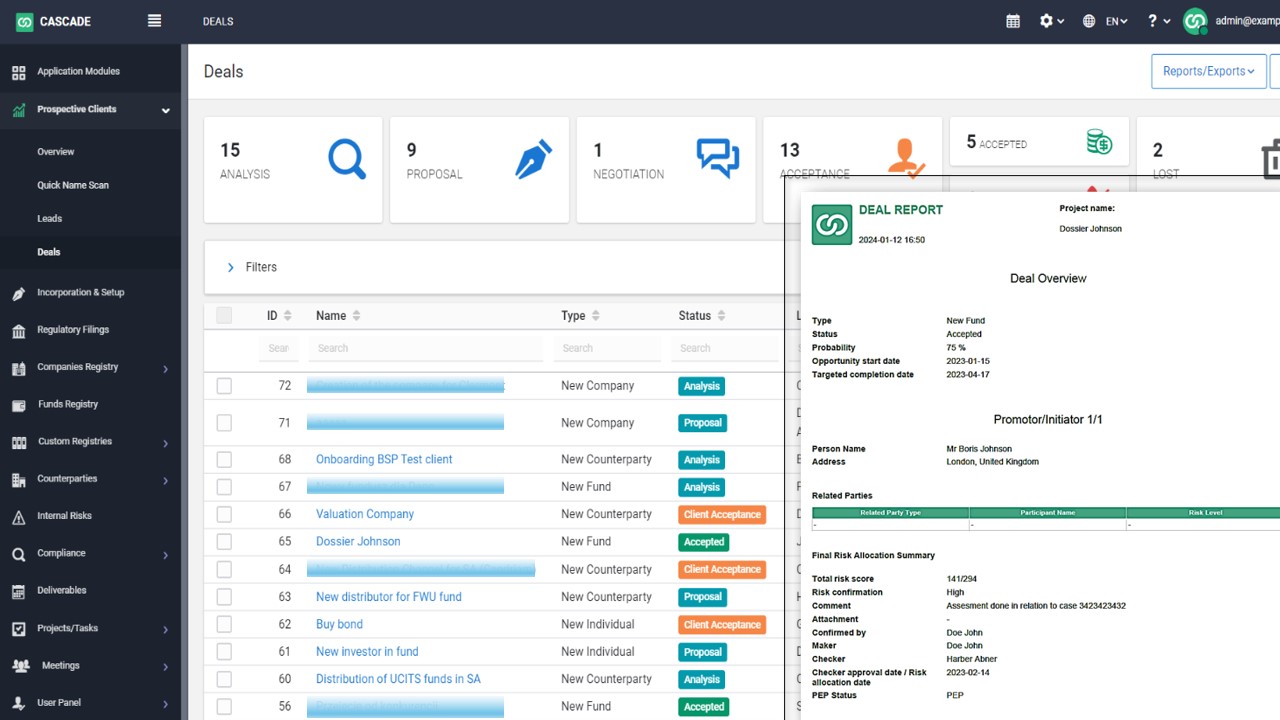
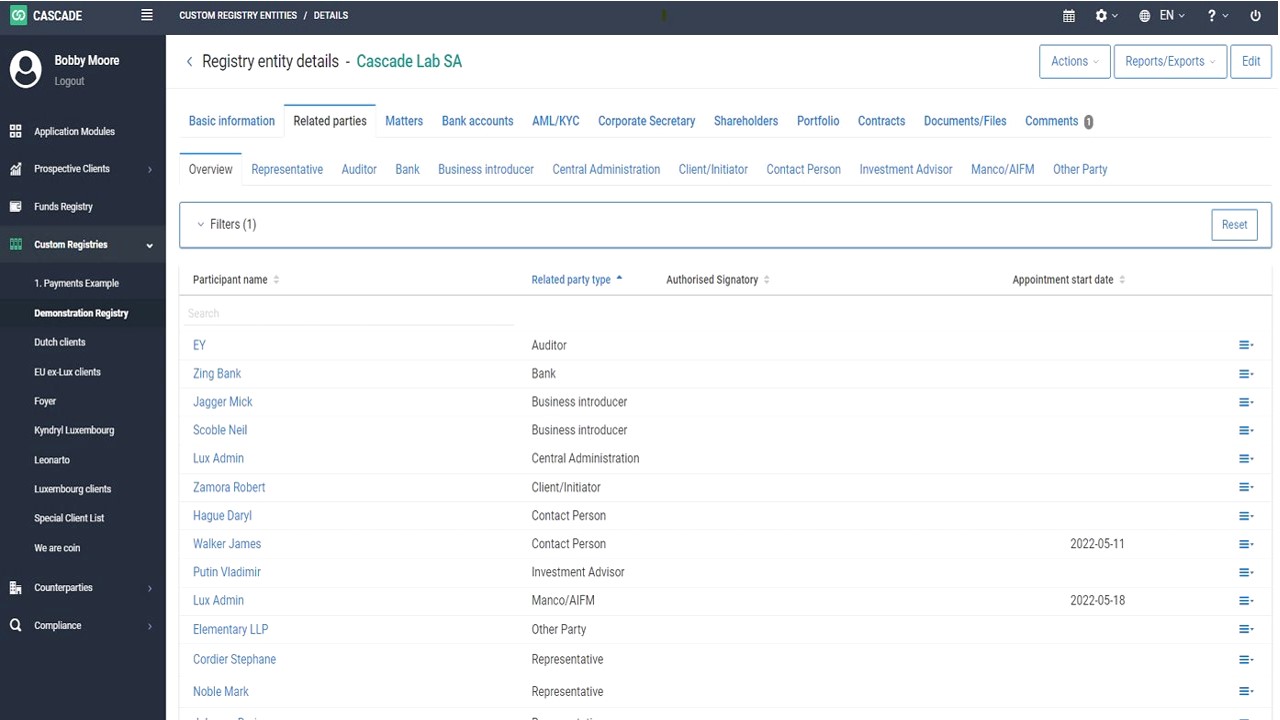
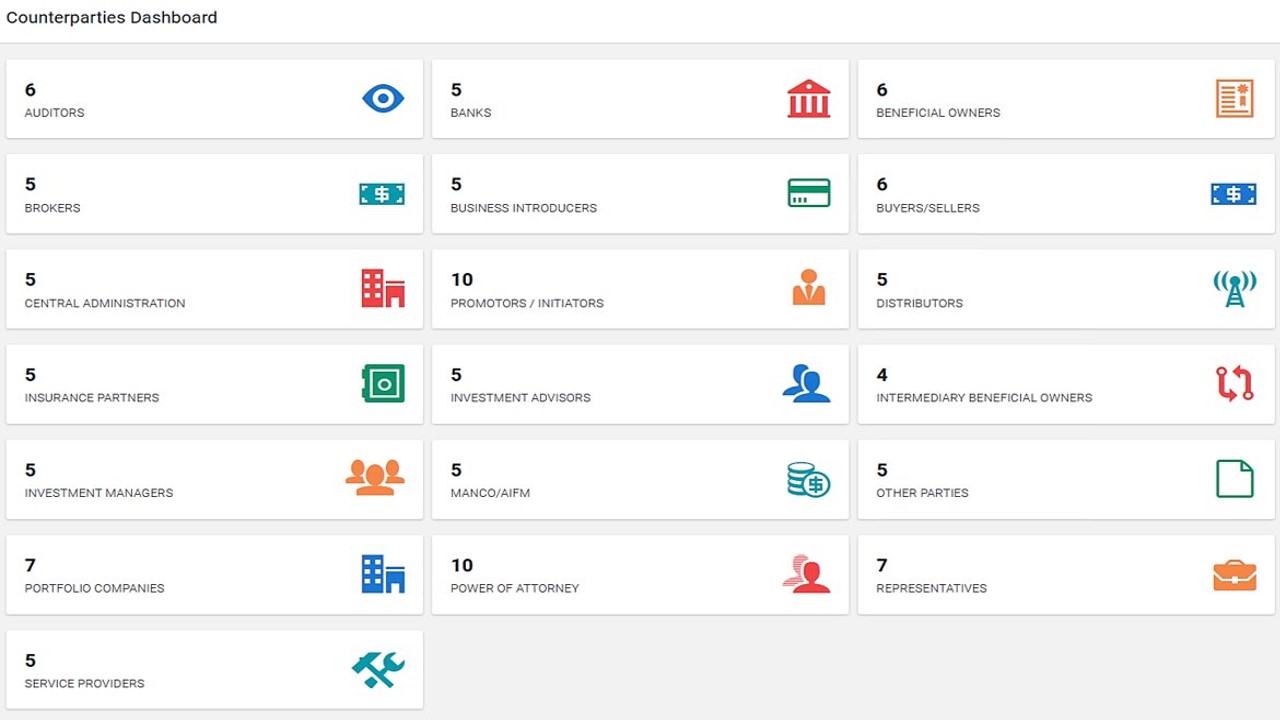
Cascade centralizes desk-based review procedures by linking identity verification, beneficial ownership research, screening results, and risk assessments within a unified client record. Workflow automation ensures consistent evidence capture, secondary review validation, and audit-ready reporting. To see how Cascade can operationalize desk-based review procedures for your law firm, explore Cascade’s AML capabilities.
Disclaimer
This article is for general information only and based on publicly available sources and SRA guidance at the time of writing. We have made our best effort to ensure accuracy and relevance to UK law firm AML compliance, but SRA regulations and business requirements can change. Cascade does not provide legal or compliance advice. Use of the Cascade platform does not guarantee regulatory compliance. Always verify key details against current SRA publications and consult with a qualified legal or compliance advisor before making compliance or vendor decisions.


 English
 English (Australia)
 English (UK)