On 13 August 2026, the Department of Finance published Ireland’s first-ever National Anti-Money Laundering, Countering the Financing of Terrorism, and Countering Proliferation Financing (AML/CFT/CPF) Strategy. For a jurisdiction that is the EU’s third-largest exporter of financial services and home to trillions of euro in fund assets, this is not a document compliance teams can file away and forget.
Why does the AML programme matter now for Ireland?
Ireland has never had a single, whole-of-government AML/CFT/CPF strategy before. Previous efforts were spread across separate pieces of legislation, sectoral guidance, and agency-level initiatives. The 2026–2030 Strategy changes that it sets out, for the first time, a coordinated five-year roadmap covering everything from beneficial ownership transparency to how supervisors use data and how agencies investigate financial crime.
Two forces are driving the timing. First, Ireland’s National Risk Assessment (NRA) 2026 has just been refreshed, giving the State an updated, evidence-based picture of where money laundering, terrorist financing, and proliferation financing risks actually sit.
Second, and arguably more important for compliance teams’ planning horizons, Ireland is preparing for its next Financial Action Task Force (FATF) Mutual Evaluation in 2028. FATF peer-reviews each member country’s AML/CFT/CPF framework on a seven-year cycle, with a heavy emphasis on effectiveness rather than paper compliance. Everything in this strategy is, to some degree, aimed at making sure Ireland’s exam results in 2028 look good, and that means supervisors are about to get busier, more data-driven, and less tolerant of box-ticking.
For firms operating in or through Ireland, funds, fund service providers, banks, payment institutions, and the accountants, lawyers, and corporate service providers who support them, this is the moment to check whether your AML programme is built for where the regime is going, not just where it’s been.
The framework in brief: three pillars, one risk assessment
The strategy rests on three interlocking pillars:
- Policy and oversight – assessing ML/TF/PF risk, setting domestic and EU-aligned policy, and coordinating across government.
- Safeguarding and monitoring – supervision of obliged entities, plus the collection, analysis, and dissemination of financial intelligence.
- Investigation and enforcement – identifying, investigating, prosecuting, and sanctioning ML/TF/PF offenses.
Underpinning all three is the 2026 NRA, which uses a four-tier scale (Low, Moderate, Significant, and Very Significant). The headline findings: the overall money laundering threat is rated Moderate, with drug offenses and fraud identified as the largest drivers, followed by theft and burglary, illicit trade and smuggling, human trafficking, and tax crime. Terrorist financing and proliferation financing are both rated low, though the NRA is explicit that “low” is not “ignore it”: small-scale, self-funded terrorist financing activity and Ireland’s exposure as an open, internationally connected economy both warrant continued vigilance.
From the NRA, the government has also published a separate 30-action Priority Action Plan, the operational to-do list that sits underneath the strategy’s higher-level goals.
The five strategic goals
1. National coordination
The AML Steering Committee (AMLSC), chaired by the Department of Finance, brings together An Garda Síochána, FIU Ireland, the Central Bank, the Criminal Assets Bureau, and other core agencies to coordinate national AML/CFT/CPF action, with preparing for the 2028 FATF Mutual Evaluation as its central near-term task.
2. Risk assessment and understanding
FIU Ireland’s data and analytical capacity are being upgraded, a mandatory FIU registration requirement for reporting entities is under consideration, and the Central Bank is rolling out an updated Risk Evaluation Questionnaire sector by sector.
3. Regulatory framework
Most of the concrete, dated obligations sit here: transposition of the EU’s Sixth AML Directive and AML Regulation: a strengthened beneficial ownership regime across three registers (companies, trusts, and financial vehicles), plus new mandatory UBO disclosure for all limited partnerships; an expanded bank/payment accounts register (ISBAR) linked to the EU’s BARIS system; a single point of access to real estate ownership data by July 2029; public listing and Legal Entity Identifiers for Section 110 special purpose entities; a new framework for parallel money-laundering and tax/excise investigations; Central Bank expectations on AI governance; and tighter sanctions-implementation mechanisms.
4. Capacity building and outreach
Supervisors will formally review their own risk-based approach each year, accountancy bodies will build TCSP registers (with a single national register under consideration), and the Central Bank will give firms more structured feedback to fold into their own risk assessments.
5. International cooperation
Deeper engagement with AMLA, Europol, Eurojust, and the ECB; a strengthened role in the Egmont Group; continued UN/EU sanctions compliance; FATF Mutual Evaluation preparation; and new membership of the IMF’s AML/CFT Thematic Fund.
What does an AML programme mean for compliance teams by entity type?
Investment funds and fund service providers
The limited partnership beneficial ownership change is the one to prioritize: if your structures rely on Irish limited partnerships, as much of Ireland’s private equity and venture capital fund activity does, you should expect a new disclosure obligation for UBOs and controllers, and you’ll want data-collection processes ready before the legislation lands. Property and real estate funds should also start mapping their exposure against the 2029 real estate single-point-of-access deadline now, even though it feels distant; data-quality gaps of this kind are rarely fixed quickly.
Banks and payment institutions
Expect a materially more data-driven relationship with the Central Bank as the updated REQ rolls out sector-by-sector, plus more structured supervisory feedback that you’ll need to demonstrate you’ve acted on. AI governance is also moving from “nice to have” to an explicit supervisory expectation; firms using AI or machine learning anywhere in their AML/CFT stack should be ready to explain their controls.
Law firms, accountants, and trust/company service providers
If you’re a TCSP or supervised by one of the designated accountancy bodies, watch for new register obligations, and expect more active outreach and guidance from the AMLCU if you operate in, or advise clients in, the high-value goods sector. The move toward an annual, formalized review of the supervisory approach also means designated bodies should expect their own risk-based supervision to be documented and justified more rigorously than before.
Corporate service providers and structured finance administrators
Section 110 structures should be reviewed against the incoming public listing requirement and the Legal Entity Identifier obligation; both are straightforward to prepare for now, before they become mandatory.
A risk-based approach to readiness
The strategy is explicit that Ireland’s whole AML/CFT/CPF framework should remain risk-based, proportionate, and targeted at the areas of greatest risk, and that principle should guide how firms prepare, too. Rather than treating this as a compliance checklist to work through mechanically, the more defensible approach is to map the strategy’s actions against your own firm’s exposure to the NRA’s top-rated threats: fraud, drug-related money laundering, and tax crime. A firm’s business-wide risk assessment that doesn’t visibly reflect the 2026 NRA’s findings is going to look dated to a supervisor very quickly.
Practical compliance checklist
- Refresh your firm-wide risk assessment to explicitly reference the 2026 NRA findings, particularly the elevated ratings for fraud and drug-related money laundering.
- Map your beneficial ownership data flows across all three Irish BO registers, and check whether any Irish Limited Partnership structures you administer or advise on will need UBO/controller disclosures once the new requirement takes effect.
- If you administer Section 110 special purpose entities, confirm you’re ready for public listing by Revenue and the incoming Legal Entity Identifier requirement.
- Start scoping real estate-linked client structures against the July 2029 single-point-of-access deadline; early data-quality work now avoids a scramble later.
- Review your relationship with FIU Ireland in light of a possible future mandatory registration requirement for reporting entities.
- Track the Central Bank’s sector-by-sector rollout of its updated Risk Evaluation Questionnaire and build a process for acting on the more structured feedback that follows.
- If you’re a TCSP or supervised by a designated accountancy body, get ahead of new TCSP register obligations rather than waiting for them to be finalized.
- Document your AI governance controls now; even informally, the Central Bank’s move toward systematic AI-risk understanding means this will become a supervisory talking point.
- Stress-test your STR and tax-reporting processes for the possibility of parallel, joined-up investigations rather than sequential ones.
- Keep an eye on the 30-action Priority Action Plan and Ireland’s 2028 FATF Mutual Evaluation preparations; both are strong leading indicators of where supervisory intensity is heading through 2027 and 2028.
How could Cascade AML Software help in light of the coming AML programme?
Ireland’s first National AML/CFT/CPF Strategy reinforces the importance of strong, risk-based AML/CFT systems, better data, and effective beneficial ownership transparency.
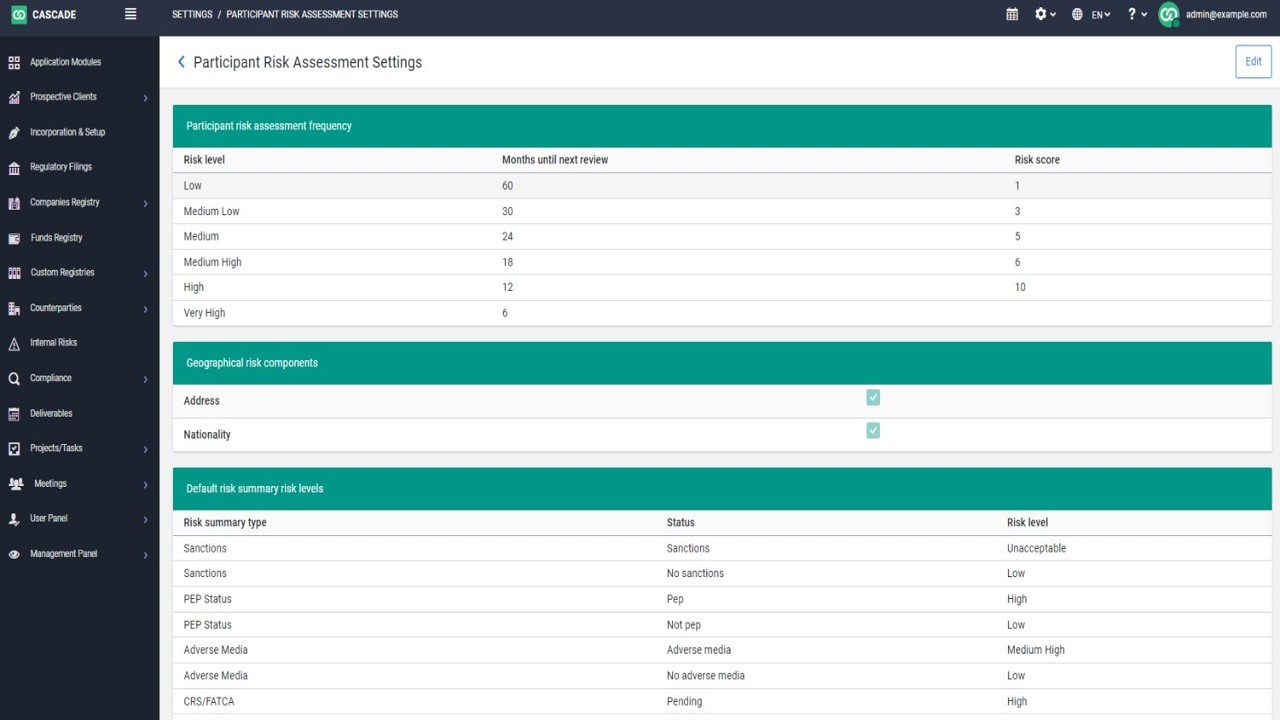
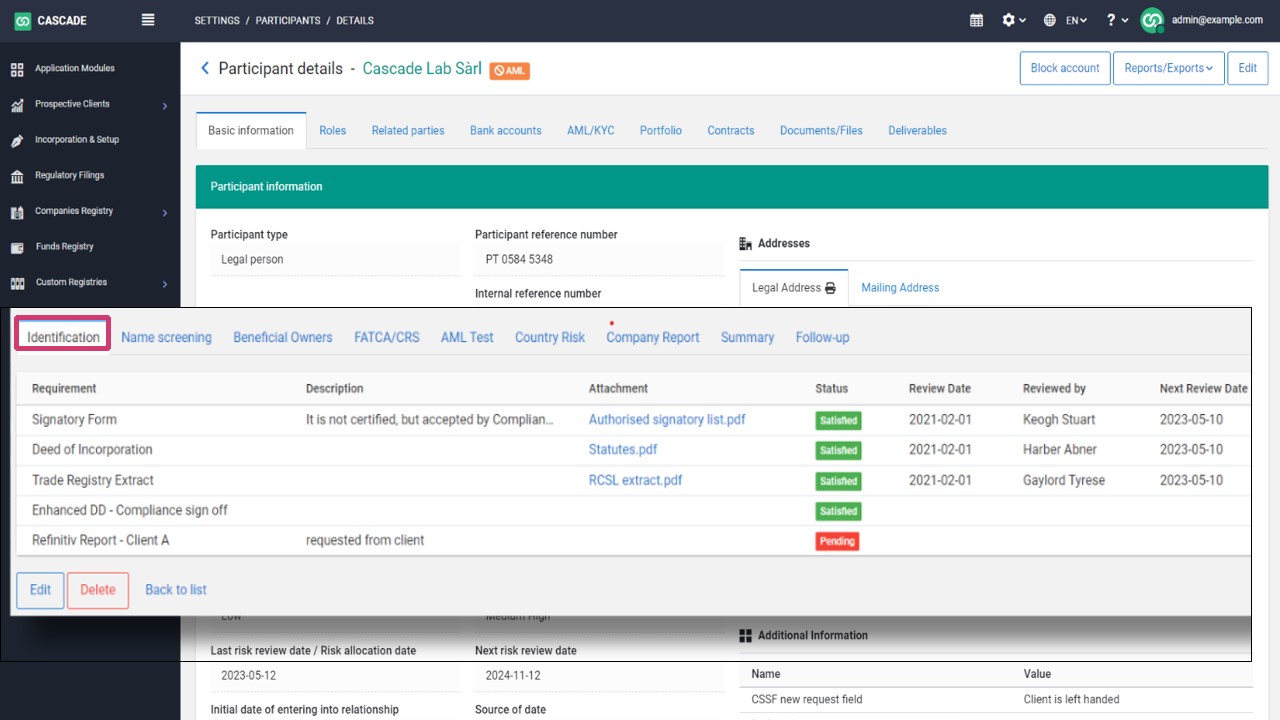
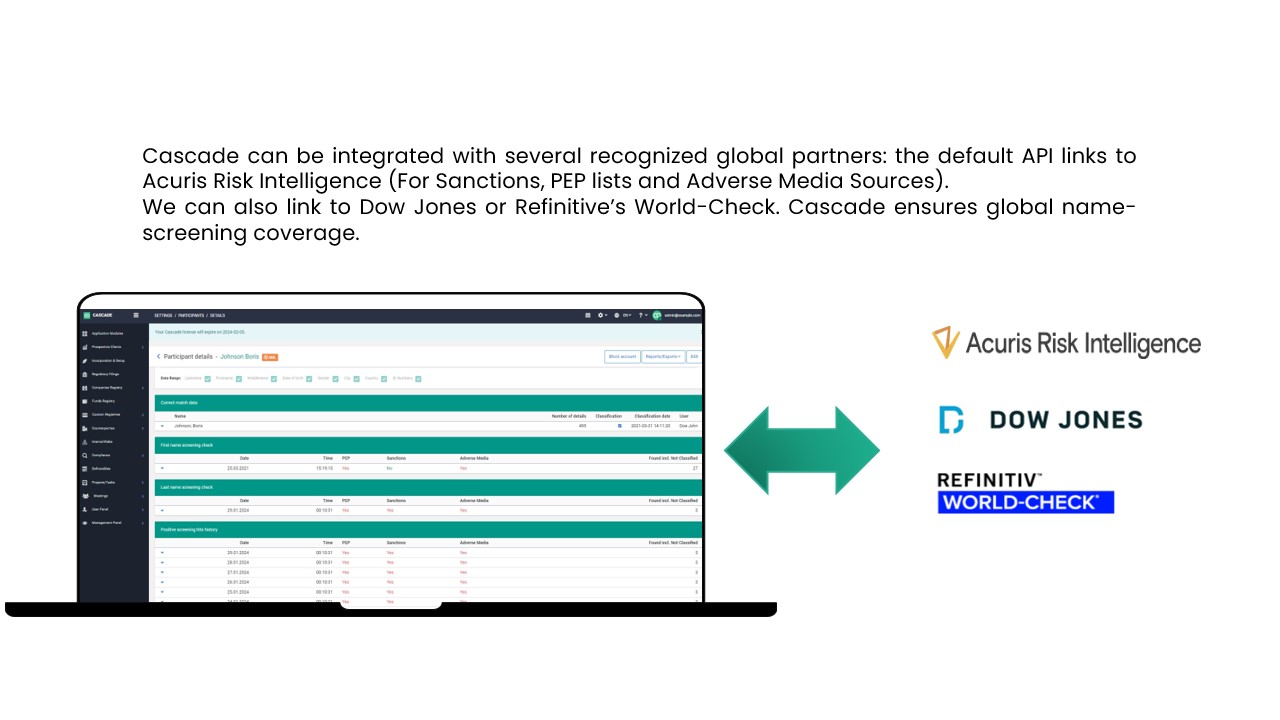
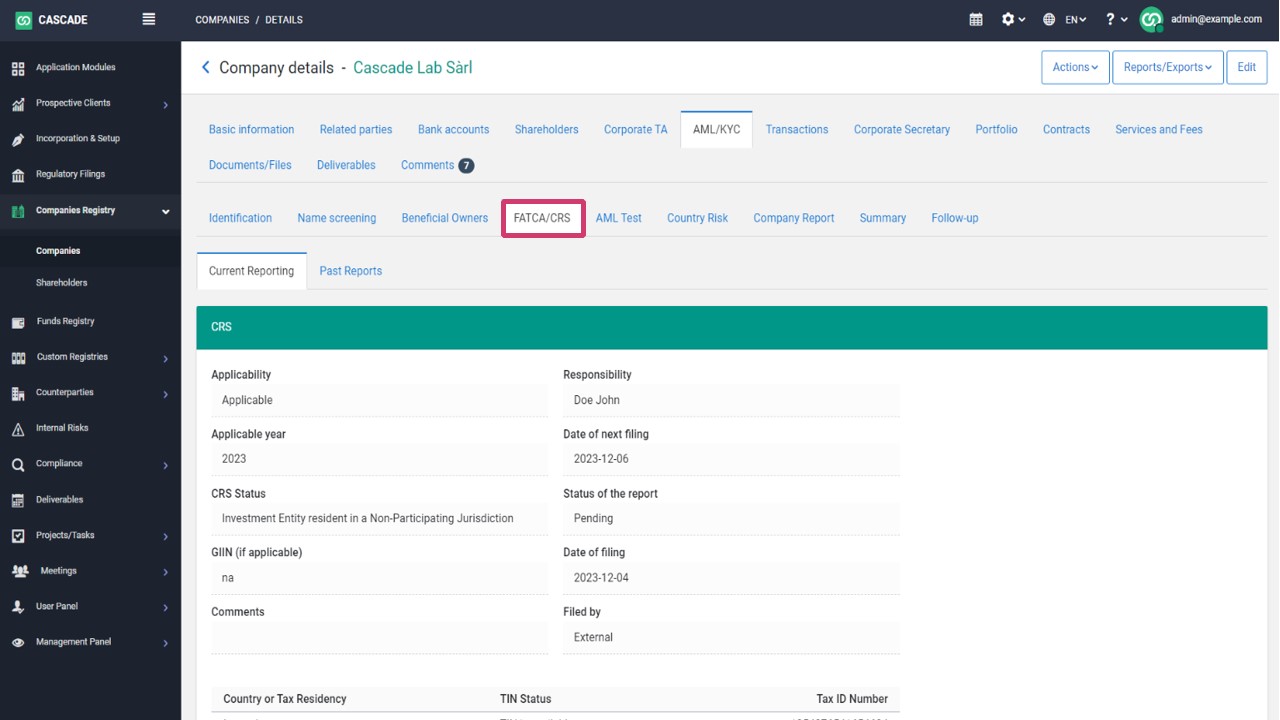
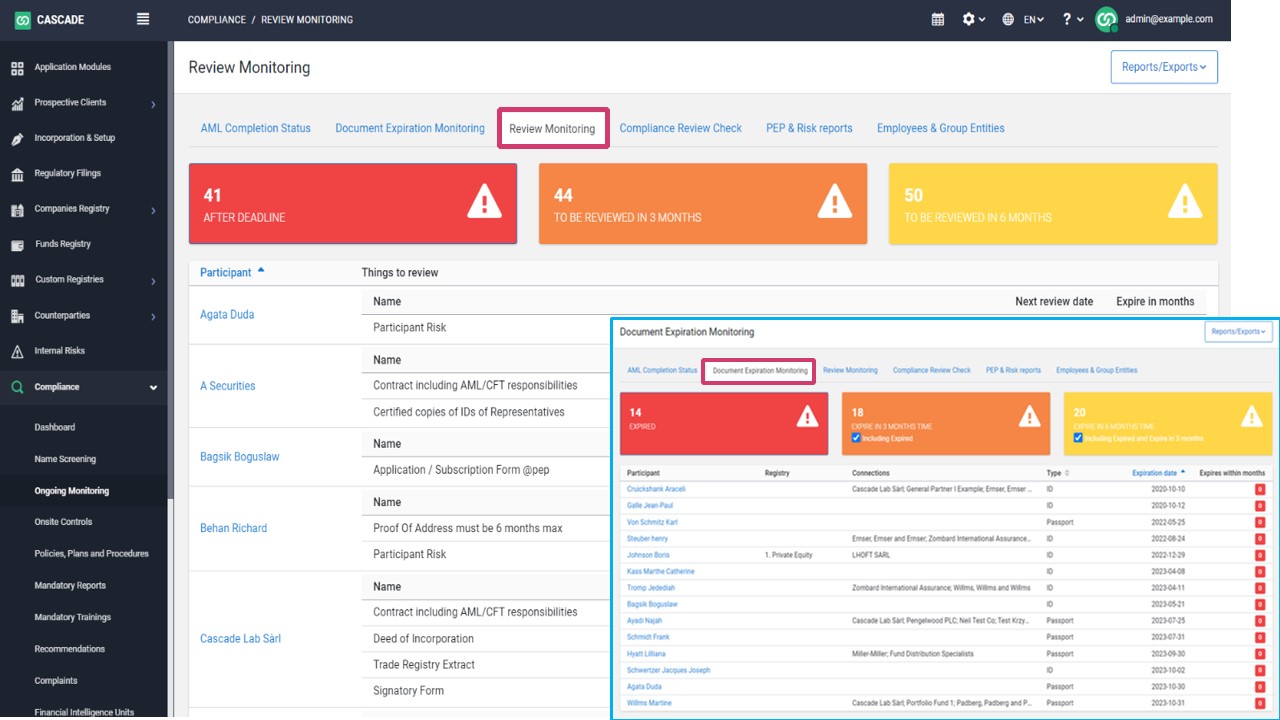
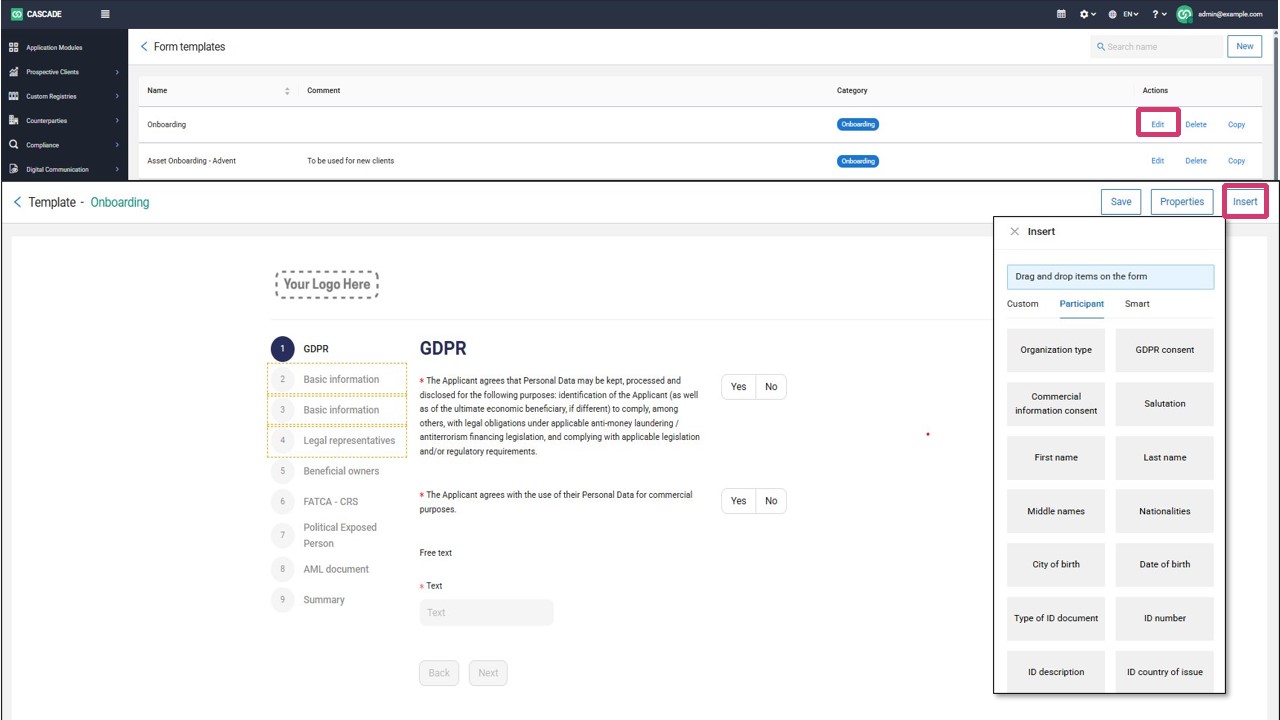
Cascade’s AML Software can support this through configurable risk-based CDD and ongoing monitoring workflows, structured UBO records, daily sanctions, PEP and adverse media screening, and audit trails that help firms evidence their compliance processes. It can also centralize compliance data to support reporting, supervisory reviews, and information requests.
Explore how Cascade could support your AML/KYC programme in light of Ireland’s 2026–2030 Strategy.
Book a demo or contact our team.
FAQ
What is Ireland’s National AML/CFT/CPF Strategy 2026–2030?
It’s Ireland’s first whole-of-government strategy for tackling money laundering, terrorist financing, and proliferation financing, published by the Department of Finance in August 2026 and covering the period to 2030. It sets out three framework pillars and five strategic goals, built on the findings of the 2026 National Risk Assessment.
Does the strategy itself create new legal obligations?
No. The strategy is a policy roadmap, not legislation. The actual legal obligations arrive through separate instruments, most significantly the transposition of the EU’s Sixth Anti-Money Laundering Directive and the new EU AML Regulation, along with related secondary legislation on beneficial ownership, real estate transparency, and special purpose entities.
Why is the 2028 FATF Mutual Evaluation so central to this?
FATF evaluates each member country’s AML/CFT/CPF framework on a seven-year cycle, focusing heavily on real-world effectiveness rather than paper compliance. Ireland’s next evaluation is due in 2028, and much of the strategy’s coordination and data work is explicitly aimed at strengthening Ireland’s readiness for that review.
What’s the most time-sensitive change for funds and corporate structures?
The new requirement for mandatory disclosure of ultimate beneficial owners and controllers of all limited partnerships is likely to have the broadest near-term impact, given how central Irish limited partnerships are to private equity and venture fund structuring in Ireland.
What should compliance teams do first?
Start by refreshing your firm-wide risk assessment against the 2026 NRA’s findings, then work through the beneficial ownership, real estate, and Section 110 obligations relevant to your structures. Firms that can show a documented, risk-based response to the strategy will be in a materially stronger position with supervisors than those that wait for legislation to land before acting.
Disclaimer: This article is provided for general informational purposes and does not constitute legal or regulatory advice. Firms should consult the Department of Finance’s published Strategy and National Risk Assessment and seek independent legal advice before making compliance decisions.


 English
  English (Australia)
  English (UK)