On 27 August 2026, the UK’s Office of Trade Sanctions Implementation (OTSI) published its first-ever annual review, covering the period from 1 April 2025 to 31 March 2026. For compliance teams in regulated firms, it is more than a performance report. It signals a clear shift in how UK trade sanctions are being enforced and in what a defensible set of sanctions controls now needs to look like.
The UK OTSI was created in October 2024 to strengthen the UK’s implementation and civil enforcement of trade sanctions. Its first full year of data gives compliance teams an early, evidence-based view of where enforcement attention is concentrated and where it is heading next.
What do the review reports?
The headline figures for UK OTSI Annual Review 2025–26 are:
- 178 suspected trade-sanctions breaches or referrals received across the financial year
- 156 of those cases related to the Russia sanctions regime, by far the largest single driver
- Most reports came from the financial services sector, in line with mandatory reporting obligations
- 111 cases (62%) were reported by sectors subject to mandatory reporting obligations, covering both self-reports and reports about third parties
- 104 enforcement cases were closed, of which 40 were referred to HMRC for reasons including possible criminal enforcement consideration or because the potential breach predated OTSI’s powers
- 41 closed cases resulted in no breach being identified
Notably, the UK OTSI report has not yet issued a single civil monetary penalty. But that is not a sign of a quiet year. The office reports ending 2025–26 with a substantial number of investigations into potential breaches at an advanced stage, expected to reach decision points in 2026–27.
In other words, the enforcement pipeline is filling rather than empty.
The strategic shift: From reactive to intelligence-led
The most important signal in the review is not any single statistic. It is OTSI’s stated direction of travel.
During 2025–26, UK OTSI established a dedicated intelligence function to identify emerging risks, evasion patterns and typologies. Only around 6% of cases opened during the year were proactively initiated, and OTSI has explicitly said it aims to significantly increase the number of proactive, intelligence-led investigations.
At the same time, OTSI’s remit and toolkit have expanded. From April 2026, it gained a new counter-circumvention power, Sanctions End-Use Controls, allowing it to scrutinise exports to third countries where there is a risk of diversion to a sanctioned destination and to block those exports where the risk cannot be resolved. Its licensing remit has also broadened to cover goods, not just services.
The direction is unmistakable. UK trade sanctions enforcement is moving from reactive processing of reports toward proactive, intelligence-driven targeting of circumvention.
Why this matters for AML compliance teams
The review makes clear that sophisticated evasion is now central to the enforcement picture. Sanctioned actors increasingly rely on third-country routes, intermediaries, complex corporate structures and services-enabled circumvention to move goods and value while staying off the obvious radar.
For AML compliance teams, this changes the standard. Screening a customer’s name against a sanctions list remains necessary, but it is no longer sufficient on its own. Firms are increasingly expected to understand and evidence the fuller picture around a relationship:
- Beneficial ownership and the organisational structures behind a client
- Third-country exposure and intermediary risk
- The services their firm may be enabling, not just the goods that cross a border
- How those risks were assessed, escalated and resolved
Crucially, enforcement bodies are looking for firms that can demonstrate this, not just assert it. The defensible question is shifting. It is no longer only “Was the customer screened?” It is also “Can we reconstruct and defend the complete risk decision?”
Building AML compliance controls that stand up to scrutiny
The review does not prescribe a compliance checklist. But in our experience, responding to this shift means connecting pieces of the compliance picture that are too often held in separate systems, spreadsheets and inboxes. In practice, we see that coming down to:
- Beneficial ownership and organisational structures, mapped and kept current
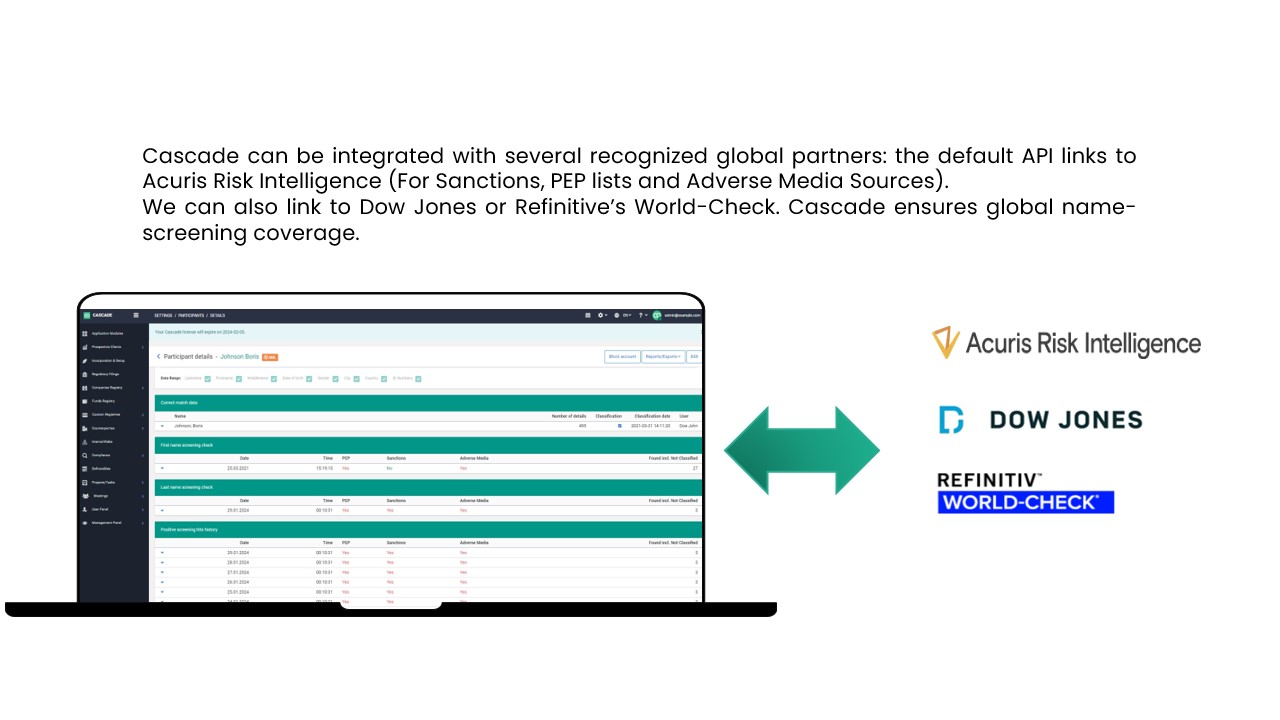
- Sanctions and adverse-media screening, run continuously rather than at a single point in time
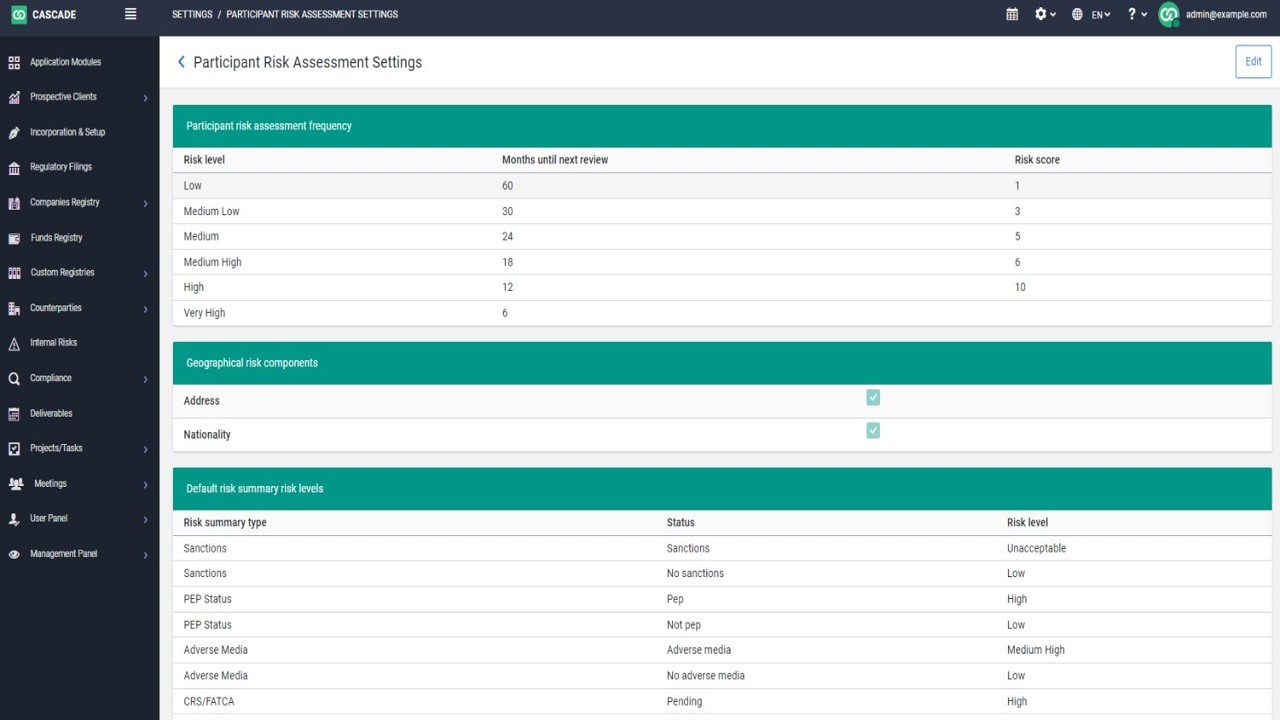
- Risk assessments and escalation decisions, captured with their rationale
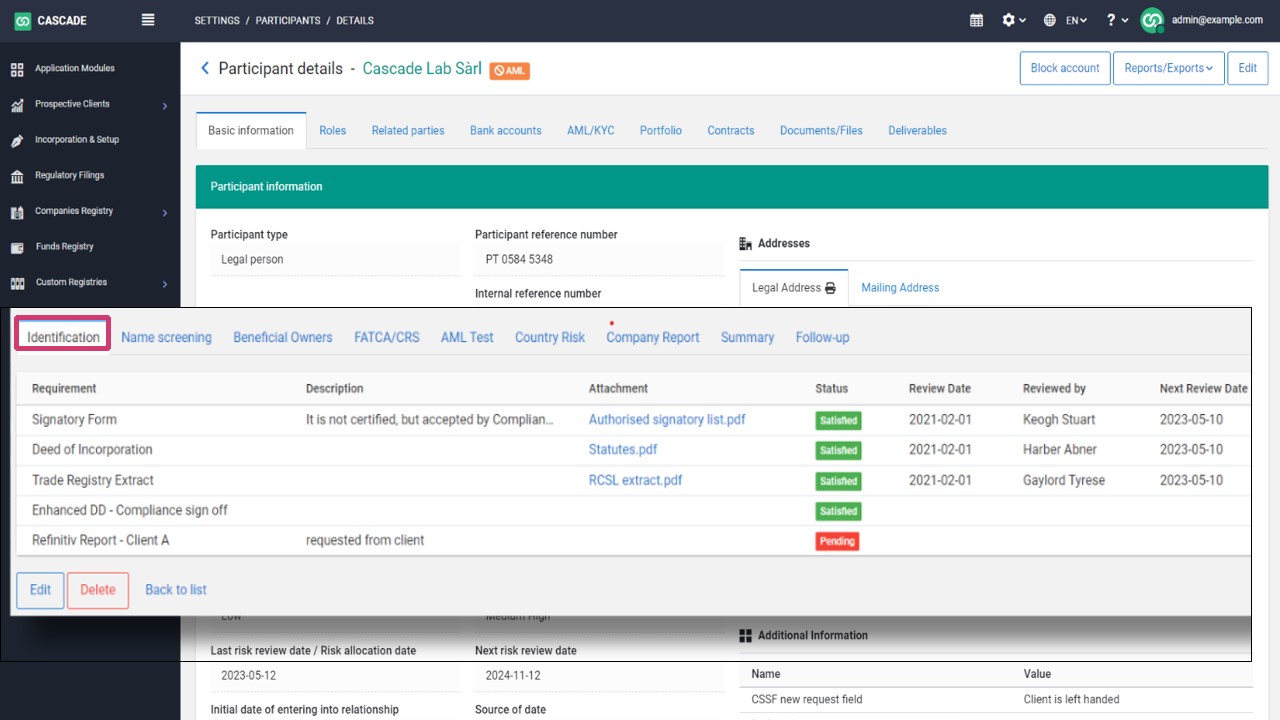
- Supporting evidence and ongoing monitoring, linked to the relationship it relates to
- A complete, auditable history of every decision, reconstructable on demand
This is where a structured AML/KYC environment earns its place.
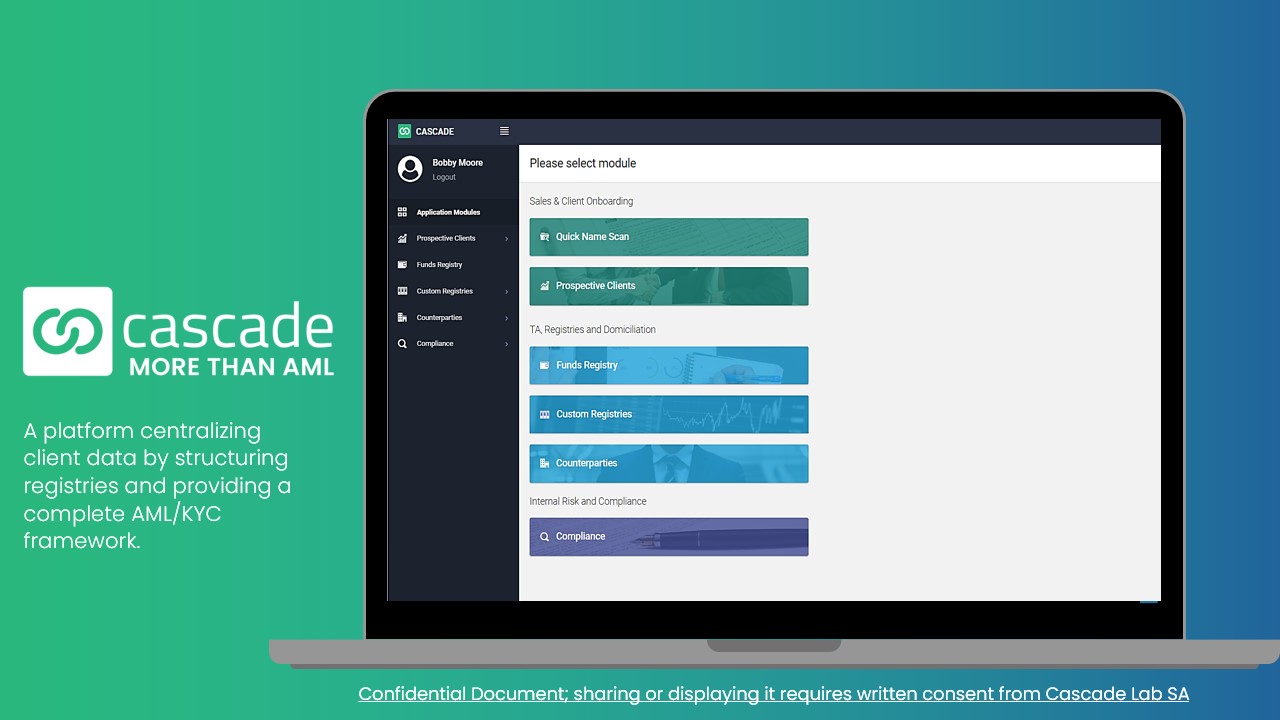
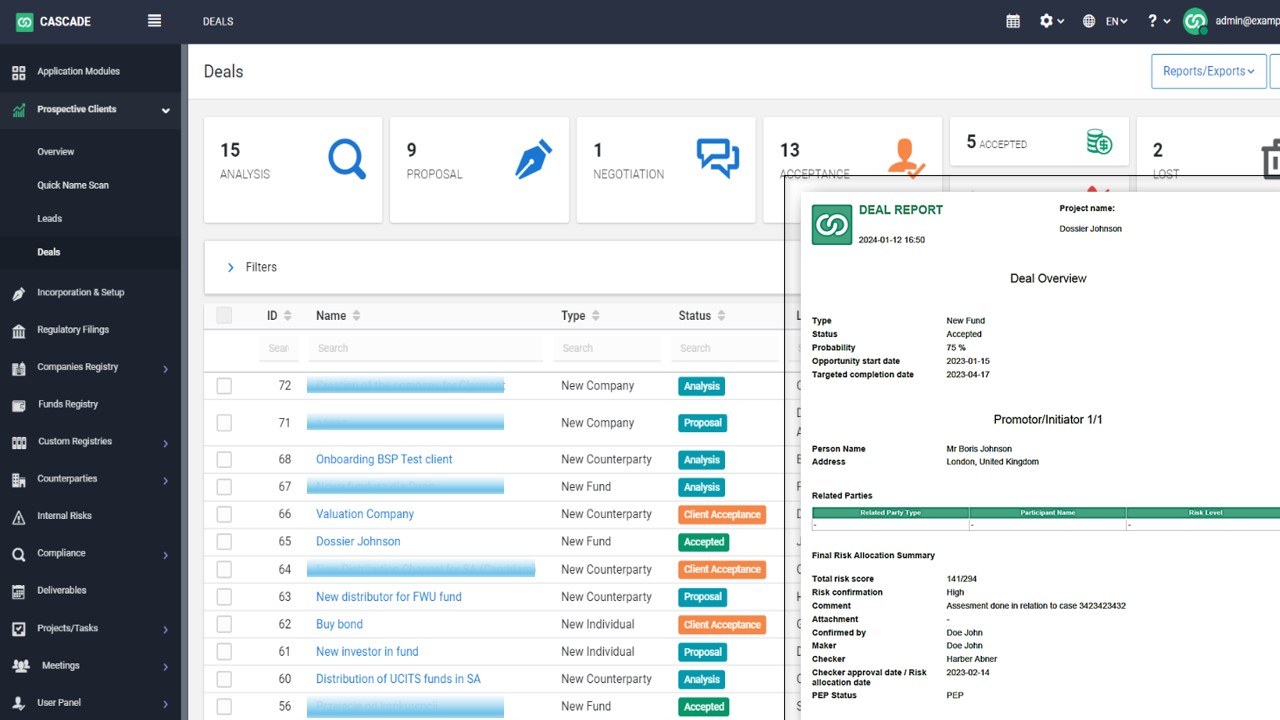
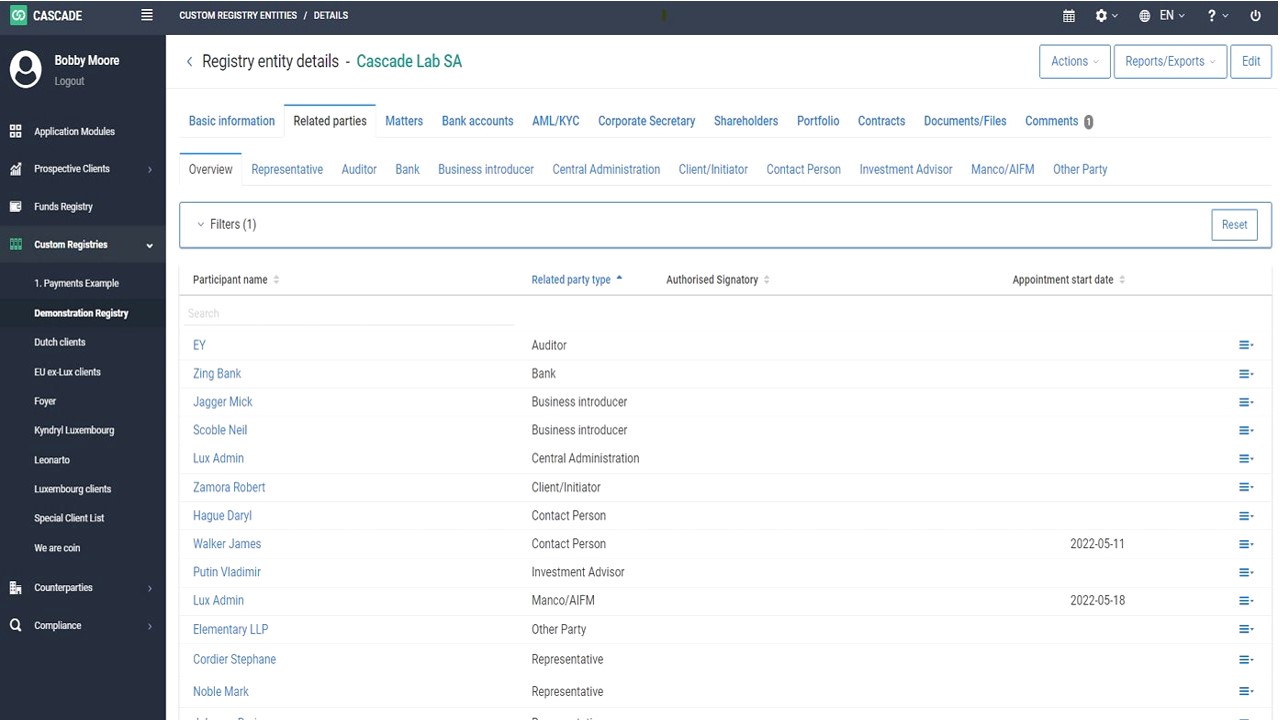
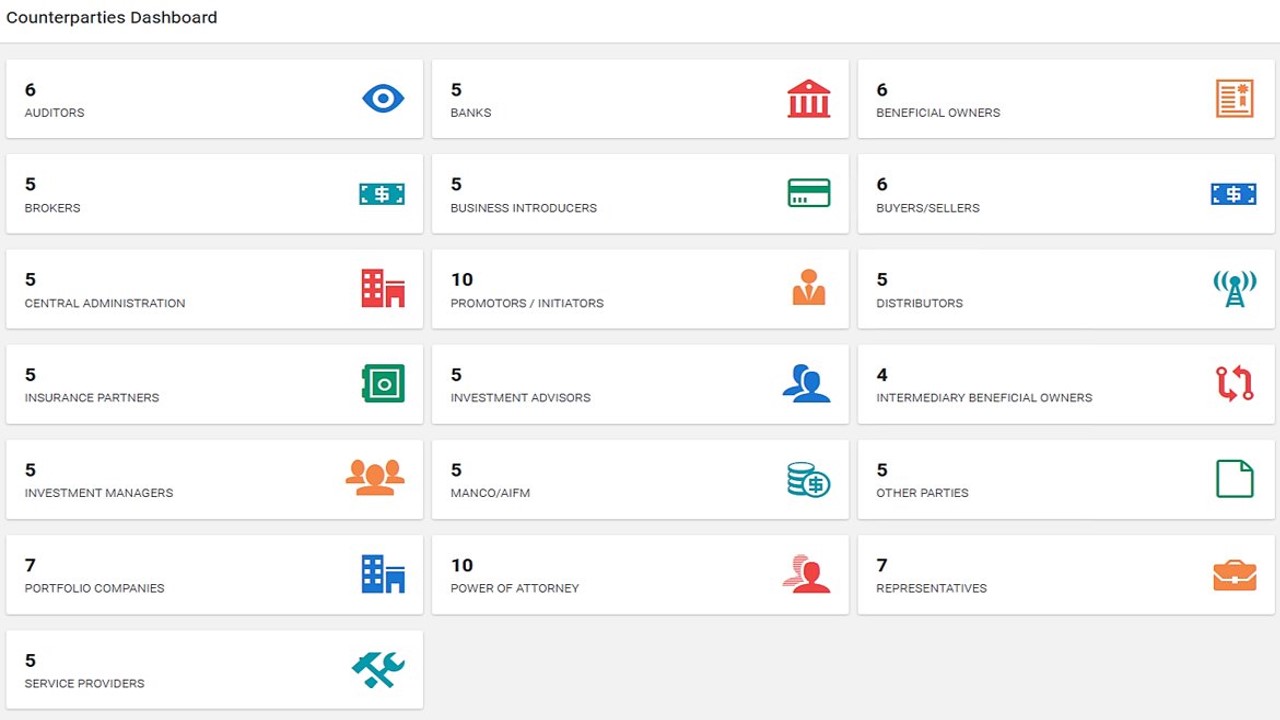
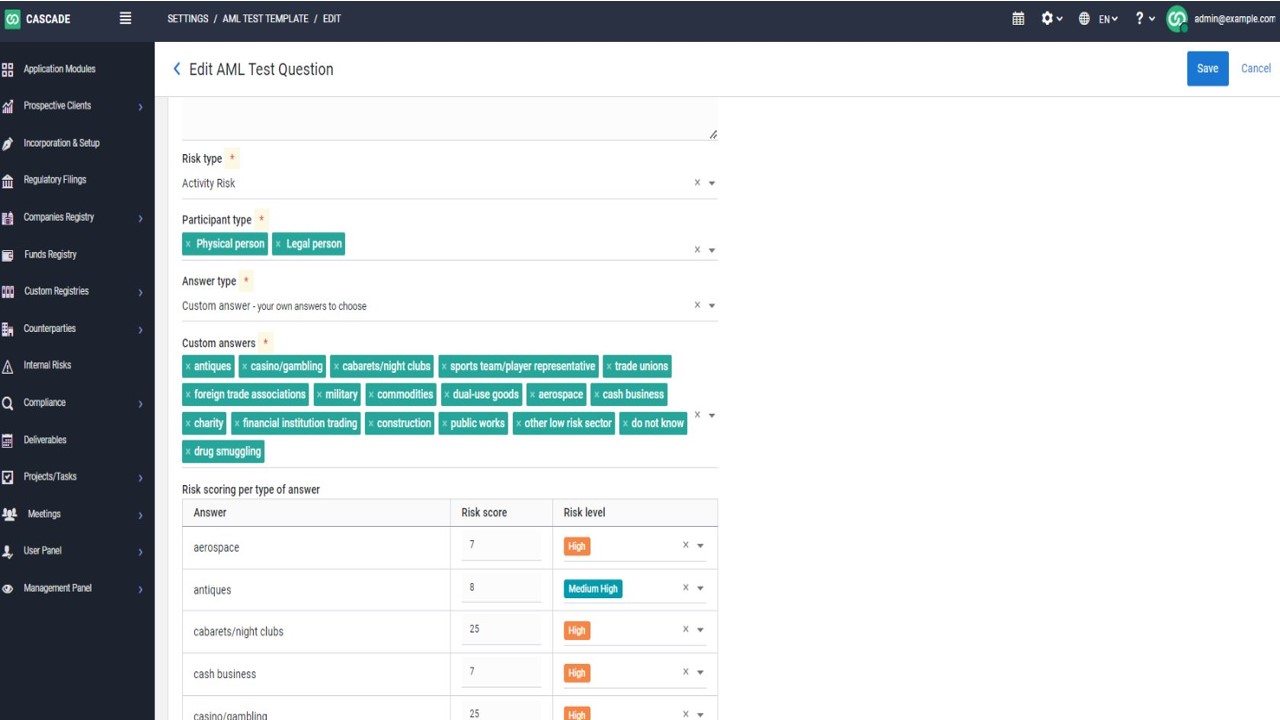
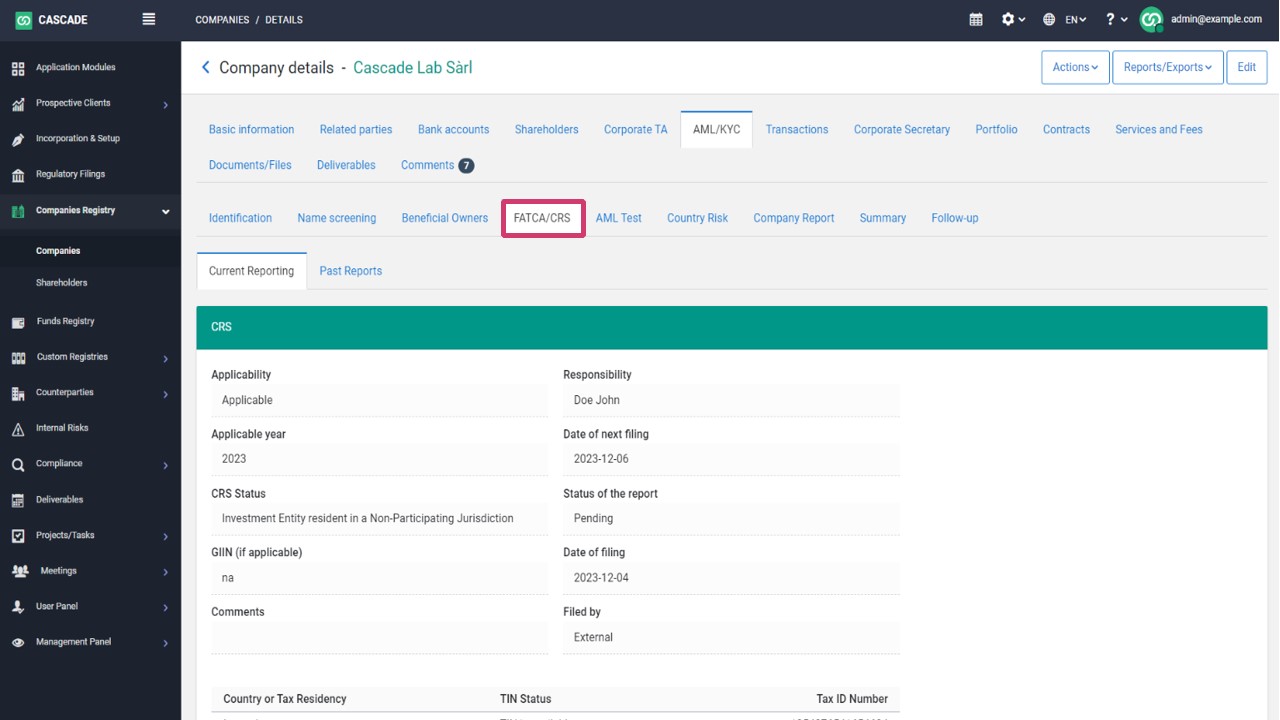
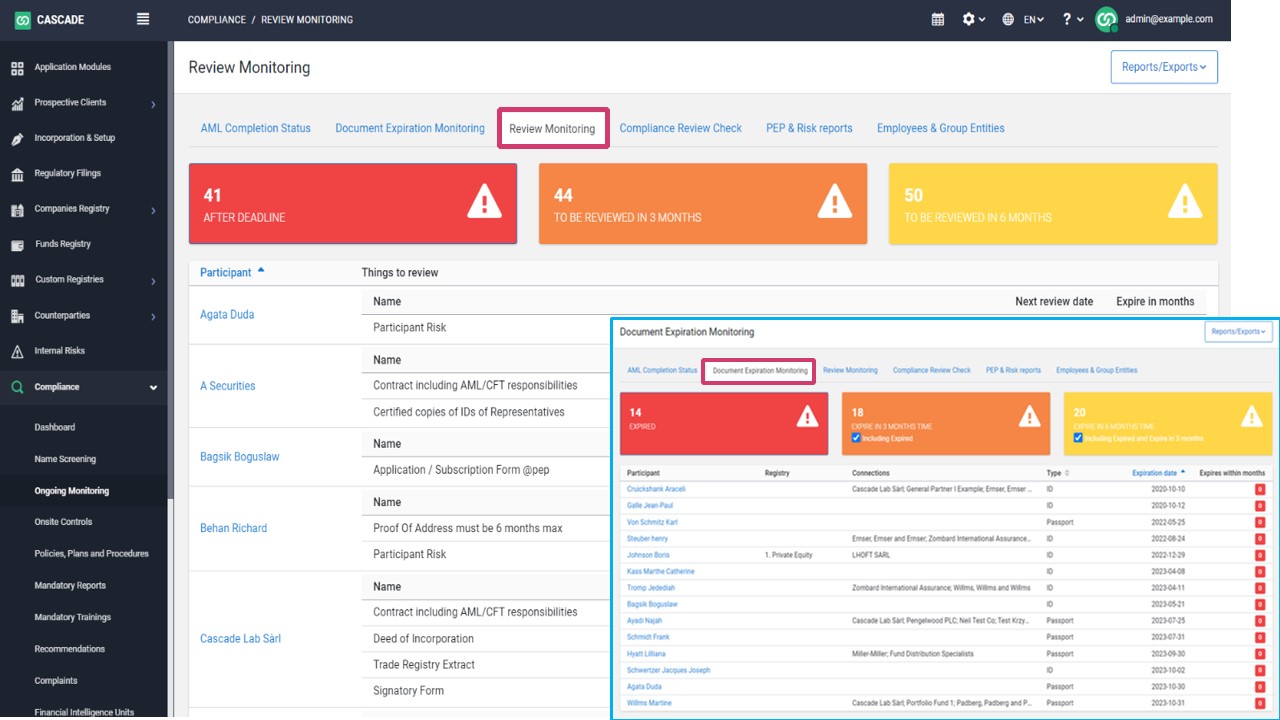
Cascade brings these elements together in one platform, linking clients, entities, beneficial owners and counterparties, running embedded daily name screening, and keeping an auditable record of how each risk decision was reached. When the question moves from “did you screen?” to “can you defend the whole decision?”, that connected, evidenced picture is what helps a control stand up.
The takeaway
The UK OTSI’s first annual review is a foundational-year report, but its message is forward-looking. Enforcement is becoming more intelligence-led, the toolkit is expanding to target circumvention, and the volume of maturing investigations suggests 2026–27 will look considerably more active than 2025–26 did.
For regulated firms, the time to strengthen the connective tissue of AML compliance and sanctions controls, before an investigation asks you to reconstruct it, is now.
Frequently asked questions
What is UK OTSI?
The Office of Trade Sanctions Implementation is a UK body, created in October 2024, responsible for the civil enforcement of UK trade sanctions, particularly those covering services and activity outside the UK border. It works alongside HMRC, which handles criminal enforcement.
What period does the review cover, and when was it published?
It covers 1 April 2025 to 31 March 2026 and was published on 27 August 2026. It is OTSI’s first annual review.
Has OTSI issued any fines yet?
No civil monetary penalties as of the 2025–26 review. But OTSI ended the year with a substantial number of investigations at an advanced stage, due to reach decision points in 2026–27.
Who has to report suspected trade-sanctions breaches to OTSI?
Providers of financial or legal services and money service businesses have a legal obligation to report. Anyone else can report voluntarily, which OTSI encourages.
What are sanctions end-use controls?
A power introduced in April 2026 that lets OTSI scrutinise exports to third countries where there is a diversion risk, require a licence, and block the export if a clear risk remains after assessment.
Does this only affect firms trading directly with sanctioned countries?
No. Evasion increasingly runs through third-country routes, intermediaries and enabling services, so firms can be exposed even where goods never cross the UK border.
What does the OTSI review mean for AML compliance teams in practice?
Enforcement bodies are identifying risks proactively rather than only reacting to reports. For AML compliance teams, that means a higher expectation of evidence: showing how a risk decision was reached, not just that screening happened.
How can Cascade help?
Cascade links clients, entities, beneficial owners and counterparties in one platform, runs embedded daily name screening, and keeps an auditable history of every risk decision, so teams can reconstruct and defend the complete decision. Request a demo.
Disclaimer: This article is based on publicly available information and market understanding at the time of writing. While we aim to provide accurate and useful information, some details may change over time or be incomplete. Readers should carry out their own assessment before making any business decision.


 English
  English (Australia)
  English (UK)